The Covenant of Restoration: A Cry for Forgiveness and Renewal
“Then hear thou from the heavens, and forgive the sin of thy people Israel, and bring them again unto the land which thou gavest to them and to their fathers.” — 2 Chronicles 6:25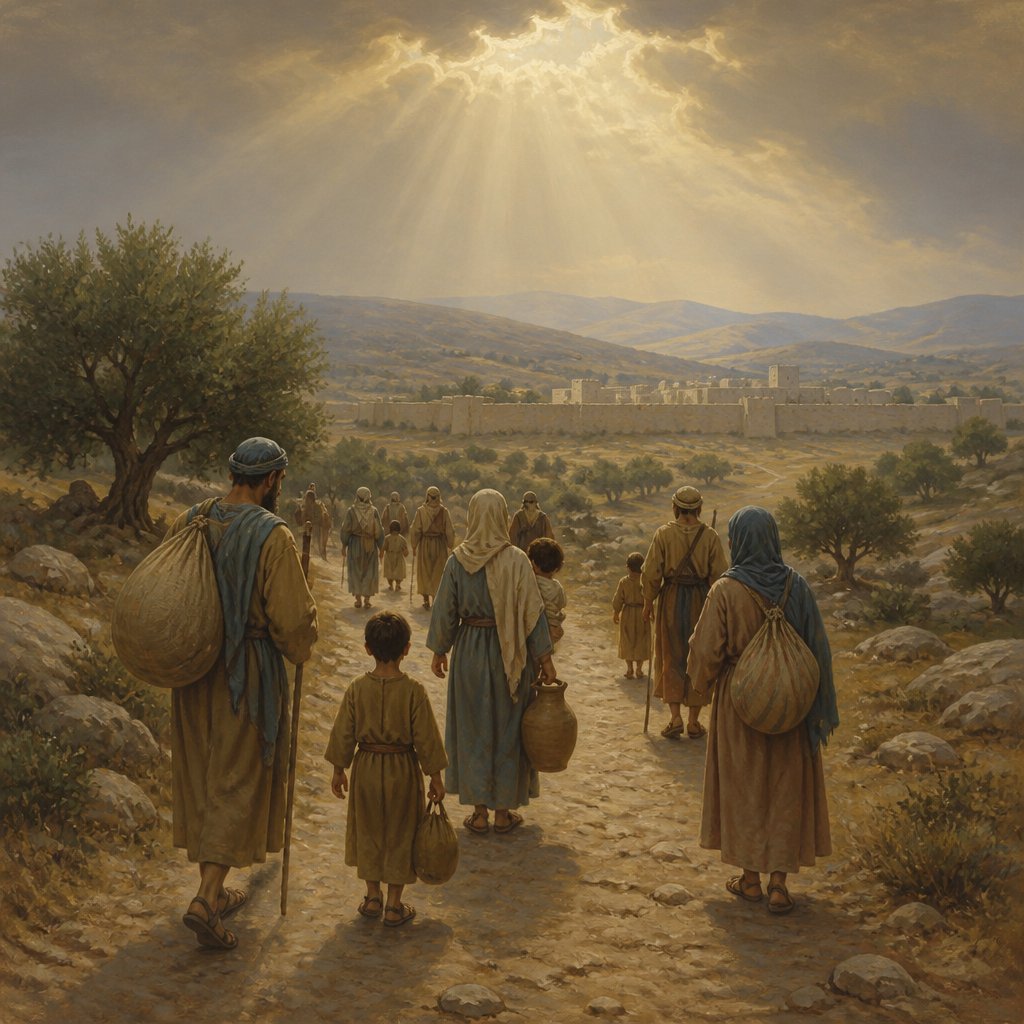
In 2 Chronicles 6:25, Solomon stands before the altar of the Lord, his heart heavy with the burden of the people's waywardness, yet filled with hope for redemption. The verse reads: "Then hear thou from the heavens, and forgive the sin of thy people Israel, and bring them again unto the land which thou gavest to them and to their fathers." This cry transcends the historical moment of Solomon’s prayer and resonates deeply with our own spiritual journeys today.
As we delve into this verse, we recognize a profound understanding of God’s nature: He is merciful and ready to forgive. Solomon beseeches God to listen from the heavens, signifying an acknowledgment that God’s perspective is much higher than ours. When we pray, we often present our requests, our needs, and our sins, but we must remember that we approach a God who is all-knowing and all-seeing, not confined to the limitations of our earthly perspective. Solomon’s earnestness reminds us that effective prayers stem from humility and a sincere recognition of our shortcomings.
The plea for forgiveness highlights the weight of sin—an aspect we often overlook in today's context. Sin not only disrupts our relationship with God but also impacts our communal and societal existence. Israel’s repeated cycles of sin, judgment, and repentance remind us that the human heart is prone to wander aside from the Lord’s path. Solomon's recognition of Israel’s sinfulness is a call to introspection for us. How often do we reflect on our own sins? In a culture that often glosses over wrongdoing, we must commit to confronting our transgressions honestly, seeking God’s grace for transformation.
The latter part of the verse carries an essential promise: God’s willingness to restore. "And bring them again unto the land which thou gavest to them and to their fathers" embodies the hope of returning to the promises God has made. For the Israelites, the land was a tangible representation of God's covenant—an inheritance filled with blessings and prosperity. For us today, the ‘land’ may symbolize the abundant life promised through faith in Christ. Jesus reminds us in John 10:10, "I am come that they might have life, and that they might have it more abundantly."
God's restoration often requires personal and communal repentance. As believers, we must recognize that claiming our inheritance involves a commitment to turn away from our sins. In 2 Chronicles, we see a community that experiences the consequences of their iniquities, yet Solomon’s prayer embodies a profound trust in God's restorative power. This calls us not to despair in our failures but to pursue Him with a repentant heart.
Furthermore, Solomon's vision extends beyond individual repentance; it speaks to collective restoration. When God's people unite in prayer and repentance, the potential for revival is immense. The church should lead in this regard, embodying the light of Christ to the world. The narrative of redemption is not just personal; it is communal. As we pray, we ought to intercede for our communities, asking God to forgive our collective sins and to turn the hearts of many back to Him.
Finally, 2 Chronicles 6:25 beckons us to remember the faithfulness of God. The land that God promised is built on His unwavering commitment to us. Romans 8:31 reminds us that if God is for us, who can be against us? In times of struggle and turmoil, this assurance of God’s faithfulness fortifies our spirits. As we kneel before Him, let us take comfort in the fact that His ear is always inclined to hear our cries.
In conclusion, may we approach God with sincerity, acknowledging our sins and the sins of our communities. Let us cry out to Him for forgiveness, trusting in His promise to restore us to the blessings of abundant life. Just as Solomon interceded for Israel, may we be relentless in our prayers for ourselves and our world, confident in the knowledge that our God is both merciful and mighty to save.
Get our apps


Artwork for 2 Chronicles 6:25

2 Chronicles 6:25 - "Then hear thou from the heavens, and forgive the sin of thy people Israel, and bring them again unto the land which thou gavest to them and to their fathers."

"Then hear thou from the heavens, and forgive the sin of thy people Israel, and bring them again unto the land which thou gavest to them and to their fathers." - 2 Chronicles 6:25

2 Chronicles 25:6 - "He hired also an hundred thousand mighty men of valour out of Israel for an hundred talents of silver."

1 Chronicles 6:25 - "And the sons of Elkanah; Amasai, and Ahimoth."

"And the sons of Elkanah; Amasai, and Ahimoth." - 1 Chronicles 6:25

2 Chronicles 25:2 - "And he did that which was right in the sight of the LORD, but not with a perfect heart."

2 Chronicles 25:25 - "¶ And Amaziah the son of Joash king of Judah lived after the death of Joash son of Jehoahaz king of Israel fifteen years."

"He hired also an hundred thousand mighty men of valour out of Israel for an hundred talents of silver." - 2 Chronicles 25:6

2 Chronicles 6:13

2 Chronicles 25:28 - "And they brought him upon horses, and buried him with his fathers in the city of Judah."

2 Chronicles 25:22 - "And Judah was put to the worse before Israel, and they fled every man to his tent."

1 Chronicles 2:25 - "¶ And the sons of Jerahmeel the firstborn of Hezron were, Ram the firstborn, and Bunah, and Oren, and Ozem, and Ahijah."

2 Chronicles 25:26 - "Now the rest of the acts of Amaziah, first and last, behold, are they not written in the book of the kings of Judah and Israel?"

2 Kings 21:25 - "Now the rest of the acts of Amon which he did, are they not written in the book of the chronicles of the kings of Judah?"

2 Chronicles 6:2 - "But I have built an house of habitation for thee, and a place for thy dwelling for ever."

1 Chronicles 25:6 - "All these were under the hands of their father for song in the house of the LORD, with cymbals, psalteries, and harps, for the service of the house of God, according to the king's order to Asaph, Jeduthun, and Heman."

1 Chronicles 6:2 - "And the sons of Kohath; Amram, Izhar, and Hebron, and Uzziel."

"And he did that which was right in the sight of the LORD, but not with a perfect heart." - 2 Chronicles 25:2

2 Chronicles 6:6 - "But I have chosen Jerusalem, that my name might be there; and have chosen David to be over my people Israel."

2 Chronicles 11:6 - "He built even Beth-lehem, and Etam, and Tekoa,"

2 Chronicles 18:25 - "Then the king of Israel said, Take ye Micaiah, and carry him back to Amon the governor of the city, and to Joash the king's son;"

2 Chronicles 25:11 - "¶ And Amaziah strengthened himself, and led forth his people, and went to the valley of salt, and smote of the children of Seir ten thousand."

2 Chronicles 6:35 - "Then hear thou from the heavens their prayer and their supplication, and maintain their cause."

1 Chronicles 25:2 - "Of the sons of Asaph; Zaccur, and Joseph, and Nethaniah, and Asarelah, the sons of Asaph under the hands of Asaph, which prophesied according to the order of the king."

2 Chronicles 25:20 - "But Amaziah would not hear; for it came of God, that he might deliver them into the hand of their enemies, because they sought after the gods of Edom."

2 Chronicles 25:3 - "¶ Now it came to pass, when the kingdom was established to him, that he slew his servants that had killed the king his father."

2 Chronicles 3:6 - "And he garnished the house with precious stones for beauty: and the gold was gold of Parvaim."

2 Chronicles 12:6 - "Whereupon the princes of Israel and the king humbled themselves; and they said, The LORD is righteous."

2 Chronicles 9:25 - "¶ And Solomon had four thousand stalls for horses and chariots, and twelve thousand horsemen; whom he bestowed in the chariot cities, and with the king at Jerusalem."

2 Kings 25:6 - "So they took the king, and brought him up to the king of Babylon to Riblah; and they gave judgment upon him."