Turning Back to God: A Path of Repentance and Restoration
“Yet if they bethink themselves in the land whither they are carried captive, and turn and pray unto thee in the land of their captivity, saying, We have sinned, we have done amiss, and have dealt wickedly;” — 2 Chronicles 6:37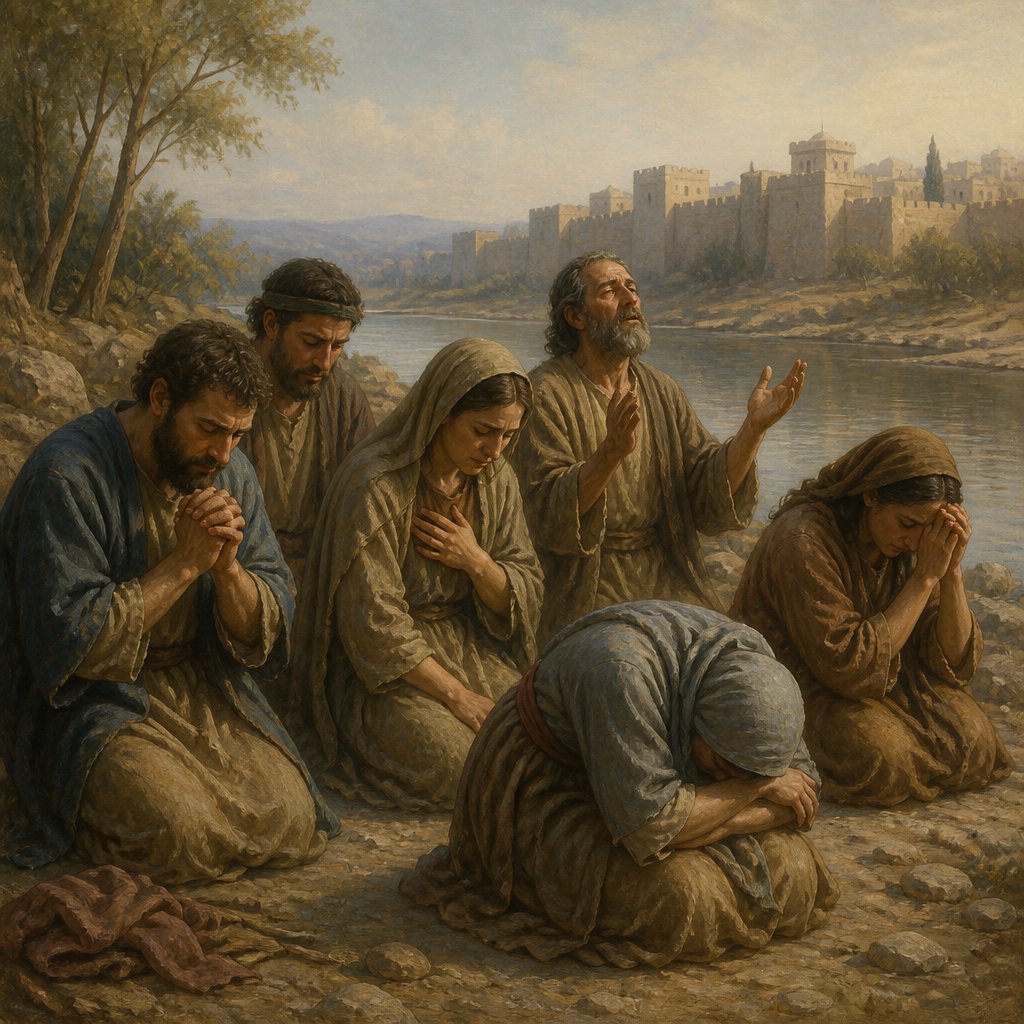
As we delve into 2 Chronicles 6:37, we come face to face with a profound truth about the power of recognition, repentance, and the mercy of our God. The verse reads: "Yet if they bethink themselves in the land whither they are carried captive, and turn and pray unto thee in the land of their captivity, saying, We have sinned, we have done amiss, and have dealt wickedly."
This scripture captures the sorrowful reality of God's people being in captivity, stripped of their autonomy, and facing the consequences of their transgressions. Here, King Solomon is dedicating the temple and acknowledges that the Israelites, as a part of God’s divine plan, may end up in foreign lands due to their sins—essentially, the inevitable result of a disregard for the covenant they made with God. In the midst of this somber prophecy lies a glimmer of hope and a roadmap for restoration.
The first part of the verse tells us, "Yet if they bethink themselves…" The word 'bethink' denotes the act of coming to realize or remember something vital. This portion of the verse reveals a crucial step in the journey toward restoration: awareness. It’s as if God is saying that even in their darkest hour of captivity, His people have the capacity to recognize their plight and their need for Him. In our own lives, we often find ourselves in metaphorical captives states—whether it be through sin, addiction, or other self-imposed prisons. The first step towards liberation is the grace-filled act of awareness, a moment when we realize that we are far from where we should be spiritually, emotionally, or physically.
Following this acknowledgment, the scripture emphasizes the importance of turning and praying. "...and turn and pray unto thee in the land of their captivity…" The act of turning signifies a change in direction—a movement away from sin and toward the presence of God. It is not enough to simply recognize our sins; we must also take action. Turning implies a decisive choice, a pivoting from the worldly ways to seek the holy. God does not wait for us to be perfect; He awaits us to come back home. How often do we let pride prevent our turn? This verse teaches us that acknowledgment and action—collectively known as repentance—are necessary for reconciliation.
Moreover, we see the nature of the prayer they are urged to offer: "saying, We have sinned, we have done amiss, and have dealt wickedly." This prayer embodies both humility and honesty. There's no sugarcoating here—it's a raw, truthful confession that lays bare the reality of their actions. In confessing sin, we are not merely stating our flaws, but effectively admitting our need for divine intervention and grace. It’s important to note that God is not seeking our perfection; rather, He desires our sincerity—a broken spirit and a contrite heart (Psalm 51:17).
It is worthwhile to reflect on how often we shy away from such vulnerable admissions in our prayers. We might disguise our failings or shy away from their depths for fear of being judged—even by God. Yet, this passage boldly points us towards the notion that confession is the pathway to clemency. God’s heart is a place where the broken and contrite find solace. Through this act of turning and praying, a relationship is reignited; it becomes a cycle where acknowledgment leads to repentance, and repentance leads to restoration.
As we meditate on 2 Chronicles 6:37, let us identify areas of our lives where we may be captive. Are there sins we have yet to acknowledge? Moments where we’ve turned away from God? Today, let us choose to 'bethink' ourselves and courageously 'turn' back toward our Creator, confessing our need for His mercy. His promise remains steadfast: if we seek Him, He is faithful to respond and lead us into a renewed life filled with hope and purpose. Let us embrace this opportunity for restoration, knowing that in our sincerity of heart, God’s compassion abounds.
Get our apps


Artwork for 2 Chronicles 6:37

2 Chronicles 6:37 - "Yet if they bethink themselves in the land whither they are carried captive, and turn and pray unto thee in the land of their captivity, saying, We have sinned, we have done amiss, and have dealt wickedly;"
"Yet if they bethink themselves in the land whither they are carried captive, and turn and pray unto thee in the land of their captivity, saying, We have sinned, we have done amiss, and have dealt wickedly;" - 2 Chronicles 6:37

2 Chronicles 20:37

1 Chronicles 6:37 - "The son of Tahath, the son of Assir, the son of Ebiasaph, the son of Korah,"

1 Chronicles 2:37 - "And Zabad begat Ephlal, and Ephlal begat Obed,"

"The son of Tahath, the son of Assir, the son of Ebiasaph, the son of Korah," - 1 Chronicles 6:37

"And Zabad begat Ephlal, and Ephlal begat Obed," - 1 Chronicles 2:37

2 Chronicles 6:13

2 Chronicles 6:2 - "But I have built an house of habitation for thee, and a place for thy dwelling for ever."

1 Chronicles 6:2 - "And the sons of Kohath; Amram, Izhar, and Hebron, and Uzziel."

1 Chronicles 9:37 - "And Gedor, and Ahio, and Zechariah, and Mikloth."

2 Chronicles 6:6 - "But I have chosen Jerusalem, that my name might be there; and have chosen David to be over my people Israel."

2 Chronicles 11:6 - "He built even Beth-lehem, and Etam, and Tekoa,"

John 6:37

1 Chronicles 11:37 - "Hezro the Carmelite, Naarai the son of Ezbai,"

2 Chronicles 6:35 - "Then hear thou from the heavens their prayer and their supplication, and maintain their cause."

1 Chronicles 1:37 - "The sons of Reuel; Nahath, Zerah, Shammah, and Mizzah."

1 Chronicles 7:37 - "Bezer, and Hod, and Shamma, and Shilshah, and Ithran, and Beera."

2 Chronicles 3:6 - "And he garnished the house with precious stones for beauty: and the gold was gold of Parvaim."

2 Chronicles 12:6 - "Whereupon the princes of Israel and the king humbled themselves; and they said, The LORD is righteous."

2 Chronicles 20:37 - "Then Eliezer the son of Dodavah of Mareshah prophesied against Jehoshaphat, saying, Because thou hast joined thyself with Ahaziah, the LORD hath broken thy works. And the ships were broken, that they were not able to go to Tarshish."

1 Chronicles 2:6 - "And the sons of Zerah; Zimri, and Ethan, and Heman, and Calcol, and Dara: five of them in all."

2 Chronicles 18:6 - "But Jehoshaphat said, Is there not here a prophet of the LORD besides, that we might enquire of him?"

2 Chronicles 6:1 - "Then said Solomon, The LORD hath said that he would dwell in the thick darkness."

2 Kings 15:6 - "And the rest of the acts of Azariah, and all that he did, are they not written in the book of the chronicles of the kings of Judah?"

2 Chronicles 6:7 - "Now it was in the heart of David my father to build an house for the name of the LORD God of Israel."

2 Chronicles 15:6 - "And nation was destroyed of nation, and city of city: for God did vex them with all adversity."

2 Chronicles 6:11 - "And in it have I put the ark, wherein is the covenant of the LORD, that he made with the children of Israel."

2 Chronicles 6:3 - "And the king turned his face, and blessed the whole congregation of Israel: and all the congregation of Israel stood."

2 Chronicles 6:42 - "O LORD God, turn not away the face of thine anointed: remember the mercies of David thy servant."