The Legacy of Generational Justice
“But of their children, who were left after them in the land, whom the children of Israel consumed not, them did Solomon make to pay tribute until this day.” — 2 Chronicles 8:8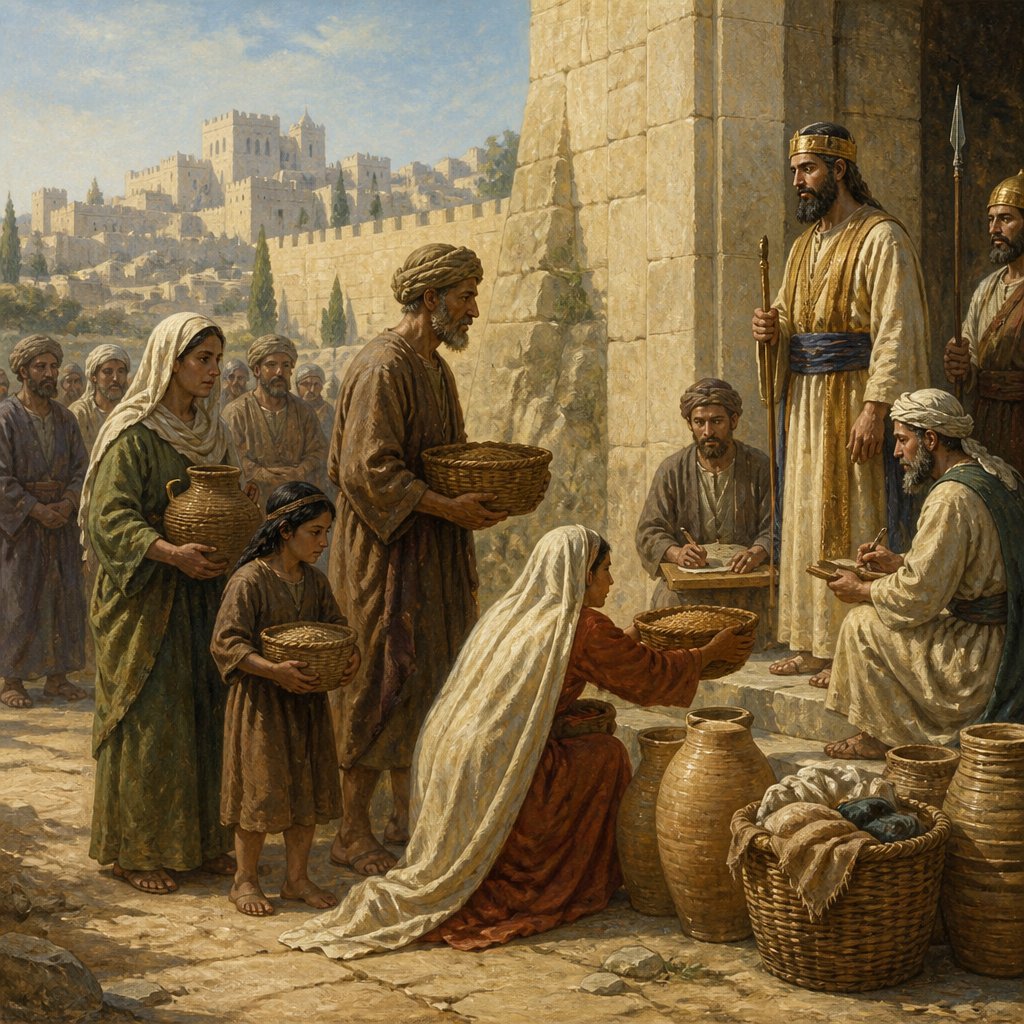
In the tapestry of Scripture, few passages illuminate the complexities of justice, mercy, and legacy as profoundly as 2 Chronicles 8:8: "But of their children, who were left after them in the land, whom the children of Israel consumed not, them did Solomon make to pay tribute until this day." At first glance, this verse may seem merely historical, relating to the political dynamics of Solomon’s reign. However, upon reflection, it offers deep spiritual insights that can guide our understanding of legacy, responsibility, and the impact of our actions on future generations.
The context of this verse unfolds during the height of King Solomon's rule, a time marked by prosperity and the wisdom of God. Solomon made crucial decisions that shaped not only Israel's present but also its future. The reference to the children left in the land suggests that while some nations were conquered and their people defeated, there was a remnant that remained. These remnants became a vital part of Solomon's kingdom, working under tribute, a form of tax or dues that ensured their subservience, which is indicative of the complexities of national and spiritual relationships.
In applying this verse to our lives today, we must consider the implications of leaving a legacy. Solomon's actions can be interpreted as an acknowledgment that the legacy of oppression and power dynamics extend beyond one's own lifetime. Even when the children of those conquered were not killed, they remained in a position of subjugation—demonstrating that the actions of one generation have repercussions on the next.
The narrative compels us to reflect on our current societal and interpersonal constructs. What are we leaving for those who come after us? Are we, as individuals and communities, perpetuating cycles of injustice, or are we actively seeking to dismantle them? Solomon’s decisions show an awareness of his environment and a calculated approach to governance. Likewise, we are called to be aware of the conditions that we create through our choices.
The act of making the remnant of the conquered pay tribute raises critical ethical questions. Are we assessing the value of human dignity? Solomon, in his wisdom, was tasked with maintaining peace and order. However, is peace achieved through subjugation without justice? Our actions, sometimes shrouded in the guise of governance and societal order, may inadvertently contribute to a cycle that marginalizes others.
Moreover, this verse bearing testimony to the children of those who were consumed reminds us of the generational scars that linger in communities today. They echo the cries for justice and fair treatment that resound throughout history, calling on believers to engage actively in healing and reconciliation. Just as Solomon’s governance held a responsibility toward those under his rule, so too do we hold responsibility for those left in the margins of society today. As Christians, we are mandated to love our neighbors, uphold justice, and work towards equity with a heart reminiscent of Christ’s love.
Solomon’s tribute is a symbol of both burden and bounty. For those in tribute, it could be a symbol of oppression, but for Solomon, it was a means to sustain and enhance his own reign. Here lies the paradox of our contemporary experience; our actions impact not just our immediate environment but often the broader community. Are we contributing to the bondage of one another or are we working towards liberation and empowerment?
In closing, let us ponder our legacy thoughtfully. Solomon is remembered for his wisdom, yet within that legacy lies a narrative of complexity. As we navigate our lives, let us strive to leave a legacy of love, justice, and mercy. May we pay tribute only to that which empowers and uplifts rather than oppresses and diminishes. Let us engage in the work of standing with the marginalized, ensuring that our influence leads to a future that resonates with hope, compassion, and equity. Amen.
Get our apps


Artwork for 2 Chronicles 8:8

2 Chronicles 8:8 - "But of their children, who were left after them in the land, whom the children of Israel consumed not, them did Solomon make to pay tribute until this day."
"But of their children, who were left after them in the land, whom the children of Israel consumed not, them did Solomon make to pay tribute until this day." - 2 Chronicles 8:8

1 Chronicles 2:8 - "And the sons of Ethan; Azariah."

2 Chronicles 11:8 - "And Gath, and Mareshah, and Ziph,"

1 Chronicles 8:2 - "Nohah the fourth, and Rapha the fifth."

2 Chronicles 8:3 - "And Solomon went to Hamath-zobah, and prevailed against it."

2 Chronicles 24:8 - "And at the king's commandment they made a chest, and set it without at the gate of the house of the LORD."

"And the sons of Ethan; Azariah." - 1 Chronicles 2:8

"And Gath, and Mareshah, and Ziph," - 2 Chronicles 11:8

2 Chronicles 8:17 - "¶ Then went Solomon to Ezion-geber, and to Eloth, at the sea side in the land of Edom."

2 Chronicles 8:2 - "That the cities which Huram had restored to Solomon, Solomon built them, and caused the children of Israel to dwell there."

2 Chronicles 20:8 - "And they dwelt therein, and have built thee a sanctuary therein for thy name, saying,"

2 Chronicles 31:8 - "And when Hezekiah and the princes came and saw the heaps, they blessed the LORD, and his people Israel."

2 Chronicles 8:4 - "And he built Tadmor in the wilderness, and all the store cities, which he built in Hamath."

2 Chronicles 12:8 - "Nevertheless they shall be his servants; that they may know my service, and the service of the kingdoms of the countries."

2 Chronicles 21:8 - "¶ In his days the Edomites revolted from under the dominion of Judah, and made themselves a king."

"Nohah the fourth, and Rapha the fifth." - 1 Chronicles 8:2

2 Kings 8:23 - "And the rest of the acts of Joram, and all that he did, are they not written in the book of the chronicles of the kings of Judah?"

2 Chronicles 8:15 - "And they departed not from the commandment of the king unto the priests and Levites concerning any matter, or concerning the treasures."

2 Chronicles 18:8 - "And the king of Israel called for one of his officers, and said, Fetch quickly Micaiah the son of Imla."

2 Chronicles 8:7 - "¶ As for all the people that were left of the Hittites, and the Amorites, and the Perizzites, and the Hivites, and the Jebusites, which were not of Israel,"

2 Chronicles 5:8 - "For the cherubims spread forth their wings over the place of the ark, and the cherubims covered the ark and the staves thereof above."

2 Chronicles 27:8 - "He was five and twenty years old when he began to reign, and reigned sixteen years in Jerusalem."

2 Chronicles 8:10 - "And these were the chief of king Solomon's officers, even two hundred and fifty, that bare rule over the people."

2 Chronicles 8:1 - "And it came to pass at the end of twenty years, wherein Solomon had built the house of the LORD, and his own house,"

2 Chronicles 8:12 - "¶ Then Solomon offered burnt offerings unto the LORD on the altar of the LORD, which he had built before the porch,"

2 Kings 13:8 - "¶ Now the rest of the acts of Jehoahaz, and all that he did, and his might, are they not written in the book of the chronicles of the kings of Israel?"

2 Chronicles 8:5 - "Also he built Beth-horon the upper, and Beth-horon the nether, fenced cities, with walls, gates, and bars;"

2 Chronicles 26:8 - "And the Ammonites gave gifts to Uzziah: and his name spread abroad even to the entering in of Egypt; for he strengthened himself exceedingly."

"And Solomon went to Hamath-zobah, and prevailed against it." - 2 Chronicles 8:3