The Thorn in the Flesh: Embracing Weakness for Strength
“For this thing I besought the Lord thrice, that it might depart from me.” — 2 Corinthians 12:8
In 2 Corinthians 12:8, we read the words of the Apostle Paul: "For this thing I besought the Lord thrice, that it might depart from me." This powerful verse encapsulates so much of the human experience—our struggles, challenges, and the moments we wish to escape pain and hardship. Paul, a man of extraordinary faith and capabilities, faced an affliction he termed a “thorn in the flesh.” Despite his impressive credentials, intellect, and contributions to the early church, Paul was not exempt from suffering.
When we first encounter Paul's plea to the Lord, it's important to realize that it reveals an essential aspect of our spiritual walk: the act of beseeching or pleading with God. Paul did not simply ask God one time for relief; instead, he sought the Lord earnestly, thrice, indicating that he was grappling with something deeply troubling—something that affected him profoundly, physically, or perhaps emotionally. This resonates with us today as we face our own thorns. Whether they manifest as chronic illness, relational strife, financial uncertainty, or spiritual dryness, we have all encountered hardships that prompt us to cry out to the Lord, yearning for Him to alleviate our burdens.
Paul's response to suffering is a model for how we, too, might approach our thorns. The persistent nature of his prayers underscores a critical truth: it is not wrong to seek alleviation from what troubles us. In fact, it is a part of our relationship with God to make our requests known to Him. However, there is a deeper lesson tucked within this plea that invites us to reflect on the purpose of pain and the responses we receive from God.
Our expectations of how God should respond to our requests can often lead to disappointment. Paul’s experience reminds us that God does not always remove our thorns; instead, He may choose to offer us grace to endure them. The Lord's response to Paul, as recorded later in the chapter, was powerful. He spoke unto Paul, saying, "My grace is sufficient for thee: for my strength is made perfect in weakness" (2 Corinthians 12:9). It was through this divine communication that Paul discovered the transformative power of God’s grace. In our weakness, we may find God’s strength becomes our anchor; His grace suffices where our strength fails.
Thus, the very aspect of our existence that we wish to cast away—the thorn—can become a catalyst for deeper communion with God and personal growth. It invites us to rely on Him fully, recognizing that our strength is a facade without His empowerment. As Paul continued, he professed, "Most gladly therefore will I rather glory in my infirmities, that the power of Christ may rest upon me" (2 Corinthians 12:9). In this, he reveals the paradox that in admitting our weaknesses, we are met with Christ's power in more profound ways than we could conceive.
As we navigate our own seasons of struggle, let us embrace our thorns as unique opportunities to experience God’s grace. Let us bring our requests before Him, honest and raw, understanding that His response may not always align with our expectations. It may instead invite us to dig deeper into faith, leaning on God for strength. In the intricate design of our lives, pain and purpose often intermingle, working together for our good and His glory.
In closing, remember that when God says, "My grace is sufficient for thee," it is a declaration of His unfailing love and support. Whether He removes the thorn or grants you strength to endure it, trust in His goodness. This is the essence of faith; seeking Him amidst our struggles, recognizing that our weaknesses reveal the beautifully divine strength of our Lord.
Get our apps


Artwork for 2 Corinthians 12:8

2 Corinthians 12:8 - "For this thing I besought the Lord thrice, that it might depart from me."

"For this thing I besought the Lord thrice, that it might depart from me." - 2 Corinthians 12:8

"For this thing I besought the Lord thrice, that it might depart from me." - 2 Corinthians 12:8

"For this thing I besought the Lord thrice, that it might depart from me." - 2 Corinthians 12:8

2 Corinthians 8:12 - "For if there be first a willing mind, it is accepted according to that a man hath, and not according to that he hath not."

1 corinthians 2:12

1 corinthians 2:12

2 Corinthians 12:9

2 Corinthians 12:7

2 Corinthians 12:7

1 corinthians 2:12

1 corinthians 2:12
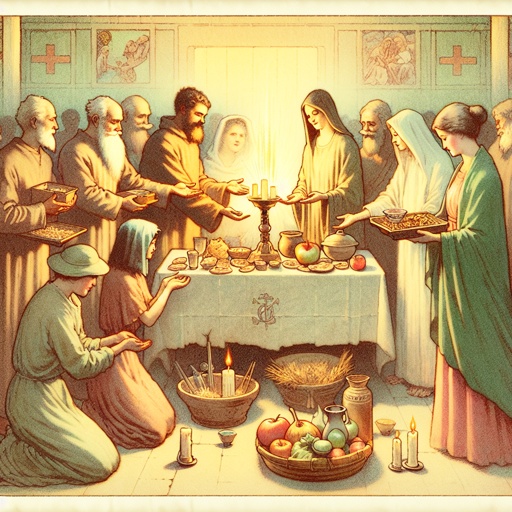
2 Corinthians 8:12 For if there is first a willing mind, it is accepted according to what one has, and not according to what he does not have.

2 Corinthians 8:12 For if there is first a willing mind, it is accepted according to what one has, and not according to what he does not have.

2 Corinthians 8:12 If the willingness is there, the gift is acceptable according to what one has, not according to what one does not have.

2 Corinthians 12:2-4 – Paul’s vision of the third heaven.

2 Corinthians 12:9

2 Corinthians 12:9

2 Corinthians 12:7

2 Corinthians 12:7

"For if there be first a willing mind, it is accepted according to that a man hath, and not according to that he hath not." - 2 Corinthians 8:12

1 Corinthians 12:8 - "For to one is given by the Spirit the word of wisdom; to another the word of knowledge by the same Spirit;"

2 Corinthians 12:9-10

2 Corinthians 8:8 - "I speak not by commandment, but by occasion of the forwardness of others, and to prove the sincerity of your love."

2 Corinthians 13:12 - "Greet one another with an holy kiss."

1 Corinthians 8:12 - "But when ye sin so against the brethren, and wound their weak conscience, ye sin against Christ."

2 Corinthians 4:12 - "So then death worketh in us, but life in you."

2 Corinthians 12:12 - "Truly the signs of an apostle were wrought among you in all patience, in signs, and wonders, and mighty deeds."

2 Corinthians 3:8 - "How shall not the ministration of the spirit be rather glorious?"

2 Corinthians 2:8 - "Wherefore I beseech you that ye would confirm your love toward him."