What does 2 Corinthians 12:8 mean?
“For this thing I besought the Lord thrice, that it might depart from me.” — 2 Corinthians 12:8
“2 Corinthians 12:8” in the King James Version reads, “For this thing I besought the Lord thrice, that it might depart from me.” In a single sentence Paul opens a window into the hidden interior of apostolic life: not triumph without strain, but faith under pressure; not constant relief, but prayer offered in weakness; not a man above need, but a servant who must “besought the Lord” like any other believer.
The immediate context is Paul’s defense of his ministry to the Corinthians, who had been impressed by outward show and troubled by “false apostles.” In the chapter just before, he recounts “infirmities” and sufferings rather than achievements, and in chapter 12 he speaks (reluctantly) of extraordinary spiritual privileges, including being “caught up into paradise” and hearing “unspeakable words.” Yet those high revelations are deliberately set beside a humiliating counterweight: “there was given to me a thorn in the flesh, the messenger of Satan to buffet me.” Verse 8 sits right in the middle of that tension. Paul has received something lofty, and he also bears something painful. His prayer “that it might depart” is the honest reaction of a man who knows both God’s power and his own limits.
The verse’s main theme is persevering prayer in the face of persistent affliction. “For this thing” points back to the thorn, whatever its exact form. Scripture does not specify it in medical or circumstantial terms, and that restraint is itself significant: the thorn becomes representative of the many forms of ongoing trial that believers might carry. The phrase “I besought the Lord” is more than a casual request; it conveys pleading, entreaty, and dependence. Paul, who had seen remarkable deliverances, does not treat suffering as fate or as something to be managed merely by discipline. He takes it to “the Lord,” affirming that Christ rules over affliction and that the proper first response is communion with him.
The “thrice” is richly suggestive within biblical patterns and Christian memory. It communicates sincerity and earnestness: Paul returned again and again with the same burden, not once, not in passing, but repeatedly. It also echoes other decisive “threes” in Scripture, especially the Lord Jesus in Gethsemane, who prayed repeatedly in anguish. Without forcing a one-to-one equation, the resonance is hard to miss: even the most faithful may ask for the cup to pass, and repeated prayer is not unbelief but a form of faithful wrestling. At the same time, “thrice” may hint at completeness rather than arithmetic alone: Paul sought God fully about it, and the matter was brought to a spiritual conclusion, not by the departure of the thorn but by the Lord’s answer that follows in the next verse.
Symbolically, the “thorn in the flesh” suggests something sharp, close, and continual—an irritation that cannot be ignored because it is not far away but “in the flesh,” touching the daily experience of life. Thorns in Scripture often recall the curse and the hardships of a fallen world, and here the thorn’s purpose is also stated in the surrounding text: “lest I should be exalted above measure.” The symbolism points to an instrument of humility. The irony is that the very man who had been granted surpassing revelations is kept low by an ongoing pain. Verse 8 shows Paul’s initial desire is relief, which is natural; but the larger story reveals that God may sometimes preserve a thorn to preserve the soul.
The wording also carries important theological weight in its implied answer. Paul does not address an impersonal force; he “besought the Lord,” treating Christ not only as Savior but as sovereign and sufficient helper. The verse teaches that believers may rightly ask for affliction to depart. There is no rebuke in the verse for praying for deliverance; indeed, Paul does it. Yet its placement prepares the reader to see that God’s will may be different from immediate removal. This is not a denial of God’s goodness; it is a deeper disclosure of how goodness operates—sometimes by changing circumstances, sometimes by changing the sufferer’s strength, perspective, and dependence.
In significance, 2 Corinthians 12:8 is a portrait of the Christian life where prayer is not merely a pathway out of trouble but also a pathway into the meaning of trouble. It dignifies the believer’s plea for relief, it validates repeated supplication, and it sets the stage for the paradox that defines the passage: that God’s power is most clearly displayed not when weakness is erased, but when grace sustains weakness. Paul’s “thrice” besought prayer stands as a testimony that even unanswered requests—unanswered in the way we ask—can be answered with something better, namely a clearer apprehension of the Lord’s sufficiency, and a ministry shaped not by self-exaltation but by dependence.
Get our apps


Artwork for 2 Corinthians 12:8

2 Corinthians 12:8 - "For this thing I besought the Lord thrice, that it might depart from me."

"For this thing I besought the Lord thrice, that it might depart from me." - 2 Corinthians 12:8

"For this thing I besought the Lord thrice, that it might depart from me." - 2 Corinthians 12:8

"For this thing I besought the Lord thrice, that it might depart from me." - 2 Corinthians 12:8

2 Corinthians 8:12 - "For if there be first a willing mind, it is accepted according to that a man hath, and not according to that he hath not."

1 corinthians 2:12

1 corinthians 2:12

2 Corinthians 12:9

2 Corinthians 12:7

2 Corinthians 12:7

1 corinthians 2:12

1 corinthians 2:12
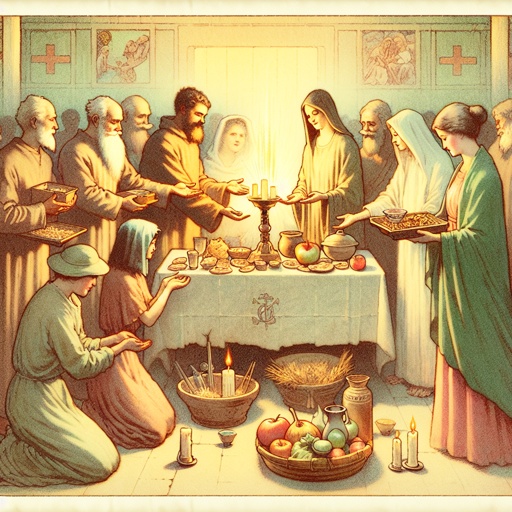
2 Corinthians 8:12 For if there is first a willing mind, it is accepted according to what one has, and not according to what he does not have.

2 Corinthians 8:12 For if there is first a willing mind, it is accepted according to what one has, and not according to what he does not have.

2 Corinthians 8:12 If the willingness is there, the gift is acceptable according to what one has, not according to what one does not have.

2 Corinthians 12:2-4 – Paul’s vision of the third heaven.

2 Corinthians 12:9

2 Corinthians 12:9

2 Corinthians 12:7

2 Corinthians 12:7

"For if there be first a willing mind, it is accepted according to that a man hath, and not according to that he hath not." - 2 Corinthians 8:12

1 Corinthians 12:8 - "For to one is given by the Spirit the word of wisdom; to another the word of knowledge by the same Spirit;"
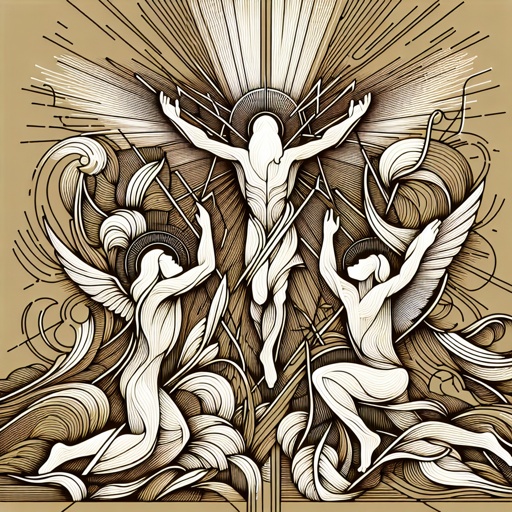
2 Corinthians 12:9-10

2 Corinthians 8:8 - "I speak not by commandment, but by occasion of the forwardness of others, and to prove the sincerity of your love."

2 Corinthians 13:12 - "Greet one another with an holy kiss."

1 Corinthians 8:12 - "But when ye sin so against the brethren, and wound their weak conscience, ye sin against Christ."

2 Corinthians 4:12 - "So then death worketh in us, but life in you."

2 Corinthians 12:12 - "Truly the signs of an apostle were wrought among you in all patience, in signs, and wonders, and mighty deeds."

2 Corinthians 3:8 - "How shall not the ministration of the spirit be rather glorious?"

2 Corinthians 2:8 - "Wherefore I beseech you that ye would confirm your love toward him."