The Legacy of Jeroboam: A Cautionary Tale
“And he did that which was evil in the sight of the LORD: he departed not from all the sins of Jeroboam the son of Nebat, who made Israel to sin.” — 2 Kings 14:24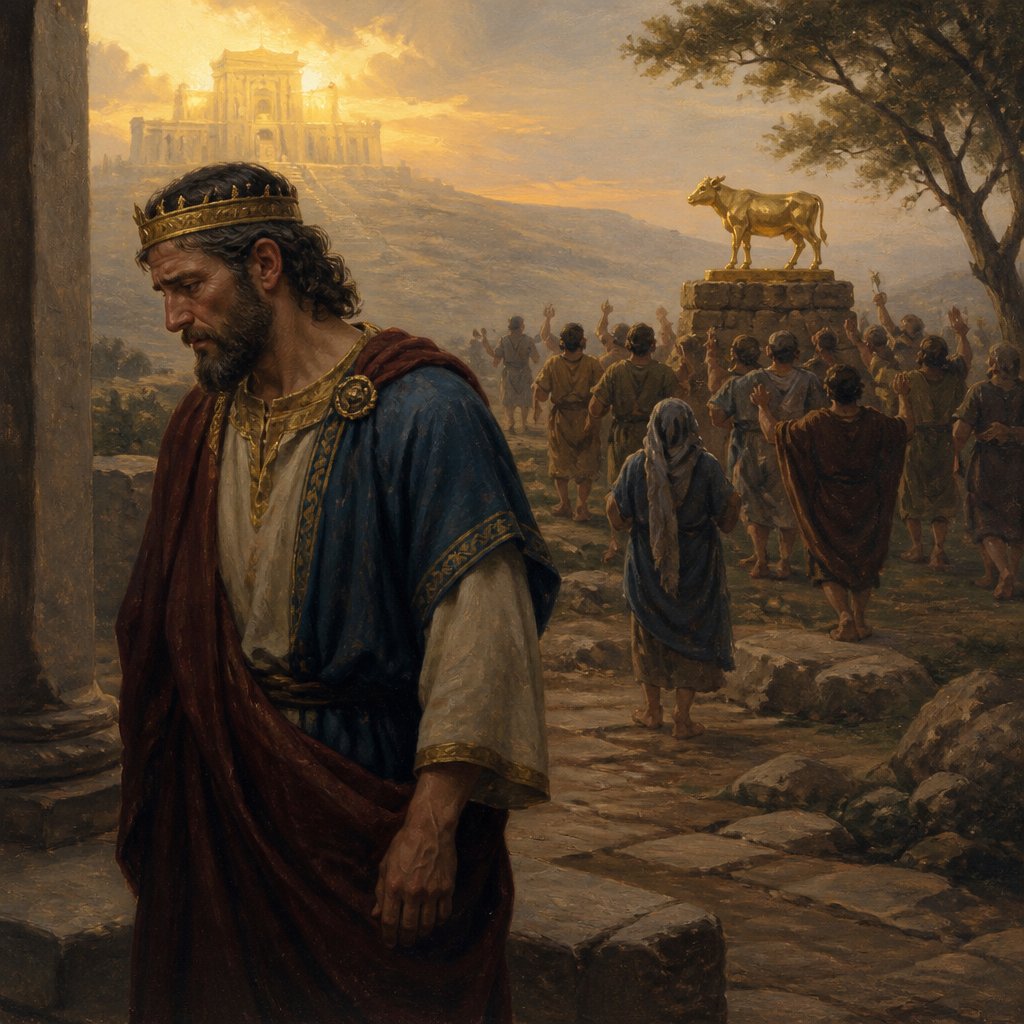
The narrative of 2 Kings 14:24 serves as a profound reminder of the impact of legacy, both seen and unseen. The verse states, "And he did that which was evil in the sight of the LORD: he departed not from all the sins of Jeroboam the son of Nebat, who made Israel to sin." Here, we observe the King of Israel, whose reign is marked by a significant moral failure, choosing to adhere to the sinful patterns established by Jeroboam—a king who set a precedent that led an entire nation astray.
To understand the gravity of this verse, we must consider the historical backdrop of Jeroboam's reign. When Solomon's reign ended, Jeroboam was appointed king over the northern tribes of Israel. However, he feared that his subjects would return to the southern kingdom of Judah to worship at the temple in Jerusalem, thereby jeopardizing his political power. In an attempt to solidify his reign, Jeroboam established alternative places of worship, creating golden calves in Bethel and Dan, and instigating idolatry among the Israelites. This tragic decision not only distanced the people from the true worship of Yahweh but also laid down a foundation of sin that subsequent generations found difficult to embrace.
The phrase "did that which was evil in the sight of the LORD" is a somber indictment. In the eyes of God, sin is not a trivial matter, and the actions of this king are met with divine disapproval. This brings to light the notion of accountability and the perennial impact of our choices. Each decision we make, particularly those that stray from God’s decrees, creates ripples that can affect not just ourselves but generations to come. The sins of Jeroboam did not merely evaporate; they became the cornerstone upon which many future kings built a heritage laden with disobedience and rebellion against God.
As believers, we must earnestly introspect about the legacies we are forming through our actions today. In a world saturated with moral ambiguity, how often do we find ourselves unconsciously perpetuating patterns of sin—whether through unchecked desires, societal compromises, or familial traditions? The challenge extends beyond identifying and resisting innate tendencies; it involves a proactive stance to root out sin in our lives, lest we leave behind a legacy of pain and struggle for our descendants.
Furthermore, this scripture encourages us to hold each other accountable in faith communities. When we see certain behaviors that mirror the sins of Jeroboam, we ought to confront them with love, praying for discernment and guiding our brethren towards repentance. There is much to learn from the past, and it would be unwise to ignore the darker shades of our shared history.
In our walk with Christ, we are called not to depart from Him. Just as Jeroboam led Israel away from true worship, we too can be led away by contemporary distractions and false gods that promise fulfillment yet lead to spiritual laziness. The good news is that redemption is a cornerstone of our faith. Recognizing the sins we may have incorporated into our lives is the first step; seeking forgiveness and aligning with God’s ways is the next.
As we meditate on 2 Kings 14:24, let us ask ourselves profound questions: What legacy are we leaving for future generations? Are there Jeroboam-like influences in our lives that need to be eradicated? Above all, we must remember God’s commitment to grace. He invites us, as wayward people, to return to His embrace, leaving behind the sins of our past just as we lead others away from them and towards the way, the truth, and the life found in Christ.
Get our apps


Artwork for 2 Kings 14:24

2 Kings 14:24 - "And he did that which was evil in the sight of the LORD: he departed not from all the sins of Jeroboam the son of Nebat, who made Israel to sin."
"And he did that which was evil in the sight of the LORD: he departed not from all the sins of Jeroboam the son of Nebat, who made Israel to sin." - 2 Kings 14:24

2 Kings 24:14 - "And he carried away all Jerusalem, and all the princes, and all the mighty men of valour, even ten thousand captives, and all the craftsmen and smiths: none remained, save the poorest sort of the people of the land."

2 kings 6:24

2 Kings 24:5 - "¶ Now the rest of the acts of Jehoiakim, and all that he did, are they not written in the book of the chronicles of the kings of Judah?"

2 Kings 14:18 - "And the rest of the acts of Amaziah, are they not written in the book of the chronicles of the kings of Judah?"

1 Kings 14:24 - "And there were also sodomites in the land: and they did according to all the abominations of the nations which the LORD cast out before the children of Israel."

2 Kings 24:11 - "And Nebuchadnezzar king of Babylon came against the city, and his servants did besiege it."

2 Kings 24:10 - "¶ At that time the servants of Nebuchadnezzar king of Babylon came up against Jerusalem, and the city was besieged."

2 Kings 14:29 - "And Jeroboam slept with his fathers, even with the kings of Israel; and Zachariah his son reigned in his stead."

2 Kings 12:14 - "But they gave that to the workmen, and repaired therewith the house of the LORD."

2 Kings 13:24 - "So Hazael king of Syria died; and Ben-hadad his son reigned in his stead."

2 Kings 14:16 - "And Jehoash slept with his fathers, and was buried in Samaria with the kings of Israel; and Jeroboam his son reigned in his stead."

Genesis 14:17–24 tells the story of a meeting between Abram and two kings. Returning as the victor after having defeated the eastern kings and recapturing all their plunder, Abram is met by the king of Sodom and by Melchizedek, the mysterious king of Salem.

2 Kings 24:19 - "And he did that which was evil in the sight of the LORD, according to all that Jehoiakim had done."

2 Kings 24:6 - "So Jehoiakim slept with his fathers: and Jehoiachin his son reigned in his stead."

2 Kings 14:14 - "And he took all the gold and silver, and all the vessels that were found in the house of the LORD, and in the treasures of the king's house, and hostages, and returned to Samaria."

2 Kings 24:17 - "¶ And the king of Babylon made Mattaniah his father's brother king in his stead, and changed his name to Zedekiah."

2 Kings 24:9 - "And he did that which was evil in the sight of the LORD, according to all that his father had done."

2 Kings 14:22 - "He built Elath, and restored it to Judah, after that the king slept with his fathers."

2 Kings 6:24 - "¶ And it came to pass after this, that Ben-hadad king of Syria gathered all his host, and went up, and besieged Samaria."

2 Kings 14:12 - "And Judah was put to the worse before Israel; and they fled every man to their tents."
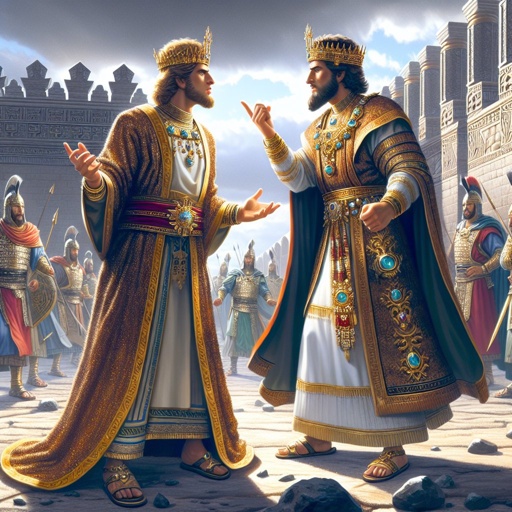
2 Kings 14:15 - "¶ Now the rest of the acts of Jehoash which he did, and his might, and how he fought with Amaziah king of Judah, are they not written in the book of the chronicles of the kings of Israel?"

2 Kings 24:4 - "And also for the innocent blood that he shed: for he filled Jerusalem with innocent blood; which the LORD would not pardon."

2 Kings 14:20 - "And they brought him on horses: and he was buried at Jerusalem with his fathers in the city of David."

"And the rest of the acts of Amaziah, are they not written in the book of the chronicles of the kings of Judah?" - 2 Kings 14:18

2 Kings 2:24 - "And he turned back, and looked on them, and cursed them in the name of the LORD. And there came forth two she bears out of the wood, and tare forty and two children of them."

2 Kings 8:24 - "And Joram slept with his fathers, and was buried with his fathers in the city of David: and Ahaziah his son reigned in his stead."

2 Kings 14:1 - "In the second year of Joash son of Jehoahaz king of Israel reigned Amaziah the son of Joash king of Judah."

2 Kings 25:14 - "And the pots, and the shovels, and the snuffers, and the spoons, and all the vessels of brass wherewith they ministered, took they away."