Seeking New Foundations: The Altar of Compromise
“And king Ahaz went to Damascus to meet Tiglath-pileser king of Assyria, and saw an altar that was at Damascus: and king Ahaz sent to Urijah the priest the fashion of the altar, and the pattern of it, according to all the workmanship thereof.” — 2 Kings 16:10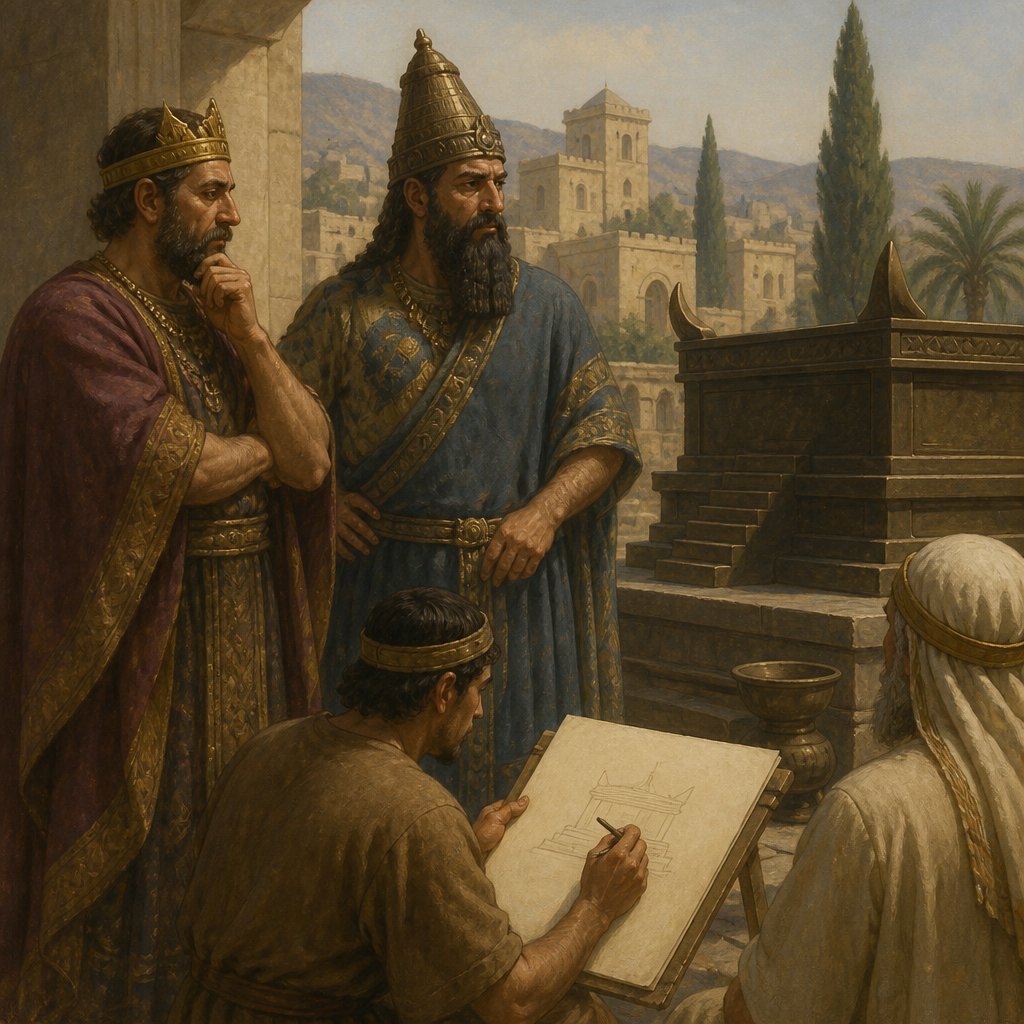
The narrative of 2 Kings 16:10 offers a glimpse into the life of King Ahaz, a ruler whose decisions set the trajectory for the nation of Judah during a time fraught with challenges. The verse reads: "And king Ahaz went to Damascus to meet Tiglath-pileser king of Assyria, and saw an altar that was at Damascus: and king Ahaz sent to Urijah the priest the fashion of the altar, and the pattern of it, according to all the workmanship thereof" (KJV). This profound moment reflects not just a physical journey but a spiritual shift that has much to teach us about faith, compromise, and the pursuit of what we consider 'better'.
King Ahaz was facing a crisis. As the king of Judah, he was surrounded by enemies and desperately sought security amid geopolitical turmoil. The kingdom of Israel was colluding with Syria against him, and the threat of invasion loomed large. Seeking a strategic alliance with Tiglath-pileser, the Assyrian king, Ahaz's visit to Damascus speaks to his desire for safety and expediency. However, one must consider the implications of this journey—not just politically but spiritually as well.
When King Ahaz arrived in Damascus, his attention was drawn to the altar there. It stood as a representation of a different faith, a different practice that worshiped foreign gods. In his desperation and blinded by the allure of Assyrian power, Ahaz made the fateful decision to replicate this altar back in Judah. He sent to Urijah the priest and provided the design, a detailed template following the workmanship of the foreign altar. This was not simply an architectural project, but a translation of his allegiance into a worship practice that was contrary to the worship of Yahweh, the God of Israel.
The decision of Ahaz serves as a stark reminder of the ease with which we can compromise our values under pressure. Often, when we are faced with adversity, our first instinct might be to seek solutions that align with worldly wisdom, rather than relying on the divine guidance God offers us. Ahaz saw the Assyrian altar not just as a structure, but as a symbol of strength and security—something he felt was lacking at home. Rather than consulting the God who had been his people’s protector throughout their history, he chose a path that ultimately led to the spiritual decline of Judah.
In our own lives, we face similar pressures, whether they be from societal norms, workplace expectations, or personal crises. The world often proposes alternatives that seem safer, more pragmatic. The temptation to conform—to build altars to success, recognition, or approval—can lead to tragic compromises. How often do we prioritize the urgent over the important? In pursuit of our own security and success, do we sacrifice our integrity, our faith, and the very principles that define us?
The actions of Ahaz remind us that every altar we build—whether of self-protection or of social acceptance—will demand our devotion. It becomes imperative to reflect on what we are endorsing in our lives. Are we erecting altars that resonate with our faith and commitment to God, or are we crafting substitutes that threaten to distract us from our true purpose?
The lesson here is not merely about the physical act of worship but a contemplation of our spiritual priorities. Returning to the foundational truths of Scripture and remaining rooted in God’s word is essential. As we navigate the complexities of life, we are encouraged to seek divine wisdom first, relying on God’s promises rather than ill-fated alliances that lead us astray.
In conclusion, let us pray for discernment in our own lives. May we not be swayed by the altars of this world. Instead, let us build our lives upon the rock that is Christ and choose paths that honor His sovereignty. Just as Ahaz turned away from the eternal for the temporary, may we be diligent to seek first the Kingdom of God and His righteousness, assured that all else will be added unto us (Matthew 6:33). Our faith must guide our choices—let us build altars unto the Lord where He alone receives our worship and allegiance.
Get our apps


Artwork for 2 Kings 16:10

2 Kings 16:10 - "¶ And king Ahaz went to Damascus to meet Tiglath-pileser king of Assyria, and saw an altar that was at Damascus: and king Ahaz sent to Urijah the priest the fashion of the altar, and the pattern of it, according to all the workmanship thereof."
"¶ And king Ahaz went to Damascus to meet Tiglath-pileser king of Assyria, and saw an altar that was at Damascus: and king Ahaz sent to Urijah the priest the fashion of the altar, and the pattern of it, according to all the workmanship thereof." - 2 Kings 16:10

2 Kings 10:16 - "And he said, Come with me, and see my zeal for the LORD. So they made him ride in his chariot."

Joshua 10:16 - "But these five kings fled, and hid themselves in a cave at Makkedah."

2 Kings 16:16 - "Thus did Urijah the priest, according to all that king Ahaz commanded."

2 Kings 3:16-19

2 Kings 16:19 - "¶ Now the rest of the acts of Ahaz which he did, are they not written in the book of the chronicles of the kings of Judah?"

1 Kings 10:16 - "¶ And king Solomon made two hundred targets of beaten gold: six hundred shekels of gold went to one target."

1 Kings 16:10 - "And Zimri went in and smote him, and killed him, in the twenty and seventh year of Asa king of Judah, and reigned in his stead."

2 Kings 14:16 - "And Jehoash slept with his fathers, and was buried in Samaria with the kings of Israel; and Jeroboam his son reigned in his stead."

2 Kings 3:10 - "And the king of Israel said, Alas! that the LORD hath called these three kings together, to deliver them into the hand of Moab!"

"And he said, Come with me, and see my zeal for the LORD. So they made him ride in his chariot." - 2 Kings 10:16

"But these five kings fled, and hid themselves in a cave at Makkedah." - Joshua 10:16

2 Kings 6:16 - "And he answered, Fear not: for they that be with us are more than they that be with them."

2 Kings 20:16 - "And Isaiah said unto Hezekiah, Hear the word of the LORD."

2 Kings 12:16 - "The trespass money and sin money was not brought into the house of the LORD: it was the priests'."

2 Chronicles 28:16 - "¶ At that time did king Ahaz send unto the kings of Assyria to help him."

2 Kings 21:10 - "¶ And the LORD spake by his servants the prophets, saying,"

2 Kings 10:28 - "Thus Jehu destroyed Baal out of Israel."

2 Kings 10:4 - "But they were exceedingly afraid, and said, Behold, two kings stood not before him: how then shall we stand?"

2 Kings 10:34 - "Now the rest of the acts of Jehu, and all that he did, and all his might, are they not written in the book of the chronicles of the kings of Israel?"

2 Kings 10:20 - "And Jehu said, Proclaim a solemn assembly for Baal. And they proclaimed it."

2 Kings 3:16 - "And he said, Thus saith the LORD, Make this valley full of ditches."

2 Kings 10:16-17 - "And he said, Come with me, and see my zeal for the Lord. So they made him ride in his chariot. And when he came to Samaria, he killed all who remained to Ahab in Samaria, till he had wiped them out, according to the word of the Lord that he spoke to Elijah."

2 Kings 16:1 - "In the seventeenth year of Pekah the son of Remaliah Ahaz the son of Jotham king of Judah began to reign."

2 Kings 16:8 - "And Ahaz took the silver and gold that was found in the house of the LORD, and in the treasures of the king's house, and sent it for a present to the king of Assyria."

"Thus did Urijah the priest, according to all that king Ahaz commanded." - 2 Kings 16:16

2 Kings 16:12 - "And when the king was come from Damascus, the king saw the altar: and the king approached to the altar, and offered thereon."

1 Kings 2:10 - "So David slept with his fathers, and was buried in the city of David."

2 Kings 10:26 - "And they brought forth the images out of the house of Baal, and burned them."