Divine Displacement: A Lesson from Samaria
“And the king of Assyria brought men from Babylon, and from Cuthah, and from Ava, and from Hamath, and from Sepharvaim, and placed them in the cities of Samaria instead of the children of Israel: and they possessed Samaria, and dwelt in the cities thereof.” — 2 Kings 17:24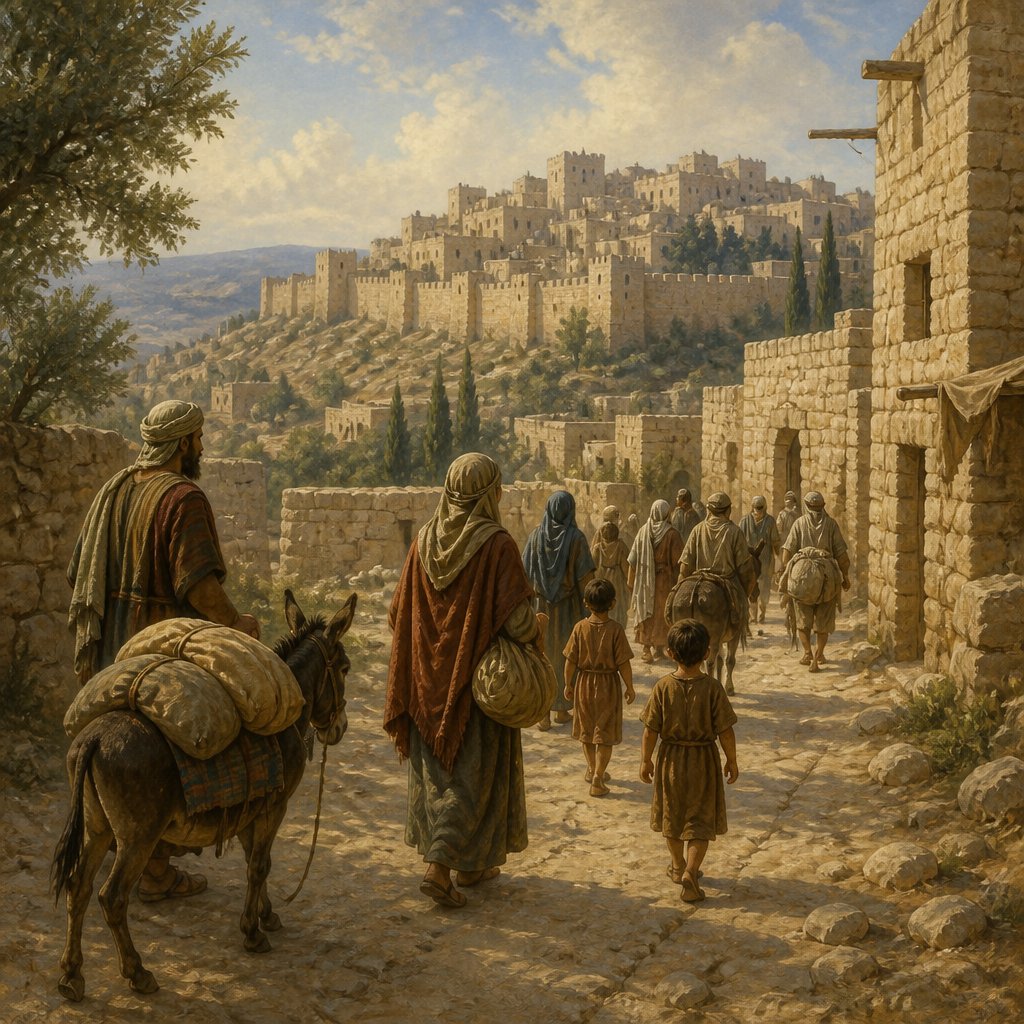
The passage from 2 Kings 17:24 reveals a striking moment in the history of Israel—a pivotal scene that highlights themes of consequences, identity, and divine sovereignty. The verse states:
"And the king of Assyria brought men from Babylon, and from Cuthah, and from Ava, and from Hamath, and from Sepharvaim, and placed them in the cities of Samaria instead of the children of Israel: and they possessed Samaria, and dwelt in the cities thereof." (2 Kings 17:24 KJV)
As we meditate on this verse, we must first understand its historical context. The land of Samaria had once been the heart of the northern kingdom of Israel, a place where God’s people gathered, worshiped, and lived out their covenant with Him. However, due to their persistent disobedience and idolatry, the children of Israel were subjected to the judgment of God. Assyria was raised up as an instrument of His discipline. The previous exile of the Israelites laid the groundwork for this profound event: the arrival of foreign peoples to take their place. Could there be a more poignant reminder of what can happen when God’s warnings are ignored?
In the aftermath of Israel’s fall, the king of Assyria imported five different groups of people from various locations—Babylon, Cuthah, Ava, Hamath, and Sepharvaim—each bringing their customs, gods, and practices into the land of Samaria. This act was not mere replacement or colonization; it was a direct result of the Israelites' failure to uphold their covenant with God. Their fields, homes, and cities became the new wards of those who worshipped unfamiliar gods, and thus the character of Samaria was forever altered.
Instituting this spiritual and cultural shift serves as a stark warning against complacency and the dangers of syncretism. When we allow the things of the world—practices, values, and ideologies that go against God's design—to infiltrate our lives, we invite confusion and spiritual decline. The people placed in Samaria did not come without their gods; rather, they brought with them a mixture of beliefs that polluted the faith of the remnant left behind. This leads us to a critical reflection: What are we allowing into our hearts and homes? Are we, too, replacing the presence of God with foreign idols that distract us from our walk with Him?
Furthermore, this passage compels us to contemplate the theme of identity. The people of Israel had a unique calling as God's chosen people; they were to reflect His character and bear witness to His truth. Yet, through their disobedience and disregard for His commandments, they lost claim to their land and identity. When we, as followers of Christ, stray from our commitment and invite worldly influences into our lives, we risk losing sight of who we are in Him. As 1 Peter 2:9 reminds us: "But ye are a chosen generation, a royal priesthood, an holy nation, a peculiar people; that ye should shew forth the praises of him who hath called you out of darkness into his marvelous light." (KJV)
Let us note how the Israelites’ rejection of God prompted Him to give them over to their desires—leading to their displacement and the occupation of their land. This reality isn't merely an ancient narrative; it's a timeless truth. God, in His sovereignty, permits consequences so we might recognize the depth of our need for Him. In the New Testament, we see this echoed by Paul in Romans 1, where he explains how God’s wrath is revealed as people exchange His truth for a lie and therefore surrender themselves to a debased mind.
As we study this verse in 2 Kings, let us examine our lives and consider what we have allowed to take residence in our hearts. The story of Samaria invites us to reclaim our identities, defend against spiritual decline, and earnestly seek to understand God’s word so that we may not fall into the trap that captured the Israelites. May we take heed, hold fast to our faith, and always strive to be set apart as God’s holy people, so that we may dwell securely in His truth and love.
Get our apps


Artwork for 2 Kings 17:24
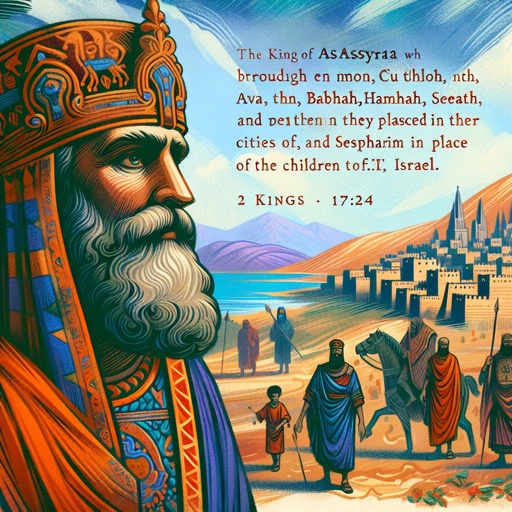
2 Kings 17:24 - "¶ And the king of Assyria brought men from Babylon, and from Cuthah, and from Ava, and from Hamath, and from Sepharvaim, and placed them in the cities of Samaria instead of the children of Israel: and they possessed Samaria, and dwelt in the cities thereof."
"¶ And the king of Assyria brought men from Babylon, and from Cuthah, and from Ava, and from Hamath, and from Sepharvaim, and placed them in the cities of Samaria instead of the children of Israel: and they possessed Samaria, and dwelt in the cities thereof." - 2 Kings 17:24

2 Kings 24:17 - "¶ And the king of Babylon made Mattaniah his father's brother king in his stead, and changed his name to Zedekiah."

2 kings 6:24

2 Kings 17:2 - "And he did that which was evil in the sight of the LORD, but not as the kings of Israel that were before him."

"¶ And the king of Babylon made Mattaniah his father's brother king in his stead, and changed his name to Zedekiah." - 2 Kings 24:17

2 Kings 19:17 - "Of a truth, LORD, the kings of Assyria have destroyed the nations and their lands,"

1 Kings 17:24 - "¶ And the woman said to Elijah, Now by this I know that thou art a man of God, and that the word of the LORD in thy mouth is truth."

2 Kings 24:5 - "¶ Now the rest of the acts of Jehoiakim, and all that he did, are they not written in the book of the chronicles of the kings of Judah?"

1 Kings 17:2 - "And the word of the LORD came unto him, saying,"

2 Kings 24:11 - "And Nebuchadnezzar king of Babylon came against the city, and his servants did besiege it."

2 Kings 17:2 - "And he did that which was evil in the sight of the LORD, but not as the kings of Israel that were before him."

Genesis 14:17–24 tells the story of a meeting between Abram and two kings. Returning as the victor after having defeated the eastern kings and recapturing all their plunder, Abram is met by the king of Sodom and by Melchizedek, the mysterious king of Salem.

2 Kings 24:10 - "¶ At that time the servants of Nebuchadnezzar king of Babylon came up against Jerusalem, and the city was besieged."

2 Kings 17:40 - "Howbeit they did not hearken, but they did after their former manner."

2 Kings 13:24 - "So Hazael king of Syria died; and Ben-hadad his son reigned in his stead."

2 Kings 17:8 - "And walked in the statutes of the heathen, whom the LORD cast out from before the children of Israel, and of the kings of Israel, which they had made."

2 Kings 21:17 - "¶ Now the rest of the acts of Manasseh, and all that he did, and his sin that he sinned, are they not written in the book of the chronicles of the kings of Judah?"

2 Samuel 17:24 - "Then David came to Mahanaim. And Absalom passed over Jordan, he and all the men of Israel with him."

2 Kings 24:19 - "And he did that which was evil in the sight of the LORD, according to all that Jehoiakim had done."

2 Kings 24:6 - "So Jehoiakim slept with his fathers: and Jehoiachin his son reigned in his stead."

2 Chronicles 24:17 - "Now after the death of Jehoiada came the princes of Judah, and made obeisance to the king. Then the king hearkened unto them."

2 Kings 17:17 - "And they caused their sons and their daughters to pass through the fire, and used divination and enchantments, and sold themselves to do evil in the sight of the LORD, to provoke him to anger."

2 Kings 24:9 - "And he did that which was evil in the sight of the LORD, according to all that his father had done."

"And he did that which was evil in the sight of the LORD, but not as the kings of Israel that were before him." - 2 Kings 17:2

"Of a truth, LORD, the kings of Assyria have destroyed the nations and their lands," - 2 Kings 19:17

2 Kings 6:24 - "¶ And it came to pass after this, that Ben-hadad king of Syria gathered all his host, and went up, and besieged Samaria."

2 Kings 17:19 - "Also Judah kept not the commandments of the LORD their God, but walked in the statutes of Israel which they made."

2 Kings 17:5 - "¶ Then the king of Assyria came up throughout all the land, and went up to Samaria, and besieged it three years."

2 Kings 24:4 - "And also for the innocent blood that he shed: for he filled Jerusalem with innocent blood; which the LORD would not pardon."