Standing Firm in the Face of Adversity
“And the king of Assyria sent Tartan and Rabsaris and Rab-shakeh from Lachish to king Hezekiah with a great host against Jerusalem. And they went up and came to Jerusalem. And when they were come up, they came and stood by the conduit of the upper pool, which is in the highway of the fuller’s field.” — 2 Kings 18:17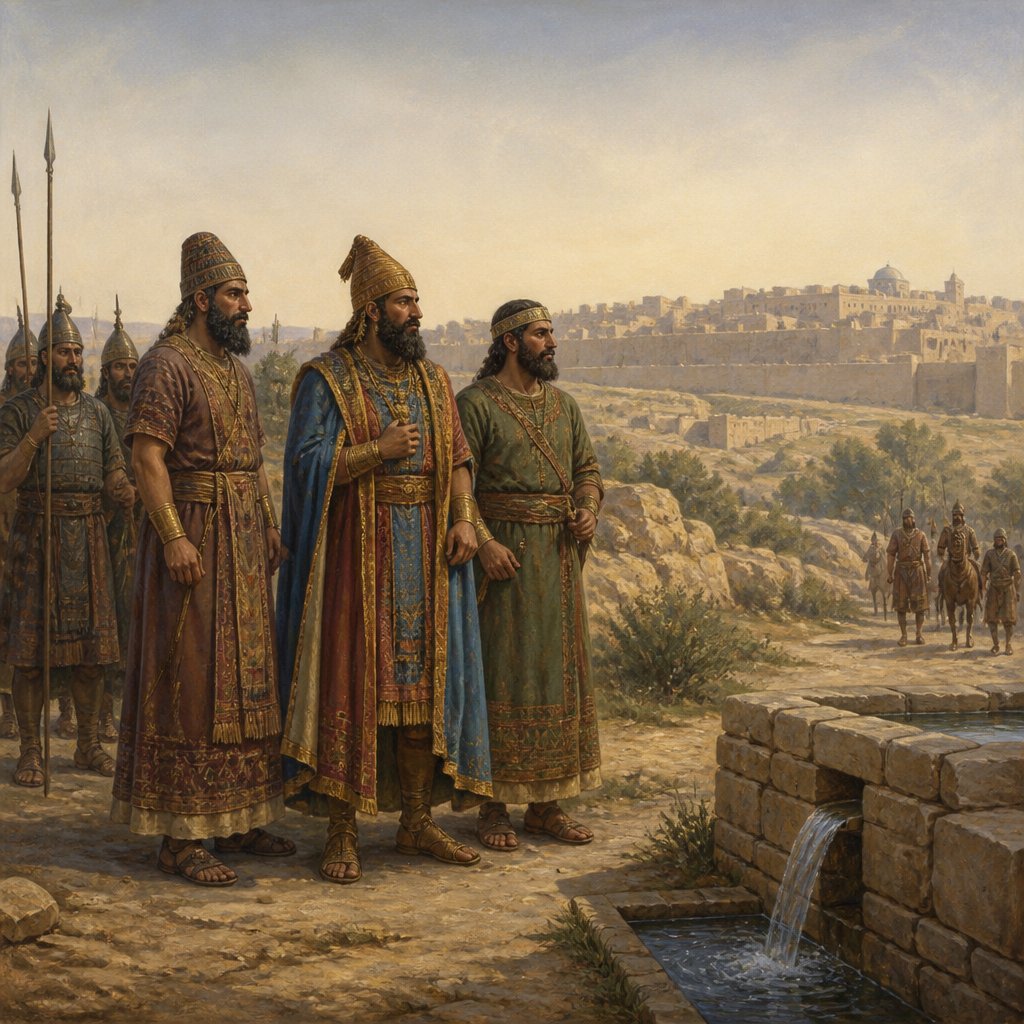
In 2 Kings 18:17, we encounter a moment of great tension and uncertainty in the life of King Hezekiah and the nation of Judah. The verse states: "And the king of Assyria sent Tartan and Rabsaris and Rabshakeh from Lachish to king Hezekiah with a great host against Jerusalem. And they went up and came to Jerusalem. And when they were come up, they came and stood by the conduit of the upper pool, which is in the highway of the fuller's field" (KJV). This passage captures not only the historical reality of ancient warfare but also offers profound spiritual insights that resonate throughout time.
### The Context of Conflict
At this point in history, Assyria was a dominant empire, exerting its power by invading kingdoms and instilling fear among its enemies. King Hezekiah had made significant reforms in Judah, turning the people back to the worship of Yahweh, but now they were faced with an overwhelming threat. The term "great host" signifies the magnitude of the Assyrian army—an intimidating force meant to instill fear. Hezekiah's faith and leadership were under siege; the very survival of his kingdom hung in the balance.
The location where the Assyrian envoys gathered—the conduit of the upper pool—was strategic. It was an aqueduct supplying water to Jerusalem, symbolizing both provision and the potential for vulnerability. Water is essential for life, and standing at this place, Rabshakeh, Tartan, and Rabsaris came to deliver a message intended to demoralize and intimidate Hezekiah and his people.
### The Leadership of Hezekiah
King Hezekiah's story is one of unwavering faith in God amidst dire circumstances. When faced with threats, he did not turn to alliances with Egypt or other nations for help. Instead, he turned his face toward the Lord. This reflects a crucial aspect of spiritual leadership: acknowledging our limitations and seeking divine intervention. Hezekiah knew only God could deliver Judah from this dire situation.
It is critical for believers today to take note of how Hezekiah navigated his crisis. Crisis reveals the strength of our faith; it drives us to choose between fear and faith, self-reliance or divine dependence. During our trials, we are often positioned at the conduit of our own upper pool, confronting the reality of our vulnerability. Will we crumble under pressure or rise in faith?
### The Voice of Fear
Rabshakeh, the chief advisor of the Assyrian king, wielded words as weapons. He spoke not just to intimidate but to dismantle the trust the people of Judah had in their God. "What confidence is this wherein thou trustest?" he taunted (2 Kings 18:19). This mirrors the voices we encounter in our own lives that challenge our faith. The enemy often uses ridicule, doubt, and fear to sow discord and lead us away from trusting in God's promises.
These voices can emerge through situations, people, or even our thoughts. It’s crucial to recognize that opposition often escalates when we are closest to a breakthrough. As we stand firm, we must remind ourselves of the promises of God, much like Hezekiah, who ultimately sought God's word and assurance through the prophet Isaiah.
### A Call to Prayer and Action
Faced with such an overwhelming situation, Hezekiah’s response was prayer and action. He spread out the letter from the Assyrians before the Lord (2 Kings 19:14) and sought divine counsel. If we can learn anything from Hezekiah, it's that we have the power to bring our fears and doubts before God in honest prayer. He listens, and in His presence, we find peace knowing that we are never alone in our battles.
As we reflect on this passage, may we be encouraged to stand firm in the face of adversity. Like Hezekiah, let us not yield to the threats and fears around us, but instead turn our hearts decisively towards God. Let us remember that every time we confront a challenge, we have the ultimate Warrior on our side, prepared to fight our battles when we place our trust in Him. In the quiet of prayer, amid the noise of opposition, we can discover that He is our refuge, strength, and deliverer.
Get our apps


Artwork for 2 Kings 18:17

2 Kings 18:17 - "¶ And the king of Assyria sent Tartan and Rabsaris and Rabshakeh from Lachish to king Hezekiah with a great host against Jerusalem. And they went up and came to Jerusalem. And when they were come up, they came and stood by the conduit of the upper pool, which is in the highway of the fuller's field."
"¶ And the king of Assyria sent Tartan and Rabsaris and Rabshakeh from Lachish to king Hezekiah with a great host against Jerusalem. And they went up and came to Jerusalem. And when they were come up, they came and stood by the conduit of the upper pool, which is in the highway of the fuller's field." - 2 Kings 18:17

2 Kings 17:18 - "Therefore the LORD was very angry with Israel, and removed them out of his sight: there was none left but the tribe of Judah only."

2 Kings 17:2 - "And he did that which was evil in the sight of the LORD, but not as the kings of Israel that were before him."

Revelation 17:18 - "And the woman which thou sawest is that great city, which reigneth over the kings of the earth."

2 Kings 14:18 - "And the rest of the acts of Amaziah, are they not written in the book of the chronicles of the kings of Judah?"

2 Kings 19:17 - "Of a truth, LORD, the kings of Assyria have destroyed the nations and their lands,"

1 Kings 18:17 - "¶ And it came to pass, when Ahab saw Elijah, that Ahab said unto him, Art thou he that troubleth Israel?"

2 Kings 1:18 - "Now the rest of the acts of Ahaziah which he did, are they not written in the book of the chronicles of the kings of Israel?"

1 Kings 17:2 - "And the word of the LORD came unto him, saying,"

"Therefore the LORD was very angry with Israel, and removed them out of his sight: there was none left but the tribe of Judah only." - 2 Kings 17:18
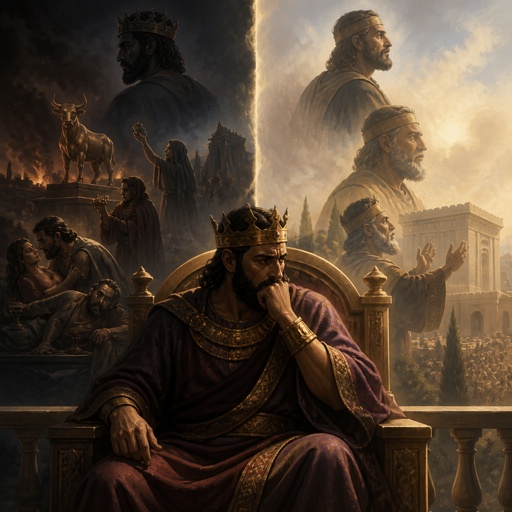
2 Kings 17:2 - "And he did that which was evil in the sight of the LORD, but not as the kings of Israel that were before him."

2 Kings 17:40 - "Howbeit they did not hearken, but they did after their former manner."

1 Kings 2:18 - "And Bath-sheba said, Well; I will speak for thee unto the king."

2 Kings 17:8 - "And walked in the statutes of the heathen, whom the LORD cast out from before the children of Israel, and of the kings of Israel, which they had made."

2 Kings 21:17 - "¶ Now the rest of the acts of Manasseh, and all that he did, and his sin that he sinned, are they not written in the book of the chronicles of the kings of Judah?"

2 Kings 18:18 - "And when they had called to the king, there came out to them Eliakim the son of Hilkiah, which was over the household, and Shebna the scribe, and Joah the son of Asaph the recorder."

2 Kings 8:18 - "And he walked in the way of the kings of Israel, as did the house of Ahab: for the daughter of Ahab was his wife: and he did evil in the sight of the LORD."

1 Kings 18:2 - "And Elijah went to shew himself unto Ahab. And there was a sore famine in Samaria."

2 Kings 18:15 - "And Hezekiah gave him all the silver that was found in the house of the LORD, and in the treasures of the king's house."

2 Kings 18:36 - "But the people held their peace, and answered him not a word: for the king's commandment was, saying, Answer him not."

2 Kings 17:17 - "And they caused their sons and their daughters to pass through the fire, and used divination and enchantments, and sold themselves to do evil in the sight of the LORD, to provoke him to anger."

2 Chronicles 17:18 - "And next him was Jehozabad, and with him an hundred and fourscore thousand ready prepared for the war."

"And he did that which was evil in the sight of the LORD, but not as the kings of Israel that were before him." - 2 Kings 17:2

"And the rest of the acts of Amaziah, are they not written in the book of the chronicles of the kings of Judah?" - 2 Kings 14:18

"Of a truth, LORD, the kings of Assyria have destroyed the nations and their lands," - 2 Kings 19:17

2 Kings 3:18 - "And this is but a light thing in the sight of the LORD: he will deliver the Moabites also into your hand."

2 Kings 18:33 - "Hath any of the gods of the nations delivered at all his land out of the hand of the king of Assyria?"

2 Kings 17:19 - "Also Judah kept not the commandments of the LORD their God, but walked in the statutes of Israel which they made."

2 Kings 18:5 - "He trusted in the LORD God of Israel; so that after him was none like him among all the kings of Judah, nor any that were before him."