Trust in the Face of Opposition
“And Rab-shakeh said unto them, Speak ye now to Hezekiah, Thus saith the great king, the king of Assyria, What confidence is this wherein thou trustest?” — 2 Kings 18:19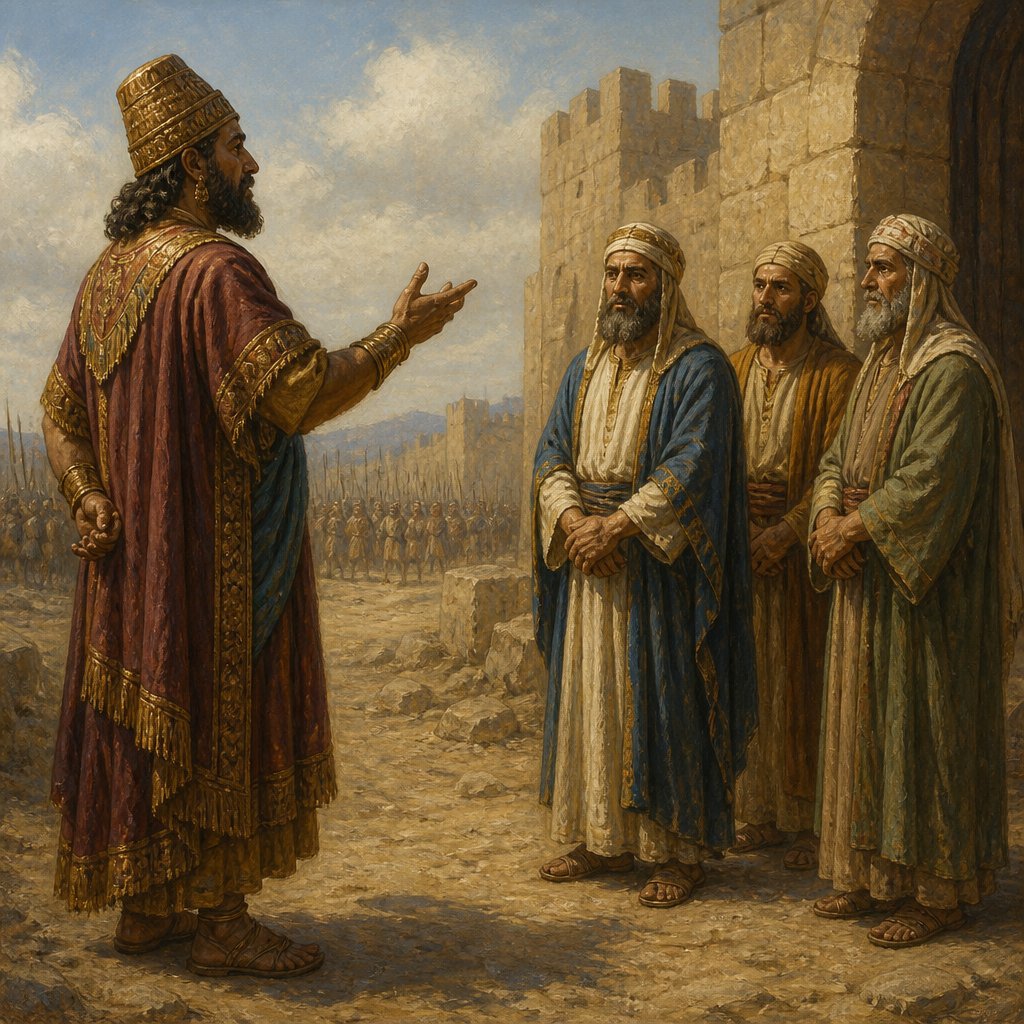
In moments of trial and tribulation, the question posed in 2 Kings 18:19 resonates deeply: "What confidence is this wherein thou trustest?" The tale of King Hezekiah, facing immense pressure from the Assyrian empire, paints a vivid picture of faith during adversity, which is applicable to believers even in contemporary times.
The context of 2 Kings depicts a critical juncture in Judah's history. Hezekiah, a king known for his reforms and dedication to God, finds himself at war against the formidable Assyrian king. Beseiged by Rabshakeh, a representative of Sennacherib, Hezekiah is confronted with mocking questions designed to provoke fear and doubt. Rabshakeh’s taunt, “What confidence is this wherein thou trustest?” is not merely a question; it’s an attempt to erode Hezekiah’s faith and the people’s spirit.
As I reflect on this verse, I am struck by the insidious nature of doubt. Rabshakeh’s question is a challenge to Hezekiah’s confidence in God, and this same challenge often emerges in our lives. When facing personal battles, whether illness, financial strain, or familial strife, the world echoes similar taunts, asking what we trust in. Like Hezekiah, how do we respond to such challenges?
Hezekiah did not respond to Rabshakeh’s mockery with armed rebellion or desperate negotiations; instead, he turned to the God of Israel with fervent prayer (2 Kings 19:1-4). This is a powerful lesson for us: confidence in God is not merely a declaration but an actionable trust that leads us to our knees in prayer. When the afflictions of life overwhelm us, do we turn to God as our first response? The world may question our trust, but in our quiet times of prayer, we find the strength to stand firmly in faith.
Rabshakeh's pretense of strength and power serves as a reminder that external forces can often present themselves as invincible. Yet, the true power lies not in the might of armies or the weight of threats but in the sovereignty of God. The Assyrians were a great empire, yet they were mere tools in the hands of the Almighty. Our assurance should not be rooted in what we can see; rather, it should be grounded in the unshakeable promise of God. As the Apostle Paul reminds us in 2 Corinthians 5:7, "For we walk by faith, not by sight."
The challenge of faith, encapsulated in Rabshakeh’s question, is a testament to the spiritual warfare that every believer encounters. Our faith will invariably be tested, and just like Hezekiah, we must remember that our confidence comes from the One who is greater than our battles. In Isaiah 26:3, we find a comforting promise: "Thou wilt keep him in perfect peace, whose mind is stayed on thee: because he trusteth in thee."
Moreover, the story of Hezekiah and Rabshakeh culminates in a profound demonstration of God’s power. When distressing news reaches Hezekiah, he does not succumb to despair. He presents his case before God, and the outcome is staggering—God intervenes and ultimately delivers His people from the Assyrians without a sword being drawn (2 Kings 19:32-36). This historical account illustrates not only the futility of opposing God but also reminds us that genuine confidence in Him can lead to miraculous outcomes.
In all our tribulations, let us remember to examine our trust. What confidence do we hold in our hearts? Is it in our circumstances, our abilities, or in God’s sovereign control? May we heed the words of Scripture and place our unwavering trust in the Creator of the heavens and the earth, for He alone is our refuge and strength. When faced with questions that seek to undermine our faith, let us answer with a firm resolve, rooted in the confidence that God is with us and for us.
Get our apps


Artwork for 2 Kings 18:19

2 Kings 18:19 - "And Rabshakeh said unto them, Speak ye now to Hezekiah, Thus saith the great king, the king of Assyria, What confidence is this wherein thou trustest?"

"And Rabshakeh said unto them, Speak ye now to Hezekiah, Thus saith the great king, the king of Assyria, What confidence is this wherein thou trustest?" - 2 Kings 18:19

2 Kings 19:18 - "And have cast their gods into the fire: for they were no gods, but the work of men's hands, wood and stone: therefore they have destroyed them."

1 Kings 19:1-18

2 Kings 19:2

2 Kings 19:2

2 Kings 19:2

2 Kings 19:17 - "Of a truth, LORD, the kings of Assyria have destroyed the nations and their lands,"

2 Kings 14:18 - "And the rest of the acts of Amaziah, are they not written in the book of the chronicles of the kings of Judah?"

2 Kings 12:19 - "¶ And the rest of the acts of Joash, and all that he did, are they not written in the book of the chronicles of the kings of Judah?"

2 Kings 3:16-19

2 Kings 16:19 - "¶ Now the rest of the acts of Ahaz which he did, are they not written in the book of the chronicles of the kings of Judah?"

2 Kings 19:5 - "So the servants of king Hezekiah came to Isaiah."

2 Kings 1:18 - "Now the rest of the acts of Ahaziah which he did, are they not written in the book of the chronicles of the kings of Israel?"

"And have cast their gods into the fire: for they were no gods, but the work of men's hands, wood and stone: therefore they have destroyed them." - 2 Kings 19:18

2 Kings 19:36 - "So Sennacherib king of Assyria departed, and went and returned, and dwelt at Nineveh."

2 Kings 19:13 - "Where is the king of Hamath, and the king of Arpad, and the king of the city of Sepharvaim, of Hena, and Ivah?"

1 Kings 2:18 - "And Bath-sheba said, Well; I will speak for thee unto the king."

2 Kings 18:18 - "And when they had called to the king, there came out to them Eliakim the son of Hilkiah, which was over the household, and Shebna the scribe, and Joah the son of Asaph the recorder."

2 Kings 8:18 - "And he walked in the way of the kings of Israel, as did the house of Ahab: for the daughter of Ahab was his wife: and he did evil in the sight of the LORD."

2 Kings 19:11 - "Behold, thou hast heard what the kings of Assyria have done to all lands, by destroying them utterly: and shalt thou be delivered?"

1 Kings 18:2 - "And Elijah went to shew himself unto Ahab. And there was a sore famine in Samaria."

2 Kings 18:15 - "And Hezekiah gave him all the silver that was found in the house of the LORD, and in the treasures of the king's house."

2 Kings 18:36 - "But the people held their peace, and answered him not a word: for the king's commandment was, saying, Answer him not."

1 Kings 19:18 - "Yet I have left me seven thousand in Israel, all the knees which have not bowed unto Baal, and every mouth which hath not kissed him."

2 Kings 19:2 - "And he sent Eliakim, which was over the household, and Shebna the scribe, and the elders of the priests, covered with sackcloth, to Isaiah the prophet the son of Amoz."

"And the rest of the acts of Amaziah, are they not written in the book of the chronicles of the kings of Judah?" - 2 Kings 14:18

2 Kings 19:34 - "For I will defend this city, to save it, for mine own sake, and for my servant David's sake."

2 Kings 3:18 - "And this is but a light thing in the sight of the LORD: he will deliver the Moabites also into your hand."

"Of a truth, LORD, the kings of Assyria have destroyed the nations and their lands," - 2 Kings 19:17