Trusting in the Unseen: A Lesson from Hezekiah's Time
“How then wilt thou turn away the face of one captain of the least of my master’s servants, and put thy trust on Egypt for chariots and for horsemen?” — 2 Kings 18:24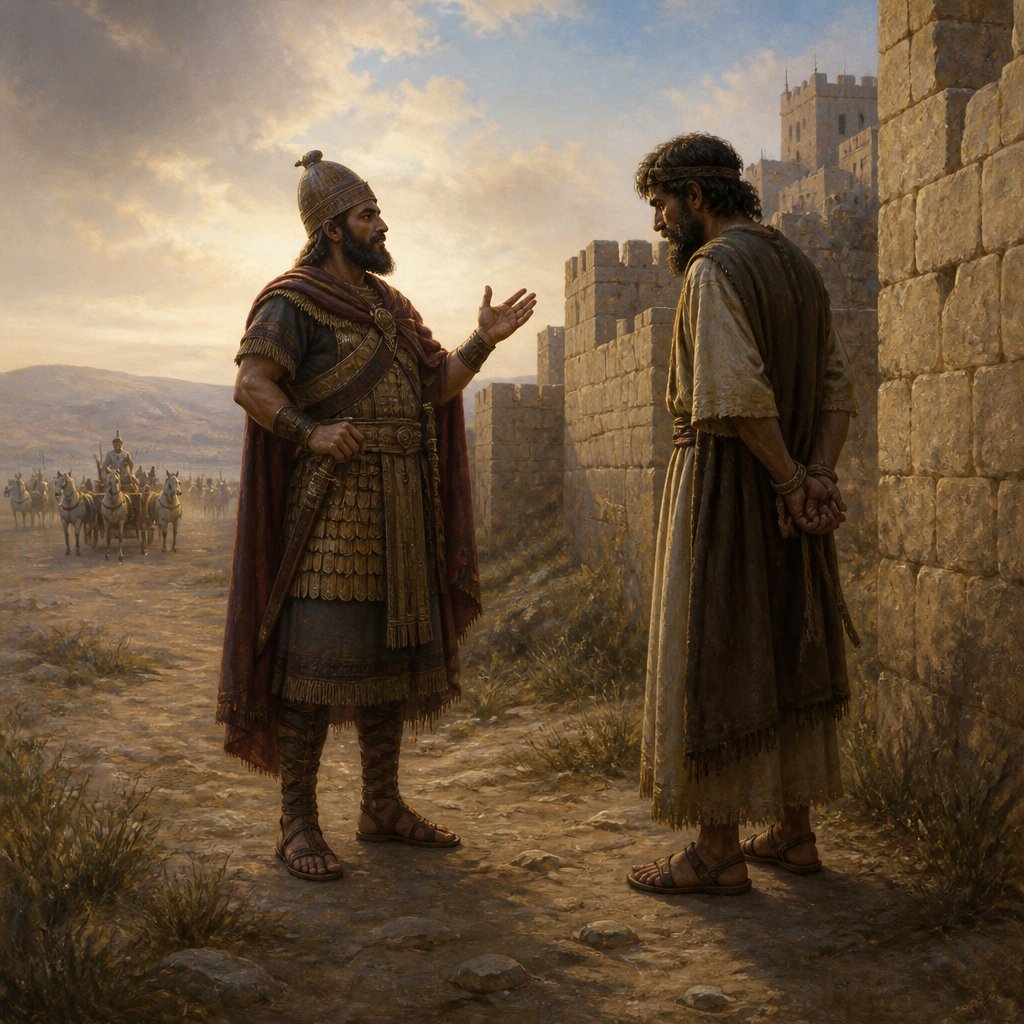
Introduction
In the narrative of 2 Kings 18, we encounter a time of great distress for the people of Judah during the reign of King Hezekiah. The nation faced the formidable Assyrian army, led by a challenging enemy, Sennacherib. This particular passage, 2 Kings 18:24, brings forth a profound teaching about trust, reliance, and the perspective of faith in the face of overwhelming circumstances. The words of Sennacherib's representative echo a pivotal question that strikes at the heart of our faith journey, especially when we are tempted to rely on earthly means instead of God.
The Context of the Verse
The context surrounding this verse is essential to grasp the weight of its message. The Assyrians, who had already conquered several nations, approached Jerusalem with threats and taunts, intending to instill fear and panic among the people. Sennacherib's emissary challenged the leaders of Jerusalem, mocking their faith in God, asserting that no god had been able to deliver nations from the might of Assyria. The verse reads: "How then wilt thou turn away the face of one captain of the least of my master's servants, and put thy trust on Egypt for chariots and for horsemen?" (2 Kings 18:24, KJV).
The Essence of Trust
To understand the significance of this statement, we must recognize the cultural and military context of Egypt during this period. Egypt was known for its horses and chariots, symbols of military strength and power. Sennacherib was attempting to sway Hezekiah and the people of Judah to place their trust in the might of Egypt, rather than in God. The taunt reveals a strategic psychological warfare aiming to weaken the resolve of Judah by appealing to their visible resources, pointing them away from the Almighty who had proven faithful to His people time and time again.
In modern terms, this question surfaces in our own lives as we face overwhelming circumstances: How often do we forget the power of the One who fights for us? Perhaps we too are tempted to lean on our abilities, our finances, our connections, or the wisdom of the world instead of trusting in God's providential care. In that moment of temptation, we must ask ourselves: what or who are we ultimately placing our trust in?
The Call to Faith
Hezekiah’s response to Sennacherib's challenge is one of profound faith. Instead of succumbing to fear, he turned to God, understanding that the strength of a single captain or an entire army is as chaff compared to the Almighty. In that moment of need, he prayed, recognizing that true deliverance comes from the Lord and not from the might of men. This reflects a poignancy of faith in a time of crisis.
What can we learn from Hezekiah's example? It teaches us about the importance of our perspective during trials. Trusting God means acknowledging that our best efforts are futile in the face of our challenges unless we align ourselves with His purpose and power. The real chariots and horsemen we need are found in the heavenly realms—those that can overcome the fiercest storms and the mightiest obstacles.
Reflection and Application
In our lives, we encounter moments that feel daunting, where the challenges before us seem insurmountable. Instead of seeking solace in earthly solutions, we must remember the words spoken through the ages: "Trust in the Lord with all thine heart; and lean not unto thine own understanding" (Proverbs 3:5, KJV). Sennacherib's contempt should serve as a reminder to us to evaluate our own hearts: are we bowing to the threats that surround us, or are we fortified by the hope that lies in the Lord?
Conclusion
As we reflect on 2 Kings 18:24, let us rise up in faith, reject the lies that lure us to place our trust in the visible and temporal, and embrace the unseen might of our steadfast God. May we have the courage to declare, like Hezekiah, that our trust is not in chariots and horsemen, but in the very Lord of Hosts, who stands ready to defend and deliver us in our times of need. Trust is a choice, and let us choose to trust in Him.
Get our apps


Artwork for 2 Kings 18:24

2 Kings 18:24 - "How then wilt thou turn away the face of one captain of the least of my master's servants, and put thy trust on Egypt for chariots and for horsemen?"
"How then wilt thou turn away the face of one captain of the least of my master's servants, and put thy trust on Egypt for chariots and for horsemen?" - 2 Kings 18:24

2 Kings 24:18 - "Zedekiah was twenty and one years old when he began to reign, and he reigned eleven years in Jerusalem. And his mother's name was Hamutal, the daughter of Jeremiah of Libnah."

2 kings 6:24

2 Kings 14:18 - "And the rest of the acts of Amaziah, are they not written in the book of the chronicles of the kings of Judah?"

2 Kings 24:5 - "¶ Now the rest of the acts of Jehoiakim, and all that he did, are they not written in the book of the chronicles of the kings of Judah?"

2 Kings 1:18 - "Now the rest of the acts of Ahaziah which he did, are they not written in the book of the chronicles of the kings of Israel?"

2 Kings 24:11 - "And Nebuchadnezzar king of Babylon came against the city, and his servants did besiege it."

2 Kings 24:10 - "¶ At that time the servants of Nebuchadnezzar king of Babylon came up against Jerusalem, and the city was besieged."

1 Kings 2:18 - "And Bath-sheba said, Well; I will speak for thee unto the king."

2 Kings 13:24 - "So Hazael king of Syria died; and Ben-hadad his son reigned in his stead."

1 Kings 18:24 - "And call ye on the name of your gods, and I will call on the name of the LORD: and the God that answereth by fire, let him be God. And all the people answered and said, It is well spoken."

2 Kings 18:18 - "And when they had called to the king, there came out to them Eliakim the son of Hilkiah, which was over the household, and Shebna the scribe, and Joah the son of Asaph the recorder."

2 Kings 8:18 - "And he walked in the way of the kings of Israel, as did the house of Ahab: for the daughter of Ahab was his wife: and he did evil in the sight of the LORD."

2 Kings 24:19 - "And he did that which was evil in the sight of the LORD, according to all that Jehoiakim had done."

2 Kings 24:6 - "So Jehoiakim slept with his fathers: and Jehoiachin his son reigned in his stead."

1 Kings 18:2 - "And Elijah went to shew himself unto Ahab. And there was a sore famine in Samaria."

2 Kings 18:15 - "And Hezekiah gave him all the silver that was found in the house of the LORD, and in the treasures of the king's house."

2 Kings 18:36 - "But the people held their peace, and answered him not a word: for the king's commandment was, saying, Answer him not."

2 Kings 24:17 - "¶ And the king of Babylon made Mattaniah his father's brother king in his stead, and changed his name to Zedekiah."

2 Kings 24:9 - "And he did that which was evil in the sight of the LORD, according to all that his father had done."

"And the rest of the acts of Amaziah, are they not written in the book of the chronicles of the kings of Judah?" - 2 Kings 14:18

2 Kings 3:18 - "And this is but a light thing in the sight of the LORD: he will deliver the Moabites also into your hand."

2 Kings 18:33 - "Hath any of the gods of the nations delivered at all his land out of the hand of the king of Assyria?"

2 Kings 6:24 - "¶ And it came to pass after this, that Ben-hadad king of Syria gathered all his host, and went up, and besieged Samaria."

2 Kings 18:5 - "He trusted in the LORD God of Israel; so that after him was none like him among all the kings of Judah, nor any that were before him."

2 Chronicles 24:18 - "And they left the house of the LORD God of their fathers, and served groves and idols: and wrath came upon Judah and Jerusalem for this their trespass."

2 Kings 16:18 - "And the covert for the sabbath that they had built in the house, and the king's entry without, turned he from the house of the LORD for the king of Assyria."

2 Kings 4:18 - "¶ And when the child was grown, it fell on a day, that he went out to his father to the reapers."

2 Kings 2:18 - "And when they came again to him, (for he tarried at Jericho,) he said unto them, Did I not say unto you, Go not?"