Rebuilding the High Places: A Reflection on Idolatry and Obedience
“For he built up again the high places which Hezekiah his father had destroyed; and he reared up altars for Baal, and made a grove, as did Ahab king of Israel; and worshipped all the host of heaven, and served them.” — 2 Kings 21:3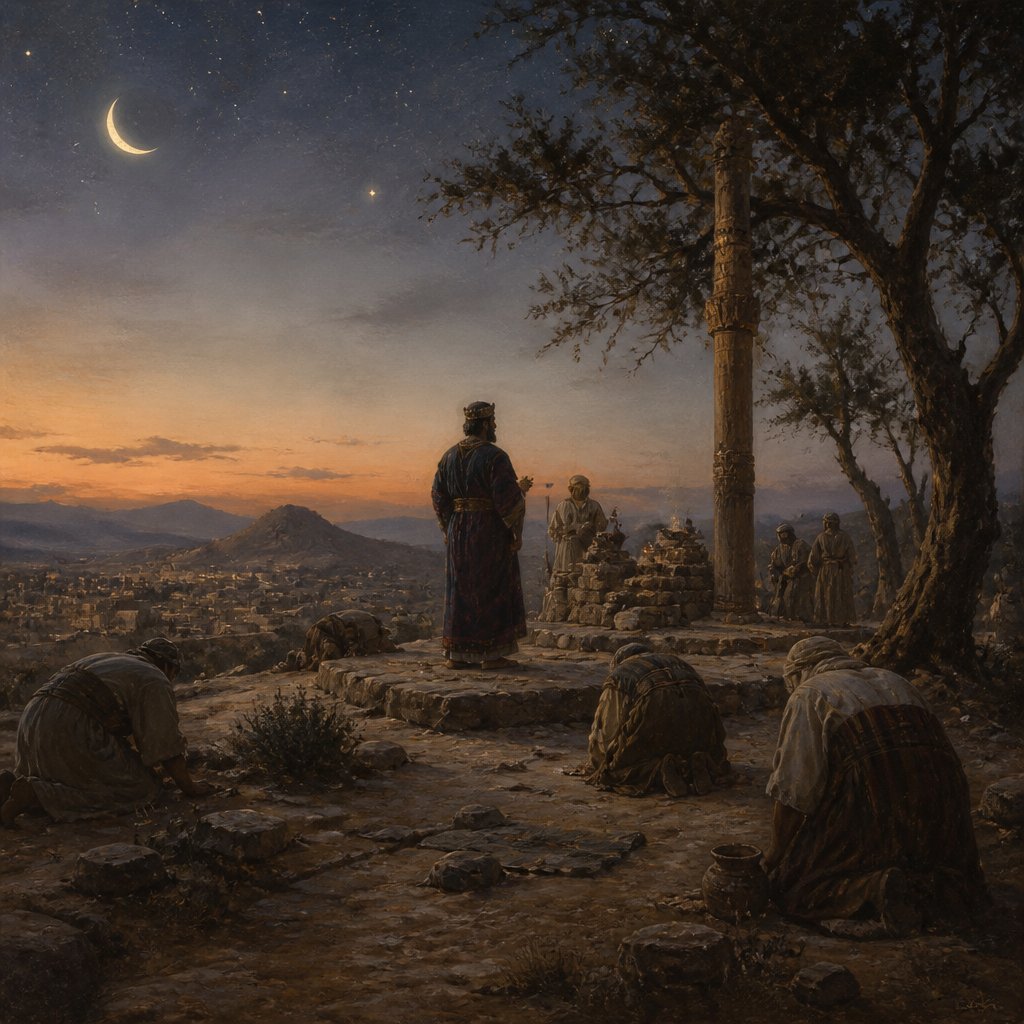
The verse 2 Kings 21:3 states, "For he built up again the high places which Hezekiah his father had destroyed; and he reared up altars for Baal, and made a grove, as did Ahab king of Israel; and worshipped all the host of heaven, and served them." This passage paints a poignant picture of spiritual decline and the perils of turning away from God. It serves as a reminder of the ongoing battle between faithfulness and idolatry, both in the kingdom of Judah and in our own lives today.
To fully appreciate the weight of this verse, we must first consider the context surrounding it. King Hezekiah, the father of King Manasseh, was renowned for his faithfulness to God. He led sweeping reforms to obliterate the high places dedicated to idol worship. These high places were sites of worship that stood in direct opposition to the covenant practices outlined in the Law of Moses. Hezekiah’s actions were profound; he sought to bring the people back to a pure form of worship, centered on the one true God, the God of Israel.
In stark contrast, Manasseh's reign represents a regression into idolatry. By rebuilding the high places, he directly opposed his father’s reforms and demonstrated a surprising fell-away from the devotion that Hezekiah had cultivated among the people. Instead of challenging the spiritual darkness, Manasseh embraced it. He established altars for Baal, a deity worshipped by surrounding nations, thus encouraging the people to engage in practices abhorrent to the Lord, including ritualistic sexual immoralities and child sacrifice. This behavior should signal a warning for us: when we allow the distractions of the world to creep back into our hearts, we pave the way for spiritual devastation.
The mention of the “grove” is particularly significant. Groves were often places associated with illicit worship, where the worshippers would make offerings to various deities and participate in practices that deviate from God’s commands. This imagery conveys not only physical locations but also spiritual states—man’s tendency to seek fulfillment outside of God himself. Through Manasseh’s reestablishment of these sites, we see the heartbreaking reality of a heart that has openly rejected God’s authority.
In contemporary terms, this mirrors the high places we often reconstruct in our lives. They may not be literal altars to Baal, but they can be anything that takes the place of God in our hearts—materialism, career ambition, personal ambitions, and even relationships that draw us away from a God-centered life. Like Manasseh, we might inadvertently allow these "high places" to flourish, leading to spiritual complacency and division from God’s will.
This leads us to an essential question: how do we recognize and dismantle our own high places? The answer lies in self-examination and in the pursuit of a deeper relationship with God. Spending time in prayer, seeking His will through Scripture, and being part of a community that encourages spiritual growth can fortify our hearts against the allure of idolatry. Just as Hezekiah sought to tear down the high places, our spiritual quest demands that we identify and remove anything that stands between us and complete devotion to God.
As we reflect on 2 Kings 21:3, let us ask the Holy Spirit to reveal areas where we may have rebuilt high places in our lives. Are there habits or routines that distract us from serving God wholeheartedly? May we remember that our legacy—like that of Hezekiah or Manasseh—is determined by our choices. Let us choose faithfulness and strive to honor God in every aspect of our lives, ensuring that we do not give in to the temptation of restoring those high places but rather seek to live in obedience to the Lord. The spiritual legacy we leave is a powerful testimony to those who follow after us.
Get our apps


Artwork for 2 Kings 21:3

2 Kings 21:3 - "For he built up again the high places which Hezekiah his father had destroyed; and he reared up altars for Baal, and made a grove, as did Ahab king of Israel; and worshipped all the host of heaven, and served them."
"For he built up again the high places which Hezekiah his father had destroyed; and he reared up altars for Baal, and made a grove, as did Ahab king of Israel; and worshipped all the host of heaven, and served them." - 2 Kings 21:3

2 Kings 3:21 - "¶ And when all the Moabites heard that the kings were come up to fight against them, they gathered all that were able to put on armour, and upward, and stood in the border."

2 Kings 2:21

2 Kings 15:21 - "¶ And the rest of the acts of Menahem, and all that he did, are they not written in the book of the chronicles of the kings of Israel?"

2 Kings 21:25 - "Now the rest of the acts of Amon which he did, are they not written in the book of the chronicles of the kings of Judah?"

2 Kings 21:10 - "¶ And the LORD spake by his servants the prophets, saying,"

2 Kings 21:21 - "And he walked in all the way that his father walked in, and served the idols that his father served, and worshipped them:"

1 Kings 21:3 - "And Naboth said to Ahab, The LORD forbid it me, that I should give the inheritance of my fathers unto thee."

2 Kings 11:21 - "Seven years old was Jehoash when he began to reign."

2 Kings 21:17 - "¶ Now the rest of the acts of Manasseh, and all that he did, and his sin that he sinned, are they not written in the book of the chronicles of the kings of Judah?"

2 Kings 21:23 - "¶ And the servants of Amon conspired against him, and slew the king in his own house."

2 Kings 3:15

2 Kings 3:15

2 Kings 3:15

2 Kings 21:22 - "And he forsook the LORD God of his fathers, and walked not in the way of the LORD."

"¶ And when all the Moabites heard that the kings were come up to fight against them, they gathered all that were able to put on armour, and upward, and stood in the border." - 2 Kings 3:21

2 Kings 21:5 - "And he built altars for all the host of heaven in the two courts of the house of the LORD."

2 Kings 20:21 - "And Hezekiah slept with his fathers: and Manasseh his son reigned in his stead."

2 Kings 21:20 - "And he did that which was evil in the sight of the LORD, as his father Manasseh did."

1 Kings 2:21 - "And she said, Let Abishag the Shunammite be given to Adonijah thy brother to wife."

2 Kings 3:16-19

2 Kings 21:2 - "And he did that which was evil in the sight of the LORD, after the abominations of the heathen, whom the LORD cast out before the children of Israel."

2 Kings 3:10 - "And the king of Israel said, Alas! that the LORD hath called these three kings together, to deliver them into the hand of Moab!"

2 Kings 3:23 - "And they said, This is blood: the kings are surely slain, and they have smitten one another: now therefore, Moab, to the spoil."

2 Kings 21:26 - "And he was buried in his sepulchre in the garden of Uzza: and Josiah his son reigned in his stead."

2 Kings 23:21 - "¶ And the king commanded all the people, saying, Keep the passover unto the LORD your God, as it is written in the book of this covenant."

2 Kings 21:4 - "And he built altars in the house of the LORD, of which the LORD said, In Jerusalem will I put my name."

2 Kings 25:21 - "And the king of Babylon smote them, and slew them at Riblah in the land of Hamath. So Judah was carried away out of their land."

Daniel 2:21 - "And he changeth the times and the seasons: he removeth kings, and setteth up kings: he giveth wisdom unto the wise, and knowledge to them that know understanding:" respectful, symbolic bible verse art