Purging Idolatry: A Call to Holiness
“And he slew all the priests of the high places that were there upon the altars, and burned men’s bones upon them, and returned to Jerusalem.” — 2 Kings 23:20
The passage at hand, 2 Kings 23:20, presents a vivid scene of reformative zeal and divine retribution, reflective of King Josiah’s intense longing to eradicate idolatry from the land of Judah. The verse states, "And he slew all the priests of the high places that were there upon the altars, and burned men's bones upon them, and returned to Jerusalem" (KJV). To grasp the depth of this scripture, we must delve into the context of Josiah’s reign, and what it reveals about God’s holiness and our pursuit of righteousness.
The backdrop to this gruesome act involves years of spiritual decline for Israel, a time characterized by rampant idolatry, syncretism, and a systemic departure from the covenantal obligations that God had established with His people. The high places, where offerings were frequently made to Baal and other deities, exemplified the people’s infidelity to Yahweh. In an era where truth had been obscured, Josiah's discovery of the Book of the Law, possibly the book of Deuteronomy, ignited a fierce conviction within him. This wasn’t merely a rediscovery of ancient texts; it was about reestablishing the covenant and wholehearted worship of God.
Josiah’s actions in this verse symbolize a radical purging of idolatry—a necessary step if Judah was to return to the truths of their faith. The stark measure of executing the priests of the high places serves not only as an act of justice, but also as a demonstration of sanctification. It signifies that God will not share His glory with mere idols; the call is to holiness, and the eradication of sin must be absolute.
In contemplating this scene, we must ask ourselves: What are the 'high places' in our lives? While few of us would ever participate in idolatry as it was practiced in ancient Judah, there are facets of our modern lives that may distract us from our devotion to God. These distractions can manifest as materialism, ambition, unhealthy relationships, or even the pursuit of comfort at the expense of spiritual growth. The beauty of this passage lies in its relentless call to reform our own hearts. Just as Josiah cleansed the land, we too are invited to cleanse our lives from anything that leads us away from a genuine relationship with God.
There’s profound significance in the imagery of burning bones upon the altars. Bones signify the remnants of what once was—a stark reminder that unholy practices bring death, not life. In a spiritually malignant environment, even the bones of sacrifices to false gods become fuel for a purifying fire. For the believer, sin and idolatry hold no place; they must be burned as remnants of a former way of life that no longer aligns with our identity in Christ.
Moreover, Josiah’s action of returning to Jerusalem indicates a restorative journey back to the heart of worship. After cleansing the land, he returns not only as a king, but as a reformer being led back to the place where God dwells among His people. This return is significant as it points us to the importance of pursuit; once we remove distractions, we must redirect ourselves towards God. Returning to the presence of God reinvigorates our spiritual purpose and grounds our identity in His grace and glory.
As we reflect upon 2 Kings 23:20, let us embrace Josiah’s fervor for purity. To slay the idols in our lives and to burn them is not an act motivated by hatred, but one birthed out of love and reverence for God. In doing so, we cultivate a heart that seeks first the kingdom of God (Matthew 6:33) and allows the fires of revival to burn brightly within us, restoring us to our rightful place of worship in Jerusalem—symbolic of our life in Christ. Today, may we commit to uproot and destroy those high places, returning daily to God’s presence with an undivided heart, living as His holy people.
Get our apps


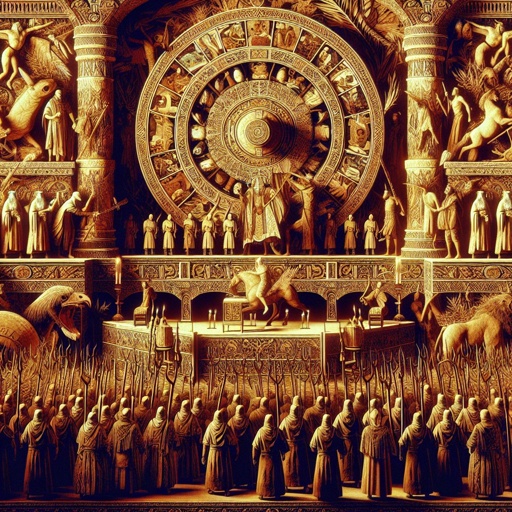
Artwork for 2 Kings 23:20

2 Kings 23:20 - "And he slew all the priests of the high places that were there upon the altars, and burned men's bones upon them, and returned to Jerusalem."

"And he slew all the priests of the high places that were there upon the altars, and burned men's bones upon them, and returned to Jerusalem." - 2 Kings 23:20

2 Kings 23:23 - "But in the eighteenth year of king Josiah, wherein this passover was holden to the LORD in Jerusalem."

2 Kings 8:23 - "And the rest of the acts of Joram, and all that he did, are they not written in the book of the chronicles of the kings of Judah?"

2 Kings 20:20 - "¶ And the rest of the acts of Hezekiah, and all his might, and how he made a pool, and a conduit, and brought water into the city, are they not written in the book of the chronicles of the kings of Judah?"
2 Kings 23:22 - "Surely there was not holden such a passover from the days of the judges that judged Israel, nor in all the days of the kings of Israel, nor of the kings of Judah;"

2 Kings 23:28 - "Now the rest of the acts of Josiah, and all that he did, are they not written in the book of the chronicles of the kings of Judah?"

2 Kings 3:23 - "And they said, This is blood: the kings are surely slain, and they have smitten one another: now therefore, Moab, to the spoil."

2 Kings 20:2 - "Then he turned his face to the wall, and prayed unto the LORD, saying,"

2 Kings 23:1 - "And the king sent, and they gathered unto him all the elders of Judah and of Jerusalem."

2 Kings 2:20 - "And he said, Bring me a new cruse, and put salt therein. And they brought it to him."

2 Kings 21:23 - "¶ And the servants of Amon conspired against him, and slew the king in his own house."

2 Kings 20:16 - "And Isaiah said unto Hezekiah, Hear the word of the LORD."

2 Kings 10:20 - "And Jehu said, Proclaim a solemn assembly for Baal. And they proclaimed it."

2 Kings 25:20 - "And Nebuzar-adan captain of the guard took these, and brought them to the king of Babylon to Riblah:"

2 Kings 9:23 - "And Joram turned his hands, and fled, and said to Ahaziah, There is treachery, O Ahaziah."

"But in the eighteenth year of king Josiah, wherein this passover was holden to the LORD in Jerusalem." - 2 Kings 23:23

2 Kings 14:20 - "And they brought him on horses: and he was buried at Jerusalem with his fathers in the city of David."

2 Kings 20:21 - "And Hezekiah slept with his fathers: and Manasseh his son reigned in his stead."

2 Kings 21:20 - "And he did that which was evil in the sight of the LORD, as his father Manasseh did."

2 Kings 13:20 - "¶ And Elisha died, and they buried him. And the bands of the Moabites invaded the land at the coming in of the year."

2 Kings 20:7 - "And Isaiah said, Take a lump of figs. And they took and laid it on the boil, and he recovered."

2 Kings 11:20 - "And all the people of the land rejoiced, and the city was in quiet: and they slew Athaliah with the sword beside the king's house."

1 Kings 20:23 - "And the servants of the king of Syria said unto him, Their gods are gods of the hills; therefore they were stronger than we; but let us fight against them in the plain, and surely we shall be stronger than they."

2 Kings 8:20 - "¶ In his days Edom revolted from under the hand of Judah, and made a king over themselves."

2 Samuel 20:23 - "¶ Now Joab was over all the host of Israel: and Benaiah the son of Jehoiada was over the Cherethites and over the Pelethites:"

2 Kings 23:37 - "And he did that which was evil in the sight of the LORD, according to all that his fathers had done."

2 Kings 23:11 - "And he took away the horses that the kings of Judah had given to the sun, at the entering in of the house of the LORD, by the chamber of Nathan-melech the chamberlain, which was in the suburbs, and burned the chariots of the sun with fire."

2 Kings 23:32 - "And he did that which was evil in the sight of the LORD, according to all that his fathers had done."

2 Kings 23:21 - "¶ And the king commanded all the people, saying, Keep the passover unto the LORD your God, as it is written in the book of this covenant."