The Complexity of Faithfulness: Lessons from Jehoram's Reign
“And he wrought evil in the sight of the LORD; but not like his father, and like his mother: for he put away the image of Baal that his father had made.” — 2 Kings 3:2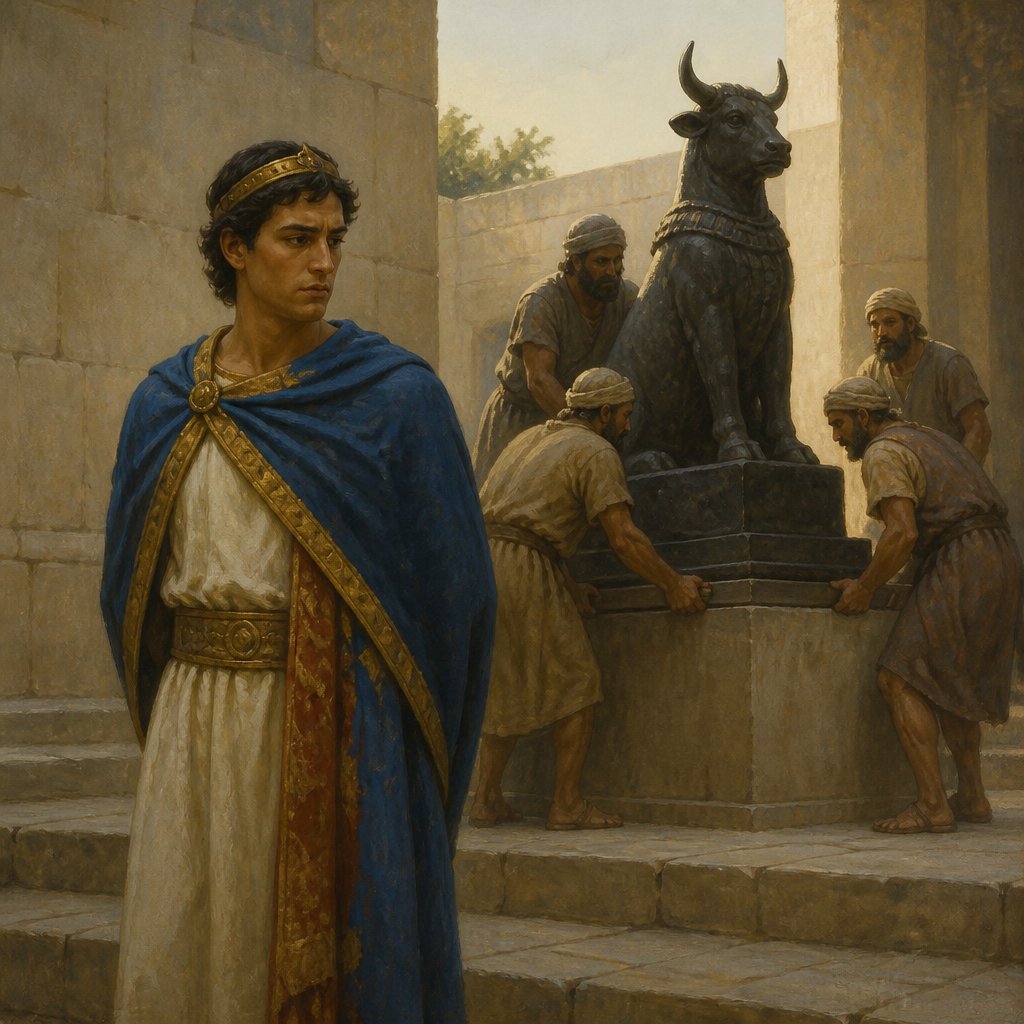
In 2 Kings 3:2, we find a multifaceted portrait of King Jehoram: "And he wrought evil in the sight of the LORD; but not like his father, and like his mother: for he put away the image of Baal that his father had made." This verse brings forth an essential reflection on the nature of faithfulness, the legacy of leadership, and the intricacies that come with navigating one's spiritual journey in the midst of a divided heritage.
Jehoram, son of King Ahab and Queen Jezebel, inherited a kingdom marked by deep spiritual corruption. His father’s reign had been characterized by mixed loyalties to God and the worship of Baal, while his mother, Jezebel, was known for her fierce promotion of idolatry and persecution of the prophets. Just like the proverbial apple that does not fall far from the tree, Jehoram began his reign with a significant shadow over him. However, the Bible points out a distinct difference in his approach; Jehoram displeased God, yet not in the same manner as his parents.
Why is this important? It reveals the complicated dynamic of familial influence. We often find ourselves wrestling with the spiritual legacies handed down by our ancestors. Inheriting both traits and tendencies from our parents can feel burdensome, as we might carry the weight of their transgressions or the expectations of their faithfulness. Jehoram's life serves as an illustration that while our lineage can affect our choices, we still hold the responsibility to choose our path. Just because he had not completely embraced the corrupt ways of his father, Ahab, does not mean that Jehoram was absolved of wrongdoing; rather, he navigated his own brand of compromise.
The phrase "he put away the image of Baal that his father had made" elicits both hope and caution. It signifies an effort on Jehoram's part to cultivate change, symbolizing an inclination to seek righteousness. Although he practiced behaviors that led him to be described as "wrought evil in the sight of the LORD," it also highlights a moment of resistance against the complete idolatry of his family line. This duality invites us to examine our own lives, particularly how we wrestle with the expectations of our spiritual heritage. Are there remnants of idolatry that we are challenged to set aside?
We might easily become engulfed by the disparity between where we come from and where we seek to go in our faith journey. It's tempting to let our circumstances define our relationship with God, yet Scripture maintains that personal accountability rests on our shoulders. Jehoram reminds us that amid our rebellious streaks, we can still make conscious decisions to walk away from the influences that do not align with God’s will. Jehoram represents both the struggle of compromise and the potential for conversion.
Furthermore, the phrase "but not like his father, and like his mother" beckons a sense of hope infused with caution—we can step away from a legacy of idol worship, but we must realize that mere disengagement is not sufficient. Repentance involves turning towards God, aligning our choices and desires with His truth. We must fill the void left by dismantling the idols with the love, grace, and eternal purpose found only in Him.
As we reflect upon the life of Jehoram, let us be vigilant stewards of our own spiritual journey. In this world, where various influences compete for our allegiance, let us be encouraged to actively pursue a relationship with the Almighty. To put away our personal Baals—be they material, relational, or ideological—requires an unwavering commitment to turn toward God. May we strive to cultivate a legacy that honors not just our lineage but, above all, our Creator. Amid complexities, let faith guide us beyond the shadows of the past.
Therefore, let us unite our hearts not in the frustration of mistakes made by those before us, but in the commitment to honor God above all. Like Jehoram, may we recognize that while our beginnings may shape our views, we have the power to choose our endings.
Get our apps


Artwork for 2 Kings 3:2

2 Kings 3:2 - "And he wrought evil in the sight of the LORD; but not like his father, and like his mother: for he put away the image of Baal that his father had made."
"And he wrought evil in the sight of the LORD; but not like his father, and like his mother: for he put away the image of Baal that his father had made." - 2 Kings 3:2

2 Kings 3:15

2 Kings 3:15

2 Kings 3:15

2 Kings 3:16-19

2 Kings 3:10 - "And the king of Israel said, Alas! that the LORD hath called these three kings together, to deliver them into the hand of Moab!"

2 Kings 3:23 - "And they said, This is blood: the kings are surely slain, and they have smitten one another: now therefore, Moab, to the spoil."

2 Kings 3:6 - "¶ And king Jehoram went out of Samaria the same time, and numbered all Israel."

2 Kings 3:16 - "And he said, Thus saith the LORD, Make this valley full of ditches."

2 Kings 3:5 - "But it came to pass, when Ahab was dead, that the king of Moab rebelled against the king of Israel."

2 Kings 3:3 - "Nevertheless he cleaved unto the sins of Jeroboam the son of Nebat, which made Israel to sin; he departed not therefrom."
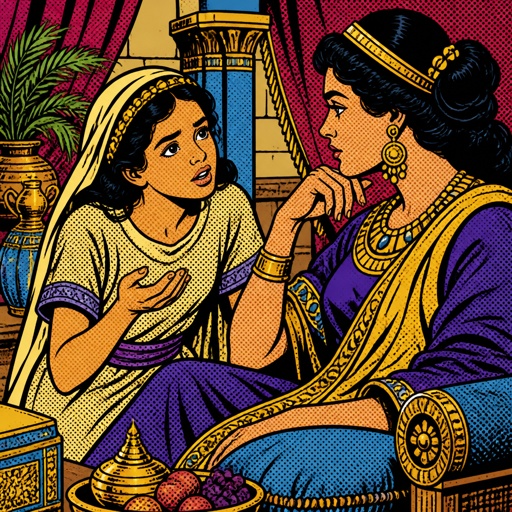
2 kings 5:3 Create a scene with a young servant girl talking earnestly with her mistress who is looking at her intently. the surroundings are rich in keeping with early biblical times of 2 kings

2 Kings 3:18 - "And this is but a light thing in the sight of the LORD: he will deliver the Moabites also into your hand."

2 Kings 25:3 - "And on the ninth day of the fourth month the famine prevailed in the city, and there was no bread for the people of the land."

2 Kings 18:3 - "And he did that which was right in the sight of the LORD, according to all that David his father did."

2 Kings 12:3 - "But the high places were not taken away: the people still sacrificed and burnt incense in the high places."

2 Kings 3:12 - "And Jehoshaphat said, The word of the LORD is with him. So the king of Israel and Jehoshaphat and the king of Edom went down to him."

2 Kings 11:3 - "And he was with her hid in the house of the LORD six years. And Athaliah did reign over the land."

2 Kings 3:21 - "¶ And when all the Moabites heard that the kings were come up to fight against them, they gathered all that were able to put on armour, and upward, and stood in the border."

2 Kings 17:3 - "Against him came up Shalmaneser king of Assyria; and Hoshea became his servant, and gave him presents."

2 Kings 15:3 - "And he did that which was right in the sight of the LORD, according to all that his father Amaziah had done;"

2 Kings 3:4 - "¶ And Mesha king of Moab was a sheepmaster, and rendered unto the king of Israel an hundred thousand lambs, and an hundred thousand rams, with the wool."

2 Kings 6:3 - "And one said, Be content, I pray thee, and go with thy servants. And he answered, I will go."

2 Kings 3:15 - "But now bring me a minstrel. And it came to pass, when the minstrel played, that the hand of the LORD came upon him."

1 Kings 3:2 - "Only the people sacrificed in high places, because there was no house built unto the name of the LORD, until those days."

2 Kings 3:8 - "And he said, Which way shall we go up? And he answered, The way through the wilderness of Edom."

2 Kings 16:3 - "But he walked in the way of the kings of Israel, yea, and made his son to pass through the fire, according to the abominations of the heathen, whom the LORD cast out from before the children of Israel."

2 Kings 22:3 - "¶ And it came to pass in the eighteenth year of king Josiah, that the king sent Shaphan the son of Azaliah, the son of Meshullam, the scribe, to the house of the LORD, saying,"

2 Kings 4:3 - "Then he said, Go, borrow thee vessels abroad of all thy neighbours, even empty vessels; borrow not a few."