Understanding the Burden: A Mother's Role in Times of Crisis
“And he said unto his father, My head, my head. And he said to a lad, Carry him to his mother.” — 2 Kings 4:19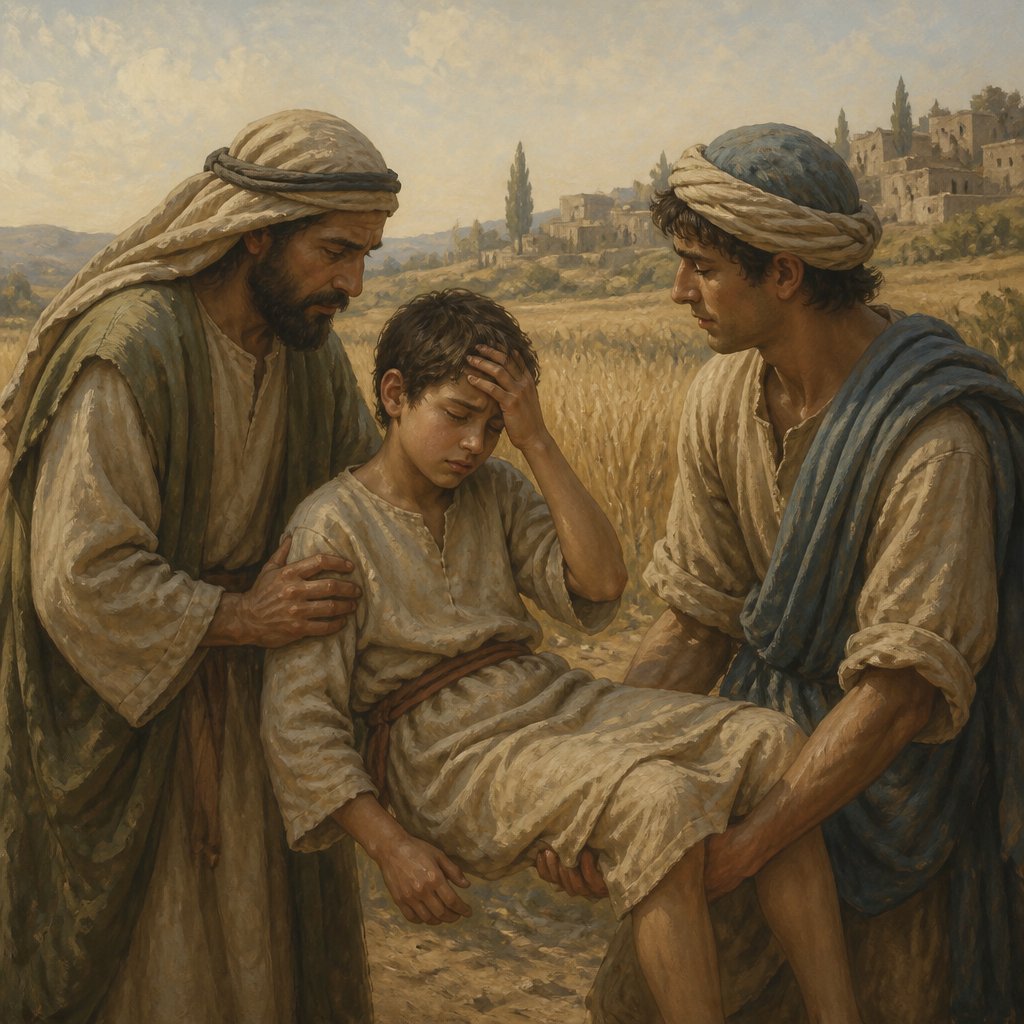
In the midst of life's trials, we often encounter moments of severe distress and heartache. One poignant moment in Scripture that illustrates this reality can be found in 2 Kings 4:19: "And he said unto his father, My head, my head. And he said to a lad, Carry him to his mother." This verse, while brief, encapsulates the depth of a father's concern and a mother’s nurturing role when crises arise in the family.
In the narrative leading up to this verse, we meet the Shunammite woman, a figure of remarkable faith and hospitality. She had extended kindness to the prophet Elisha by providing him with a place to stay. In return, Elisha, moved by her generosity, blessed her with a son, a miracle that she thought impossible. Yet, as the boy grows, a moment comes that shakes her world when he collapses, clutching his head, crying out in pain. The raw emotion encapsulated in his words, "My head, my head," carries the weight of a child's suffering and the helplessness that often accompanies it.
What a profound image this presents of a family in distress! The boy's pain is met immediately by his father’s swift action, trusting that the solution lies in the comfort of the mother. This evokes the timeless truth of the integral role of mothers in the emotional and spiritual lives of their children. The father's instinct to carry the boy to his mother reveals not only the deep bond and trust between family members but also the understanding of a mother’s calming presence.
In pondering what it means to be a mother or a mother figure, consider the nurturing quality inherent in motherhood. A mother’s love is often characterized by its tenderness and intuition in times of pain. As women navigate the complexities of motherhood, their capacity to provide comfort and peace becomes a lifeline for their children. The Shunammite woman's son clearly needed the balm of his mother's care, a loving embrace to soothe both his physical pain and his emotional distress.
In our modern world, we encounter numerous situations where the burdens of life can weigh heavily on us or our loved ones. Like the Shunammite woman, we often find ourselves in a state of uncertainty when faced with unforeseen challenges. The cries for help may come in various forms, and we must lean on the wisdom and strength granted to us through scripture and the support of our community.
It is worth noting that the story does not conclude with the boy simply returning to his mother. The Shunammite woman runs to Elisha, seeking intervention, demonstrating that while our maternal instincts might guide us toward nurturing, it is also necessary to seek divine help in difficult times. Herein lies an essential aspect of faith: the understanding that while we are often the instruments of comfort for others, we must also reach out for assistance when we are in need.
As we reflect on this brief yet powerful verse, let us examine our roles within our families and communities. Are we equipped to provide the nurturing embrace needed when someone cries out in distress? And just as importantly, are we humble enough to reach out for help when we need it? Let this story inspire us to cultivate a spirit of love, compassion, and support, whether as mothers, fathers, friends, or community members.
In conclusion, may we hold fast to the truth that while crises may arise in our lives, God has set in place a support system that often begins within our own homes. In every plea for help, in every call for comfort, remember that we are never alone. The Lord places people in our lives—mothers, fathers, friends—who become channels of His grace and healing. Let us be that source of comfort for others and allow ourselves to be comforted in our time of need. Amen.
Get our apps


Artwork for 2 Kings 4:19

2 Kings 4:19 - "And he said unto his father, My head, my head. And he said to a lad, Carry him to his mother."
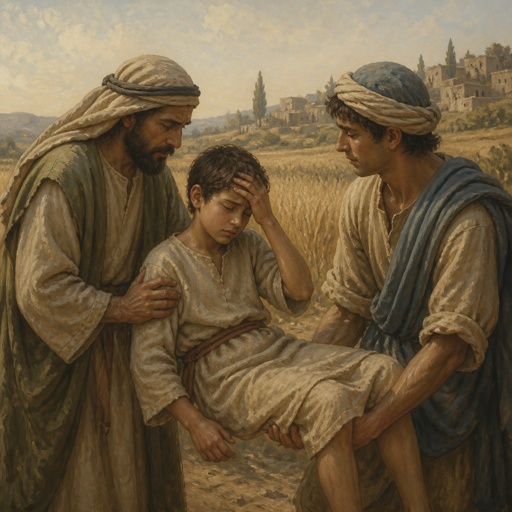
"And he said unto his father, My head, my head. And he said to a lad, Carry him to his mother." - 2 Kings 4:19

2 Kings 19:2

2 Kings 19:2

2 Kings 19:2

2 Kings 19:17 - "Of a truth, LORD, the kings of Assyria have destroyed the nations and their lands,"

2 Kings 12:19 - "¶ And the rest of the acts of Joash, and all that he did, are they not written in the book of the chronicles of the kings of Judah?"

2 Kings 4:4-5

2 Kings 3:16-19

2 Kings 16:19 - "¶ Now the rest of the acts of Ahaz which he did, are they not written in the book of the chronicles of the kings of Judah?"

2 Kings 19:5 - "So the servants of king Hezekiah came to Isaiah."

2 Kings 19:36 - "So Sennacherib king of Assyria departed, and went and returned, and dwelt at Nineveh."

2 Kings 19:13 - "Where is the king of Hamath, and the king of Arpad, and the king of the city of Sepharvaim, of Hena, and Ivah?"

2 Kings 19:4 - "It may be the LORD thy God will hear all the words of Rabshakeh, whom the king of Assyria his master hath sent to reproach the living God; and will reprove the words which the LORD thy God hath heard: wherefore lift up thy prayer for the remnant that are left."

2 Kings 19:11 - "Behold, thou hast heard what the kings of Assyria have done to all lands, by destroying them utterly: and shalt thou be delivered?"

1 Kings 4:19 - "Geber the son of Uri was in the country of Gilead, in the country of Sihon king of the Amorites, and of Og king of Bashan; and he was the only officer which was in the land."

2 Timothy 4:19 - "Salute Prisca and Aquila, and the household of Onesiphorus."

2 Kings 19:2 - "And he sent Eliakim, which was over the household, and Shebna the scribe, and the elders of the priests, covered with sackcloth, to Isaiah the prophet the son of Amoz."

2 Kings 19:34 - "For I will defend this city, to save it, for mine own sake, and for my servant David's sake."

"Of a truth, LORD, the kings of Assyria have destroyed the nations and their lands," - 2 Kings 19:17

2 Kings 24:19 - "And he did that which was evil in the sight of the LORD, according to all that Jehoiakim had done."

2 Kings 17:19 - "Also Judah kept not the commandments of the LORD their God, but walked in the statutes of Israel which they made."

2 Kings 10:4 - "But they were exceedingly afraid, and said, Behold, two kings stood not before him: how then shall we stand?"

2 Kings 19:33 - "By the way that he came, by the same shall he return, and shall not come into this city, saith the LORD."

2 Kings 11:19 - "And he took the rulers over hundreds, and the captains, and the guard, and all the people of the land; and they brought down the king from the house of the LORD, and came by the way of the gate of the guard to the king's house. And he sat on the throne of the kings."

2 Kings 19:27 - "But I know thy abode, and thy going out, and thy coming in, and thy rage against me."

2 Kings 2:19 - "¶ And the men of the city said unto Elisha, Behold, I pray thee, the situation of this city is pleasant, as my lord seeth: but the water is naught, and the ground barren."

2 Kings 5:19 - "And he said unto him, Go in peace. So he departed from him a little way."

2 Kings 19:30 - "And the remnant that is escaped of the house of Judah shall yet again take root downward, and bear fruit upward."

"So the servants of king Hezekiah came to Isaiah." - 2 Kings 19:5