The Faith of a Little Maid: A Call to Trust and Hope
“And she said unto her mistress, Would God my lord were with the prophet that is in Samaria! for he would recover him of his leprosy.” — 2 Kings 5:3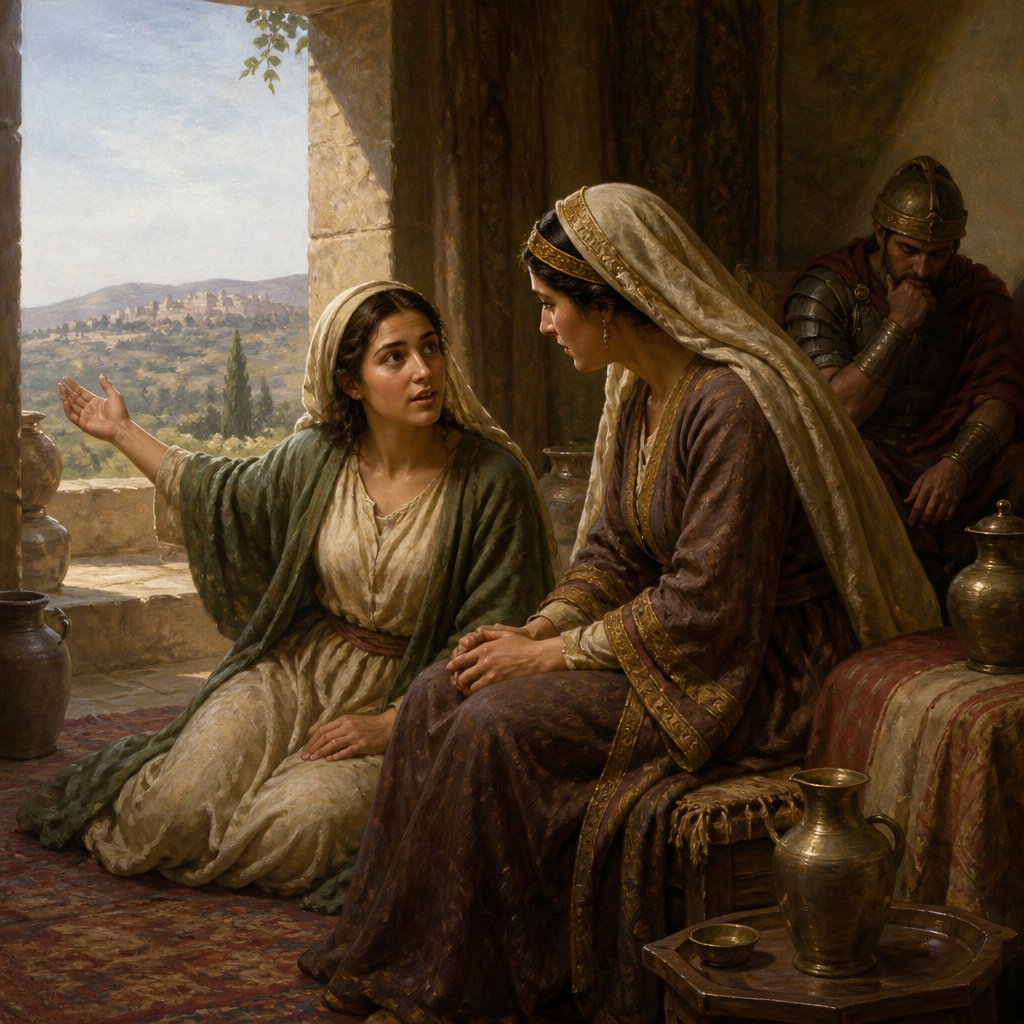
In the narrative of 2 Kings 5:3, we encounter a poignant moment in the life of Naaman, the commander of the Syrian army, who suffered from leprosy. The verse reads: "And she said unto her mistress, Would God my lord were with the prophet that is in Samaria! for he would recover him of his leprosy." This powerful statement, uttered by a young captive girl, reveals profound truths about faith, hope, and the divine power of God to heal and restore.
The context of this verse introduces us to Naaman, a man of valor, yet crippled by a debilitating disease. In ancient times, leprosy was more than just a physical ailment; it was a stigma that caused great isolation and despair. Naaman was praised for his military prowess, yet he could not escape the shadow of his condition. In this moment of desperation and hopelessness, a young female servant, seemingly insignificant in the grand narrative, becomes the catalyst for a change that would lead to Naaman’s healing.
Her words, "Would God my lord were with the prophet that is in Samaria!" demonstrate an unwavering faith in the power of God through Elisha, the prophet. Despite her own circumstances as an enslaved girl in a foreign land, she did not allow her position to hinder her ability to convey hope. She knew the truth: that God’s power was greater than Naaman's affliction. In this we see a model of faith, as she invites the attention of Naaman’s mistress to the possibility of healing.
This little girl’s faith is a profound reminder that God can use anyone, regardless of their status or standing, to fulfill His purposes. In a world where we often measure worth based on visible attributes, we are called to remember that God values the heart and can speak through the humble and mundane. Her simple yet profound declaration reflects not only her belief in the prophet’s power but, ultimately, her faith in God Himself.
Furthermore, her words foreshadow the miracles that would follow. She points Naaman towards hope, ushering him to seek out the prophet Elisha. This act sparks a journey—not just a physical one towards healing, but a spiritual journey for Naaman who would eventually encounter the living God. As we engage with our own struggles, how often do we overlook the voices that God may use to guide us? This young girl’s faith challenges us to be attentive to the seemingly insignificant around us, for God moves in mysterious ways.
Naaman’s eventual recovery didn’t just restore his physical health; it also led him to recognize the one true God. Healing often serves a dual purpose—physical transformation and spiritual awakening. The journey to healing is significant; it requires humility, obedience, and a willingness to trust God. Naaman had to step outside of his pride and acknowledge that what he needed required a level of submission. His noble status and strength as a commander had to bow before the God of Israel.
As we contemplate the implications of 2 Kings 5:3 in our own lives, we are invited to assess where we might be like Naaman—standing at the edge of our own leprosy, whether it be physical, emotional, or spiritual. Are we willing to listen to the humble voices God places in our lives? Do we possess the faith to pursue healing, even when it seems unlikely?
In conclusion, the faith of the little maid encourages us to stand firm in hope and to trust in God's ability to transform our circumstances. She opened the door for Naaman’s healing, a reminder that our words can have far-reaching effects. May we also carry the message of hope to others, knowing that no situation is beyond the power of our God. Let us look for His hand at work in our lives—through the faintest whispers or the loudest proclamations—and remember that healing starts with faith.
Get our apps


Artwork for 2 Kings 5:3

2 Kings 5:3 - "And she said unto her mistress, Would God my lord were with the prophet that is in Samaria! for he would recover him of his leprosy." respectful, symbolic bible verse art

2 kings 5:3 Create a scene with a young servant girl talking earnestly with her mistress who is looking at her intently. the surroundings are rich in keeping with early biblical times of 2 kings
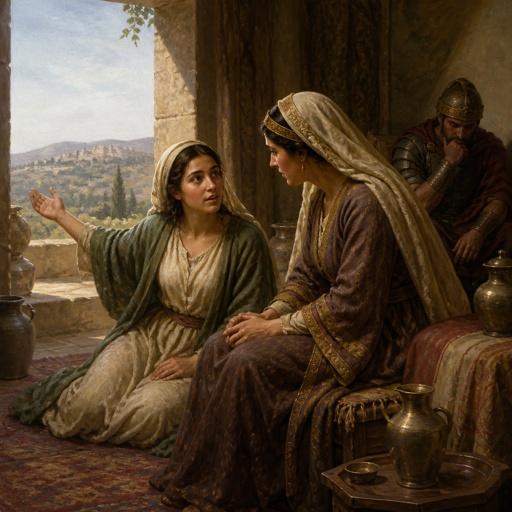
"And she said unto her mistress, Would God my lord were with the prophet that is in Samaria! for he would recover him of his leprosy." - 2 Kings 5:3

2 Kings 3:5 - "But it came to pass, when Ahab was dead, that the king of Moab rebelled against the king of Israel."

"But it came to pass, when Ahab was dead, that the king of Moab rebelled against the king of Israel." - 2 Kings 3:5

2 Kings 3:15

2 Kings 3:15

1 Kings 5:2 - "And Solomon sent to Hiram, saying,"

2 Kings 3:15

2 Kings 4:4-5

2 Kings 19:5 - "So the servants of king Hezekiah came to Isaiah."

2 corinthians 10:3-5

2 corinthians 10:3-5

2 Kings 24:5 - "¶ Now the rest of the acts of Jehoiakim, and all that he did, are they not written in the book of the chronicles of the kings of Judah?"

2 corinthians 10:3-5

2 corinthians 10:3-5

2 corinthians 10:3-5

2 corinthians 10:3-5

2 corinthians 10:3-5

2 corinthians 10:3-5

2 corinthians 10:3-5

2 corinthians 10:3-5

2 corinthians 10:3-5

2 corinthians 10:3-5

2 Kings 3:16-19

2 Kings 3:10 - "And the king of Israel said, Alas! that the LORD hath called these three kings together, to deliver them into the hand of Moab!"

2 Kings 3:23 - "And they said, This is blood: the kings are surely slain, and they have smitten one another: now therefore, Moab, to the spoil."

Titus 2:3-5

2 kings 5:11 Create Naaman being upset and frustrated at ELisha

2 Kings 5:19 - "And he said unto him, Go in peace. So he departed from him a little way."