The Stranger’s Testimony: A Lesson on Identity and Integrity
“And David said unto the young man that told him, Whence art thou? And he answered, I am the son of a stranger, an Amalekite.” — 2 Samuel 1:13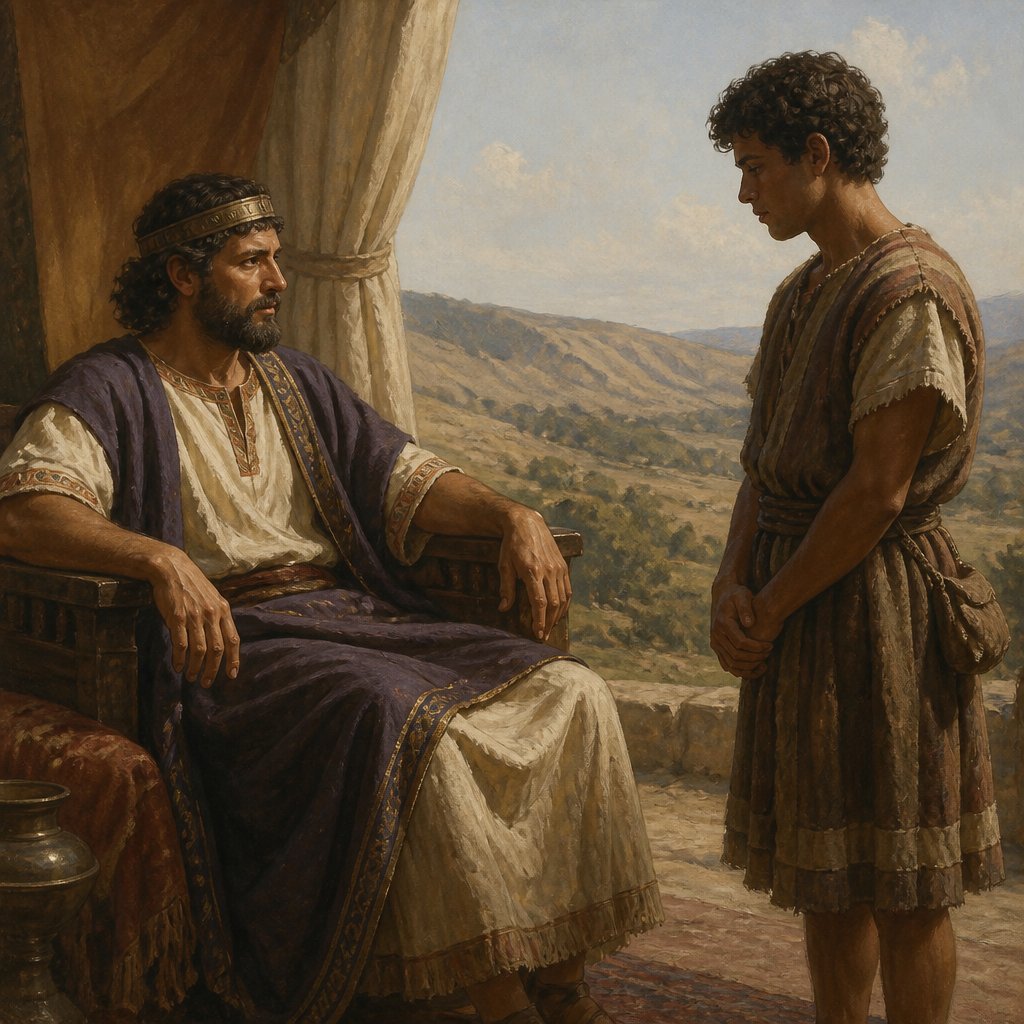
In the narrative of 2 Samuel 1:13, we encounter a poignant moment in the life of King David, who is deeply immersed in grief over the recent loss of his friend Jonathan and the king, Saul. The encounter begins with a young Amalekite approaching David with news about Saul’s demise. David, in his characteristic manner of inquiry, asks, "Whence art thou?" The young man responds, "I am the son of a stranger, an Amalekite." (2 Samuel 1:13 KJV). This moment unveils layers of meaning worth exploring, especially in regards to our identity and integrity in God.
The Amalekite, being a descendant of a people long-time foes to Israel, positions himself as a stranger in the nation where David has just been anointed king. His identity is overtly marked by his lineage, and as readers, we cannot help but notice that he invokes the name of his ancestry first—the very name that signifies enmity against God’s chosen people. In this declaration, he inadvertently showcases the significance of our backgrounds and how they can shape our perceptions, choices, and interactions with the world. However, his identity goes beyond his ancestry and speaks to a deeper inquiry of who we are in Christ.
In a world that often seems to prioritize labels, status, and social identity, we must anchor ourselves in our true identity as children of God. The Apostle Paul reminds us in Galatians 3:26 that, "For ye are all the children of God by faith in Christ Jesus." (KJV). The Amalekite may have defined himself by his father’s lineage, but as believers, we have the privilege of defining ourselves through Christ’s sacrifice and our relationship with the Father.
Furthermore, we must consider the integrity of this young man. He approaches David, expecting perhaps to be commended for his role in the king’s death—though dishonestly, he claims to have slain Saul at his request, a feat that would certainly have won him favor from David and a place in history as a hero. However, integrity comes into play when we examine his choices and motivations. He sought to establish himself by fabricating a glorious tale in the midst of death and betrayal.
David, however, sees beyond the surface. He understands that this young man’s claim comes from an immoral foundation. In truth, this was not a moment of honor, but one dripping with betrayal, not only towards Saul but also towards an anointed servant of God. The Amalekite’s choice to align himself with death instead of life echoes a warning to us today: our testimonies must resonate with the truth of God rather than self-serving desires. David’s response foreshadows his future actions—he condemns the Amalekite for his actions, stating in verse 16, "Thy blood be upon thy head; for thy mouth hath testified against thee, saying, I have slain the Lord’s anointed." (2 Samuel 1:16 KJV).
In light of this interaction, it is vital that we evaluate our own lives and the narratives we are building. Are we living in a way that honors God and aligns with truth, or are we swayed by our backgrounds and momentary desires? The Amalekite’s story becomes a cautionary tale about the importance of integrity and the pitfalls of misrepresenting oneself for gain.
As we dive deeper into our relationship with Christ, let us strive to live authentically—grounded in His truth, representing His light to the world around us. Let us remember that our identity is no longer bound by our lineage but rooted in His love and calling. Jesus Christ, the ultimate source of our identity, invites us to walk in integrity, revealing not just who we are but whose we are.
May our lives reflect the truth of the gospel as we engage in the world, ensuring our testimony aligns with the heart of God—now that is a story worthy of sharing.
Get our apps


Artwork for 2 Samuel 1:13

2 Samuel 1:13 - "¶ And David said unto the young man that told him, Whence art thou? And he answered, I am the son of a stranger, an Amalekite."
"¶ And David said unto the young man that told him, Whence art thou? And he answered, I am the son of a stranger, an Amalekite." - 2 Samuel 1:13

2 Samuel 1:3 - "And David said unto him, From whence comest thou? And he said unto him, Out of the camp of Israel am I escaped."

1 Samuel 13:13-14

2 Samuel 1. 17-27

2 Samuel 13:1 - "And it came to pass after this, that Absalom the son of David had a fair sister, whose name was Tamar; and Amnon the son of David loved her."
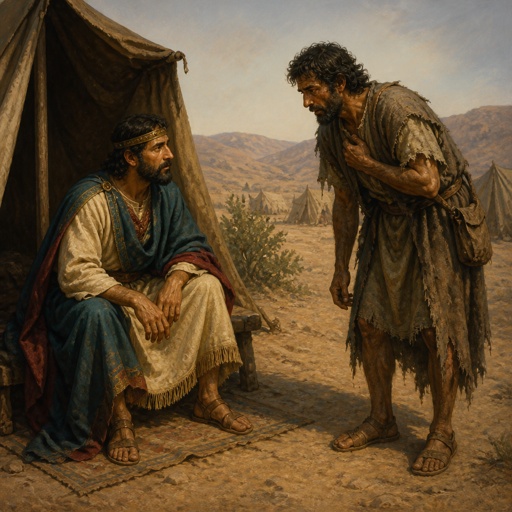
"And David said unto him, From whence comest thou? And he said unto him, Out of the camp of Israel am I escaped." - 2 Samuel 1:3

1 Samuel 16:1–13

1 Samuel 2:13 - "And the priests' custom with the people was, that, when any man offered sacrifice, the priest's servant came, while the flesh was in seething, with a fleshhook of three teeth in his hand;"

1 Samuel 13:11

1 Samuel 12:13

1 Samuel 13:3

1 Samuel 13:14

1 Samuel 12:13

1 Samuel 22:11-13

1 Samuel 15:13 - "And Samuel came to Saul: and Saul said unto him, Blessed be thou of the LORD: I have performed the commandment of the LORD."

1 Samuel 13:8 - "¶ And he tarried seven days, according to the set time that Samuel had appointed: but Samuel came not to Gilgal; and the people were scattered from him."

2 Samuel 13:38 - "So Absalom fled, and went to Geshur, and was there three years."

1 Samuel 13:23 - "And the garrison of the Philistines went out to the passage of Michmash."

2 Samuel 22:13 - "Through the brightness before him were coals of fire kindled."

1 Samuel 13:1 - "Saul reigned one year; and when he had reigned two years over Israel,"

1 Samuel 13:13 - "And Samuel said to Saul, Thou hast done foolishly: thou hast not kept the commandment of the LORD thy God, which he commanded thee: for now would the LORD have established thy kingdom upon Israel for ever."

1 Samuel 13:12 Saul's disobedience

1 Samuel 7:13 - "¶ So the Philistines were subdued, and they came no more into the coast of Israel: and the hand of the LORD was against the Philistines all the days of Samuel."

1 Samuel 1:13 - "Now Hannah, she spake in her heart; only her lips moved, but her voice was not heard: therefore Eli thought she had been drunken."

1 Samuel 13:12 No face of persons

1 Samuel 8:13 - "And he will take your daughters to be confectionaries, and to be cooks, and to be bakers."

2 Samuel 15:13 - "¶ And there came a messenger to David, saying, The hearts of the men of Israel are after Absalom."

2 Samuel 13:21 - "¶ But when king David heard of all these things, he was very wroth."

2 Samuel 1:27 - "How are the mighty fallen, and the weapons of war perished!"