The Perils of Proximity: Learning from Uriah’s Fate
“Who smote Abimelech the son of Jerubbesheth? did not a woman cast a piece of a millstone upon him from the wall, that he died in Thebez? why went ye nigh the wall? then say thou, Thy servant Uriah the Hittite is dead also.” — 2 Samuel 11:21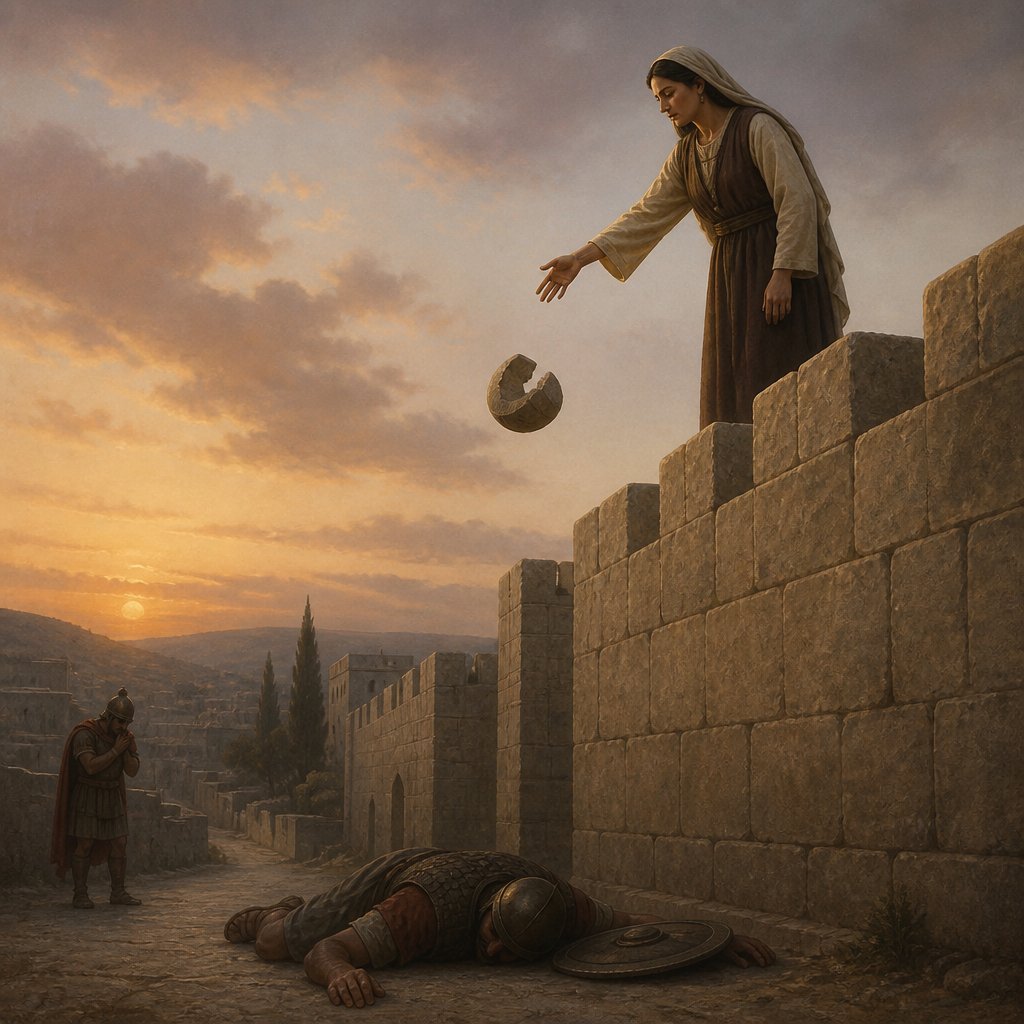
In 2 Samuel 11:21, we encounter a haunting question through the mouth of Joab, the commander of King David’s army, as he delivers a report to David about the battle’s casualties. The verse reads, "Who smote Abimelech the son of Jerubbesheth? did not a woman cast a piece of a millstone upon him from the wall, that he died in Thebez? why went ye nigh the wall? then say thou, Thy servant Uriah the Hittite is dead also." As we reflect on this passage, we find not only the historical account of war but also profound lessons about human nature, leadership, and the consequences of our actions.
To understand the context, we must remember that Uriah the Hittite was a loyal soldier of King David, one known for his bravery and commitment. Yet, against the backdrop of his loyalty stands the tragic reality of betrayal by the very king he served. The events leading to Uriah's death are darkly intertwined with David’s own moral failure, as he succumbed to temptation and committed adultery with Bathsheba, Uriah's wife, before plotting Uriah's demise to cover his sin.
Joab’s mention of Abimelech provides chilling symbolism. Abimelech, an earlier biblical character, heroically fought against overwhelming odds, only to meet his doom in a seemingly avoidable circumstance—crushed by a woman’s hand. It was an act of high-stakes warfare, where proximity to danger claimed his life. Similarly, Joab’s question to David serves as a reminder that proximity to peril in battle can result in dire consequences. For Uriah, the command to go to the front lines, too close to the wall, was a predetermined death sentence.
The scripture beckons us to ask: What walls do we approach in our lives that may lead to our downfall? There are walls of temptation, pride, and complacency that may seem innocuous at first but can lead to catastrophic spiritual devastation. Just as Joab questioned the strategy of putting men too close to the enemy wall, we must scrutinize our life choices and environments. Is there a wall of addiction, bitterness, or unconfessed sin that we are inching closer to? God urges us to maintain a safe distance from the perilous structures of life that threaten our spiritual vitality.
Moreover, this verse serves as a crucial reminder of accountability and leadership. David was not just any leader; he was a king who was expected to uphold justice and righteousness. Yet, in his quest to conceal his sin, he demonstrated the lengths to which a person may go to protect themselves from exposure. It is a stark warning against the misuse of power. For those in positions of influence, whether as leaders over families, communities, or churches, the integrity of our actions holds eternal significance. Those we lead look to us, and if we falter at the walls of moral judgment, the consequences are not ours alone to bear.
We must also note the grace that permeates even these dark circumstances. Though Uriah met a tragic end, God's redemptive plan is at work beyond choices made in folly. From Uriah's death would eventually come Solomon, a man known for his wisdom—demonstrating God’s ability to bring forth good from the ashes of human failure.
As we reflect on 2 Samuel 11:21, let us strive for integrity, remain vigilant in our choices, and keep a healthy distance from temptation. Let us also hold onto the hope that even in our darkest moments of failure, God is always ready to redeem and restore us. Like Uriah, may we be faithful in our service, and unlike the missteps of David, may we seek to live in a way that honors God and protects the sacredness of life.
Get our apps


Artwork for 2 Samuel 11:21

2 Samuel 11:21 - "Who smote Abimelech the son of Jerubbesheth? did not a woman cast a piece of a millstone upon him from the wall, that he died in Thebez? why went ye nigh the wall? then say thou, Thy servant Uriah the Hittite is dead also."
"Who smote Abimelech the son of Jerubbesheth? did not a woman cast a piece of a millstone upon him from the wall, that he died in Thebez? why went ye nigh the wall? then say thou, Thy servant Uriah the Hittite is dead also." - 2 Samuel 11:21

2 Samuel 21:11 - "And it was told David what Rizpah the daughter of Aiah, the concubine of Saul, had done."

2 Samuel 11:9

"And it was told David what Rizpah the daughter of Aiah, the concubine of Saul, had done." - 2 Samuel 21:11

2 Samuel 11

2 samuel 11

2 Samuel 11:11

2 Samuel 21:21 - "And when he defied Israel, Jonathan the son of Shimea the brother of David slew him."

2 samuel 23:8-21

2 Samuel 5:21 - "And there they left their images, and David and his men burned them."

1 Samuel 2:21 - "And the LORD visited Hannah, so that she conceived, and bare three sons and two daughters. And the child Samuel grew before the LORD."

2 Samuel 13:21 - "¶ But when king David heard of all these things, he was very wroth."

2 Samuel 2:11 - "And the time that David was king in Hebron over the house of Judah was seven years and six months."

2 Samuel 11:18 - "¶ Then Joab sent and told David all the things concerning the war;"

2 Samuel 21:22 - "These four were born to the giant in Gath, and fell by the hand of David, and by the hand of his servants."

2 Kings 11:21 - "Seven years old was Jehoash when he began to reign."

2 Samuel 11:5 - "And the woman conceived, and sent and told David, and said, I am with child."

2 Samuel 11:22 - "¶ So the messenger went, and came and shewed David all that Joab had sent him for."

2 Samuel 3:11 - "And he could not answer Abner a word again, because he feared him."

2 Samuel 11:14 - "¶ And it came to pass in the morning, that David wrote a letter to Joab, and sent it by the hand of Uriah."

1 Samuel 21:11 - "And the servants of Achish said unto him, Is not this David the king of the land? did they not sing one to another of him in dances, saying, Saul hath slain his thousands, and David his ten thousands?"

2 Samuel 22:21 - "The LORD rewarded me according to my righteousness: according to the cleanness of my hands hath he recompensed me."

2 Samuel 19:21 - "But Abishai the son of Zeruiah answered and said, Shall not Shimei be put to death for this, because he cursed the LORD'S anointed?"

2 Samuel 21:18 - "And it came to pass after this, that there was again a battle with the Philistines at Gob: then Sibbechai the Hushathite slew Saph, which was of the sons of the giant."

2 Samuel 22:11 - "And he rode upon a cherub, and did fly: and he was seen upon the wings of the wind."

2 Samuel 21:13 - "And he brought up from thence the bones of Saul and the bones of Jonathan his son; and they gathered the bones of them that were hanged."

2 Samuel 21:7 - "But the king spared Mephibosheth, the son of Jonathan the son of Saul, because of the LORD'S oath that was between them, between David and Jonathan the son of Saul."

2 Samuel 11:6 - "¶ And David sent to Joab, saying, Send me Uriah the Hittite. And Joab sent Uriah to David."

2 Samuel 11:26 - "¶ And when the wife of Uriah heard that Uriah her husband was dead, she mourned for her husband."