The Weight of Our Judgments
“And David’s anger was greatly kindled against the man; and he said to Nathan, As the LORD liveth, the man that hath done this thing shall surely die:” — 2 Samuel 12:5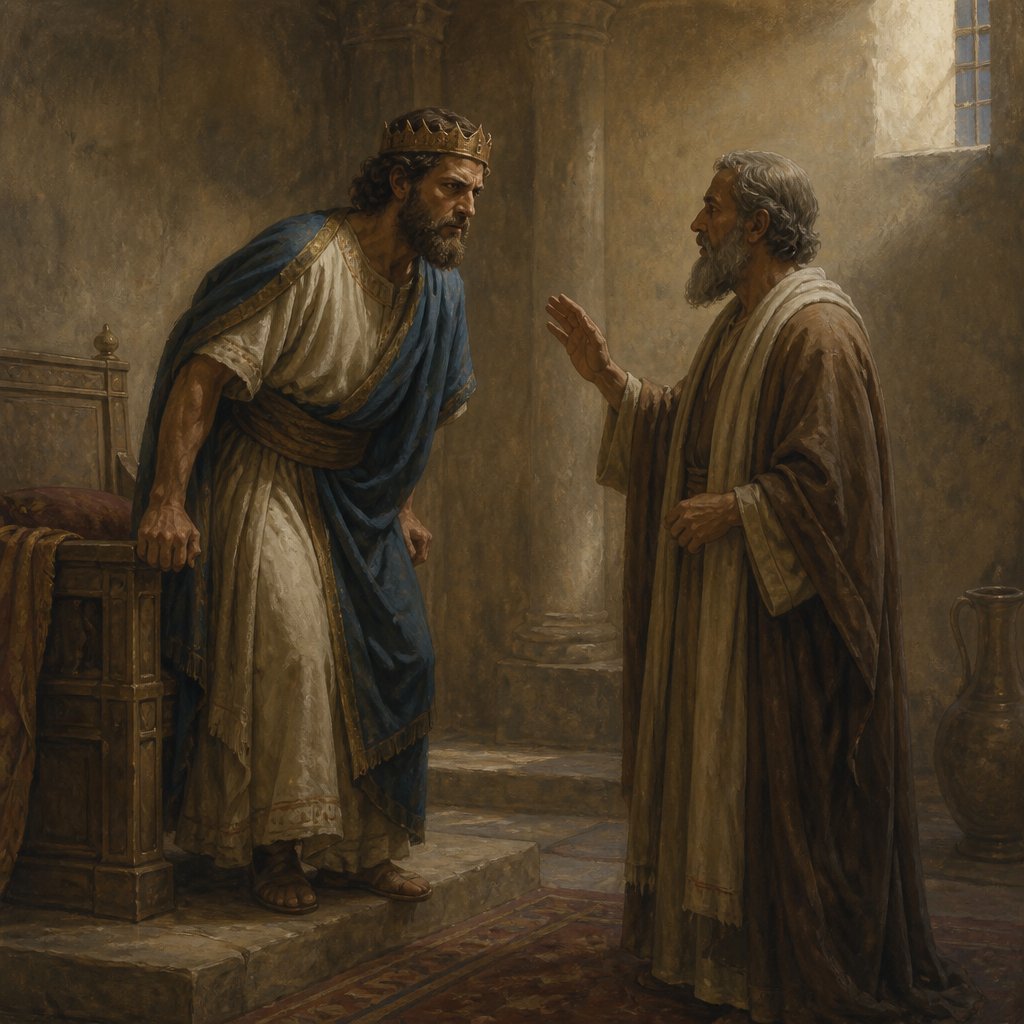
**Scripture Reading: 2 Samuel 12:1-7**
"And David's anger was greatly kindled against the man; and he said to Nathan, As the LORD liveth, the man that hath done this thing shall surely die."
In this poignant moment captured in 2 Samuel 12, we find King David in a state of righteous indignation. Nathan the prophet has just told David a parable about a rich man who took the only lamb of a poor man, provoking David's anger. David's immediate response was to decree that the man who committed this heinous act deserved death. However, the tale unfolds to reveal that David was, in fact, the man in question, having orchestrated the death of Uriah to cover up his sins with Bathsheba. As we reflect on this scripture, we are reminded of several profound lessons regarding judgment, sin, and the mercy of God.
### The Danger of Self-Righteous Anger
David's anger was kindled for what he perceived as a great injustice. His instinct was to punish the one who had committed such a moral atrocity. But how often do we find ourselves in a similar position? We are quick to judge the failings and sins of others, perhaps blinded to our own shortcomings. This story serves as a cautionary tale against the peril of self-righteousness. It is a sobering reminder that the measure we use to judge others will be the measure used against us (Luke 6:38).
### The Call to Self-Examination
In the heat of our anger over the wrongs committed by others, we must ask ourselves if we have taken the time to reflect on our own hearts. Do we recognize our sins and shortcomings before pointing out the transgressions of another? Psalm 139:23-24 reminds us to invite the Lord to search our hearts and reveal any offensive ways within us. As David issued his judgment upon the fictional rich man, he was blind to the weight of his own sins.
### The Heart of God’s Justice
God’s response, through Nathan, reveals not only the justice of God but also His mercy. Nathan’s use of a parable was designed to open David’s eyes, leading him to understand his own wrongdoing. Nathan’s declaration, “Thou art the man,” was not delivered merely as an indictment but as a pathway for David to recognize his need for repentance. God's justice is always intertwined with His grace, offering us the opportunity to repent and be restored.
This scenario illustrates the patience of God toward His servants. God does not desire our punishment but longs for our repentance and reconciliation with Him. In David’s case, his subsequent repentance (as detailed in Psalm 51) shows the fruit of a broken spirit and contrite heart, which God will not despise.
### The Call to Repentance
When faced with our faults, we have an opportunity—to wallow in guilt or to repent and come back to our God. David’s example teaches us that even the greatest among us can fall drastically and be ensnared by sin, yet redemption is always within reach through sincere repentance. 2 Samuel 12 encourages us to avoid the path of judgment and instead embrace a heart that seeks restoration, both for ourselves and for those we might be inclined to judge.
### Conclusion: Choose Grace Over Judgment
As we meditate on Nathan’s correction of David, let us be reminded to examine our own lives, aligning our judgments against our own actions. Let our statement, "the man that hath done this thing shall surely die" transform into a heartfelt plea for mercy, both for ourselves and others. Instead of condemning, let us cultivate forgiveness. After all, "Blessed are the merciful: for they shall obtain mercy" (Matthew 5:7).
Thus, as we undertake this journey of self-examination, let us speak words of grace to ourselves and to others. Let our responses to perceived injustices be born out of compassion rather than anger, reflecting the heart of our gracious God.
Get our apps


Artwork for 2 Samuel 12:5

2 Samuel 12:5 - "And David's anger was greatly kindled against the man; and he said to Nathan, As the LORD liveth, the man that hath done this thing shall surely die:"
"And David's anger was greatly kindled against the man; and he said to Nathan, As the LORD liveth, the man that hath done this thing shall surely die:" - 2 Samuel 12:5

2 Samuel 5:12

2 Samuel 5:12 - "And David perceived that the LORD had established him king over Israel, and that he had exalted his kingdom for his people Israel's sake."

1 Samuel 2:12

2 Samuel 12:2 - "The rich man had exceeding many flocks and herds:"

1 Samuel 5:12 - "And the men that died not were smitten with the emerods: and the cry of the city went up to heaven."

2 Samuel 5:16 - "And Elishama, and Eliada, and Eliphalet."

2 Samuel 12:12 - "For thou didst it secretly: but I will do this thing before all Israel, and before the sun."

2 Samuel 5:15 - "Ibhar also, and Elishua, and Nepheg, and Japhia,"

2 Samuel 2:12 - "¶ And Abner the son of Ner, and the servants of Ish-bosheth the son of Saul, went out from Mahanaim to Gibeon."

1 Samuel 2:12 - "¶ Now the sons of Eli were sons of Belial; they knew not the LORD."

2 Samuel 5:18 - "The Philistines also came and spread themselves in the valley of Rephaim."

2 Samuel 5:21 - "And there they left their images, and David and his men burned them."

2 Samuel 5:7 - "Nevertheless David took the strong hold of Zion: the same is the city of David."

2 Samuel 12:26 - "And Joab fought against Rabbah of the children of Ammon, and took the royal city."

2 Samuel 5:10 - "And David went on, and grew great, and the LORD God of hosts was with him."

2 Samuel 11:5 - "And the woman conceived, and sent and told David, and said, I am with child."

2 Samuel 5:22 - "¶ And the Philistines came up yet again, and spread themselves in the valley of Rephaim."

2 Samuel 12:29 - "And David gathered all the people together, and went to Rabbah, and fought against it, and took it."

"And Elishama, and Eliada, and Eliphalet." - 2 Samuel 5:16

2 Samuel 3:5 - "And the sixth, Ithream, by Eglah David's wife. These were born to David in Hebron."

1 Samuel 5:2 - "When the Philistines took the ark of God, they brought it into the house of Dagon, and set it by Dagon."

2 Samuel 23:12 - "But he stood in the midst of the ground, and defended it, and slew the Philistines: and the LORD wrought a great victory."

2 Samuel 5:5 - "In Hebron he reigned over Judah seven years and six months: and in Jerusalem he reigned thirty and three years over all Israel and Judah."

2 Samuel 8:12 - "Of Syria, and of Moab, and of the children of Ammon, and of the Philistines, and of Amalek, and of the spoil of Hadadezer, son of Rehob, king of Zobah."

2 Samuel 22:12 - "And he made darkness pavilions round about him, dark waters, and thick clouds of the skies."

2 Samuel 16:12 - "It may be that the LORD will look on mine affliction, and that the LORD will requite me good for his cursing this day."

2 Samuel 12:25 - "And he sent by the hand of Nathan the prophet; and he called his name Jedidiah, because of the LORD."

"The rich man had exceeding many flocks and herds:" - 2 Samuel 12:2