The Art of Reconciliation
“So Joab came to the king, and told him: and when he had called for Absalom, he came to the king, and bowed himself on his face to the ground before the king: and the king kissed Absalom.” — 2 Samuel 14:33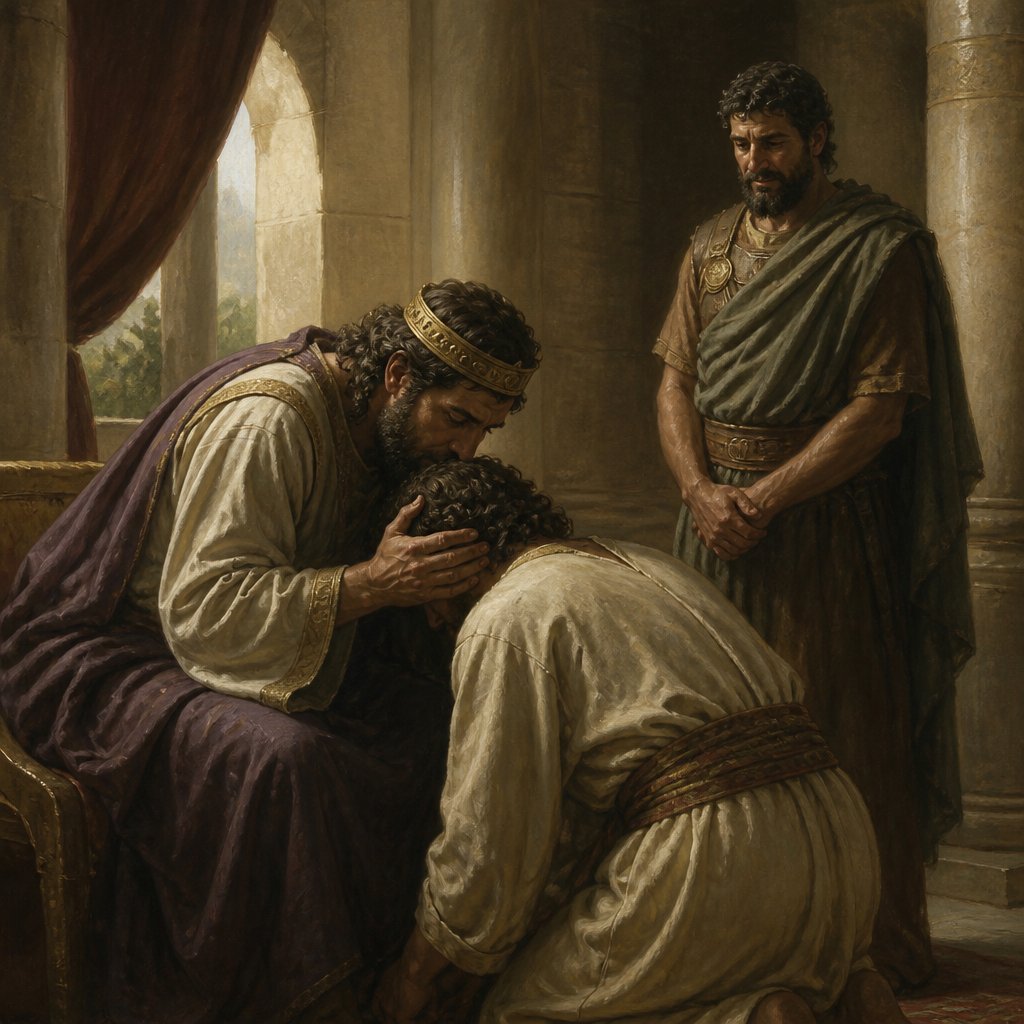
In the rich narrative of 2 Samuel 14:33, we observe a complex yet poignant moment in the life of King David and his son Absalom: "So Joab came to the king, and told him: and when he had called for Absalom, he came to the king, and bowed himself on his face to the ground before the king: and the king kissed Absalom." This verse not only captures a physical act of reconciliation but reflects deeper spiritual truths that resonate across generations.
To fully appreciate this event, we must consider the backdrop. Absalom, once a favored son of David, had become embroiled in family strife that led to his estrangement from the king. After killing his brother Amnon out of revenge, he fled into exile, forced to live away from his father and the kingdom. In the annals of biblical history, the relationship between father and son was severely fractured by pride, betrayal, and the consequences of sin.
In our contemporary society, familial relationships often face the threat of dissolution due to misunderstandings, conflicts, and grievances. Many of us can identify with the tension that arises within families, where love is tested and loyalty questioned. In this context, Joab's role as the mediator is significant. He recognizes the pain of separation and seeks to restore the relationship between David and Absalom, reminding us of the importance of peacemaking in our own lives. Joab’s persistent efforts are a testament to the role of intercession in reconciliation—a calling we are all encouraged to take seriously.
David's invitation to Absalom can be interpreted in various ways. First, it signifies the king's willingness to confront the wounds that separated him from his son. It is an acknowledgment of the need for communication and understanding, reminiscent of the call in Matthew 5:23-24, which urges us to reconcile with our brothers before offering gifts at the altar. This act of David drew forth humility from Absalom, who bowed his face to the ground before the king. Here, we see that true reconciliation often calls for humility and repentance. In submitting physically before his father, Absalom was expressing his desire for forgiveness and restoration.
Moreover, the climax of this encounter is manifested in David's act of kissing Absalom. This gesture is highly symbolic; in Hebrew culture, a kiss signifies affection, acceptance, and a return to fellowship. It is a picture of grace—a demonstration that despite past actions, there remains a pathway to love and forgiveness. Just as God, our Father, extends His grace towards us despite our transgressions, so too does David open his arms to his son.
In our spiritual journey, we often face moments where reconciliation is overdue. As recipients of God’s grace, we too are called to express that grace towards others. This interaction between David and Absalom challenges us to examine our own relationships and consider that perhaps there are unresolved issues or individuals we need to approach. It invites us to ponder: are we willing to humble ourselves and seek forgiveness from those we have wronged? Are we ready to embrace those who seek our forgiveness?
The potential for healing in relationships is always present; we must be willing to engage in the process of reconciliation. It may be grueling, requiring honest dialogue and vulnerability. Yet, as we see in David and Absalom's story, the fruits of such efforts can yield restoration and a renewed bond. In every act of breaking bread, or even in a simple hug, we can be reminded of that kiss—symbolizing love that covers a multitude of sins.
As we conclude our reflection on this powerful verse, let us open our hearts to the leading of the Holy Spirit. May we strive to be instruments of reconciliation in our families and communities, emulating the fatherly comfort that David offered to Absalom. Let this be a reminder that while we may face betrayal and rifts, the embrace of forgiveness is always within reach, waiting to restore us to our rightful place as beloved children.
Get our apps


Artwork for 2 Samuel 14:33

2 Samuel 14:33 - "So Joab came to the king, and told him: and when he had called for Absalom, he came to the king, and bowed himself on his face to the ground before the king: and the king kissed Absalom."
"So Joab came to the king, and told him: and when he had called for Absalom, he came to the king, and bowed himself on his face to the ground before the king: and the king kissed Absalom." - 2 Samuel 14:33

2 Samuel 23:33 - "Shammah the Hararite, Ahiam the son of Sharar the Hararite,"

2 Samuel 3:33 - "And the king lamented over Abner, and said, Died Abner as a fool dieth?"

2 Samuel 22:33 - "God is my strength and power: and he maketh my way perfect."
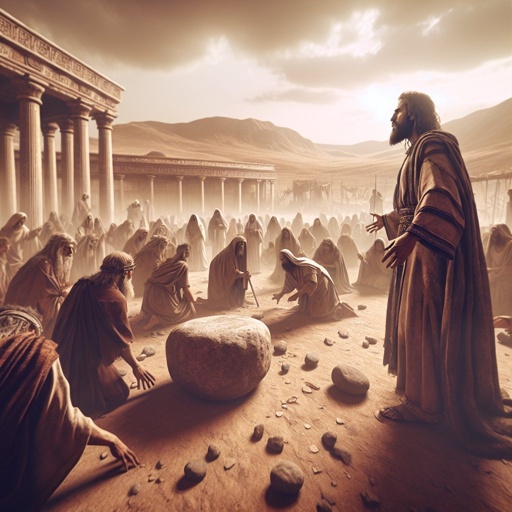
1 Samuel 14:33 - "¶ Then they told Saul, saying, Behold, the people sin against the LORD, in that they eat with the blood. And he said, Ye have transgressed: roll a great stone unto me this day."

2 Samuel 15:33 - "Unto whom David said, If thou passest on with me, then thou shalt be a burden unto me:"

2 Samuel 19:33 - "And the king said unto Barzillai, Come thou over with me, and I will feed thee with me in Jerusalem."

2 Samuel 6:14

"Shammah the Hararite, Ahiam the son of Sharar the Hararite," - 2 Samuel 23:33

2 Samuel 6:14–22

2 Samuel 23:14 - "And David was then in an hold, and the garrison of the Philistines was then in Beth-lehem."

2 Samuel 13:33 - "Now therefore let not my lord the king take the thing to his heart, to think that all the king's sons are dead: for Amnon only is dead."

2 Samuel 14:23 - "So Joab arose and went to Geshur, and brought Absalom to Jerusalem."

2 Samuel 22:14 - "The LORD thundered from heaven, and the most High uttered his voice."

2 Samuel 16:14 - "And the king, and all the people that were with him, came weary, and refreshed themselves there."

2 Samuel 14:1 - "Now Joab the son of Zeruiah perceived that the king's heart was toward Absalom."

1 Samuel 17:33

2 Samuel 14:28 - "¶ So Absalom dwelt two full years in Jerusalem, and saw not the king's face."

2 Samuel 11:14 - "¶ And it came to pass in the morning, that David wrote a letter to Joab, and sent it by the hand of Uriah."

"God is my strength and power: and he maketh my way perfect." - 2 Samuel 22:33

"And the king lamented over Abner, and said, Died Abner as a fool dieth?" - 2 Samuel 3:33

2 Samuel 2:14 - "And Abner said to Joab, Let the young men now arise, and play before us. And Joab said, Let them arise."

2 Samuel 5:14 - "And these be the names of those that were born unto him in Jerusalem; Shammua, and Shobab, and Nathan, and Solomon,"

2 Samuel 6:14 - "And David danced before the LORD with all his might; and David was girded with a linen ephod."

2 Samuel 14:8 - "And the king said unto the woman, Go to thine house, and I will give charge concerning thee."

2 Samuel 14:3 - "And come to the king, and speak on this manner unto him. So Joab put the words in her mouth."

1 Samuel 2:33 - "And the man of thine, whom I shall not cut off from mine altar, shall be to consume thine eyes, and to grieve thine heart: and all the increase of thine house shall die in the flower of their age."

Luke 14:25 - 33

Matthew 14:22-33