Faithfulness in Service: A Devotional on 2 Samuel 16:19
“And again, whom should I serve? should I not serve in the presence of his son? as I have served in thy father’s presence, so will I be in thy presence.” — 2 Samuel 16:19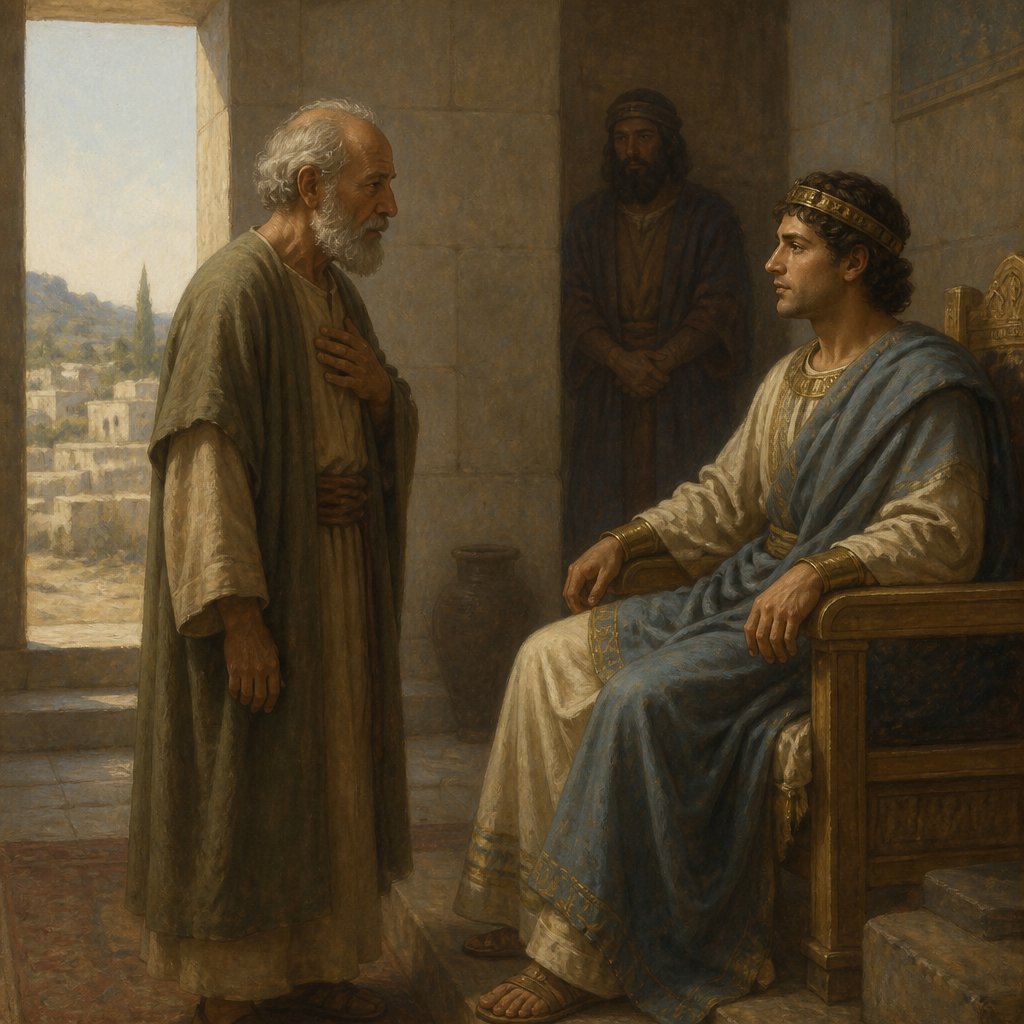
In the journey of faith, the lesson of service and loyalty often takes center stage. The words of 2 Samuel 16:19 resonate deeply within us: "And again, whom should I serve? should I not serve in the presence of his son? as I have served in thy father's presence, so will I be in thy presence." This passage emerges from a moment amid political turmoil, betrayal, and shifts in power—a time in which profound loyalty is tested.
The speaker here is Ziba, the servant of Mephibosheth, King Saul's grandson. Ziba finds himself in a precarious position; King David is fleeing Jerusalem, having been confronted with an insurrection led by his son Absalom. It is a moment where alliances are uncertain, and the question of who deserves our service becomes extremely significant.
In Ziba's declaration, we discover profound loyalty. His words suggest a commitment not only to David, the chosen king, but to the legacy of his house, honoring the vow David made to Saul's lineage when he swore to show kindness to Mephibosheth. Ziba’s action of presenting himself before David conveys a heart positioned for service, regardless of the shifting tides of loyalty around him.
As Christians, we are often faced with similar questions: 'Whom should I serve?' In a world where loyalty can shift with the wind—where popular opinion and societal trends sway like trees in a storm—this question demands our attention. Each day, we find ourselves at a crossroad, called to reaffirm our commitment to serve Christ and those He places in our path. Are we standing firm in our service, as Ziba did, irrespective of the changing dynamics around us?
Let us delve into Ziba's motivation. His decision to serve David was rooted in a historical fidelity established by David’s unwavering love for Mephibosheth. This reflects God’s unchanging nature in our lives—He is ever faithful, and in His presence, we find our purpose. When we choose to serve, we do not do it for the recognition of men, but as an expression of our love for God and our dedication to His purpose.
The question Ziba presents—"should I not serve in the presence of his son?"—also speaks to the importance of respecting the authority God has placed in our lives. It challenges us to consider our humility in service positions. Ziba acknowledges that he must serve David’s son as he had served David’s father. This need for continuity signifies a culture of honor and respect, where the lineage and authority given by God are accepted and revered.
This passage also invites reflection on the nature of our service. Are we serving with joy, humility, and obedience? Are we merely doing our duty, or is our heart genuinely engaged in the act of serving others and glorifying God? Faithfulness in service requires our hearts to continually align with God’s will, regardless of our circumstances or the reception we meet. Ziba's unwavering commitment illustrates that true service is not contingent on the outcomes or the temporary situations but anchored in the assurance that our actions reflect our faith in God's overarching plan.
In conclusion, 2 Samuel 16:19 beckons us to examine our own hearts and the motives behind our desire to serve. Just as Ziba chose to remain loyal despite the dangerous political climate, we must commit our spirits to serve God and others in every season of our lives. Remember, dear friends, as we serve in the presence of the King, our service not only honors our commitments but also testifies to the faithfulness of a loving God who never abandons His children. May we embody Ziba's spirit, ever ready to serve in whatever assignment God places before us, for His glory and our ultimate joy.
Get our apps


Artwork for 2 Samuel 16:19

2 Samuel 16:19 - "And again, whom should I serve? should I not serve in the presence of his son? as I have served in thy father's presence, so will I be in thy presence."
"And again, whom should I serve? should I not serve in the presence of his son? as I have served in thy father's presence, so will I be in thy presence." - 2 Samuel 16:19

2 Samuel 19:16 - "¶ And Shimei the son of Gera, a Benjamite, which was of Bahurim, hasted and came down with the men of Judah to meet king David."

1 Samuel 16:19 - "¶ Wherefore Saul sent messengers unto Jesse, and said, Send me David thy son, which is with the sheep."

2 Samuel 19:8

1 Samuel 19:16 - "And when the messengers were come in, behold, there was an image in the bed, with a pillow of goats' hair for his bolster."

2 Samuel 19:8

2 Samuel 19:8

2 Samuel 19:8

2 Samuel 19:24

2 Samuel 5:16 - "And Elishama, and Eliada, and Eliphalet."

"¶ And Shimei the son of Gera, a Benjamite, which was of Bahurim, hasted and came down with the men of Judah to meet king David." - 2 Samuel 19:16

2 Kings 3:16-19

2 Samuel 19:1 - "And it was told Joab, Behold, the king weepeth and mourneth for Absalom."

2 Samuel 22:19 - "They prevented me in the day of my calamity: but the LORD was my stay."

2 Samuel 24:19 - "And David, according to the saying of Gad, went up as the LORD commanded."

2 Samuel 2:19 - "And Asahel pursued after Abner; and in going he turned not to the right hand nor to the left from following Abner."

2 Samuel 1:19 - "The beauty of Israel is slain upon thy high places: how are the mighty fallen!"

2 Samuel 8:16 - "And Joab the son of Zeruiah was over the host; and Jehoshaphat the son of Ahilud was recorder;"

"And Elishama, and Eliada, and Eliphalet." - 2 Samuel 5:16

2 Samuel 19:2 - "And the victory that day was turned into mourning unto all the people: for the people heard say that day how the king was grieved for his son."

2 Samuel 16:15 - "¶ And Absalom, and all the people the men of Israel, came to Jerusalem, and Ahithophel with him."

2 Samuel 16:14 - "And the king, and all the people that were with him, came weary, and refreshed themselves there."

Soothing the Soul: The Gospel of Gentle Care 1 Kings 19:3-8; 1 Samuel 16:14-23

Soothing the Soul: The Gospel of Gentle Care 1 Kings 19:3-8; 1 Samuel 16:14-23

2 Samuel 16:20 - "¶ Then said Absalom to Ahithophel, Give counsel among you what we shall do."

2 Samuel 16:16 - "And it came to pass, when Hushai the Archite, David's friend, was come unto Absalom, that Hushai said unto Absalom, God save the king, God save the king."

2 Samuel 19:23 - "Therefore the king said unto Shimei, Thou shalt not die. And the king sware unto him."

1 Samuel 16:2 - "And Samuel said, How can I go? if Saul hear it, he will kill me. And the LORD said, Take an heifer with thee, and say, I am come to sacrifice to the LORD."

2 Samuel 11:19 - "And charged the messenger, saying, When thou hast made an end of telling the matters of the war unto the king,"