The Legacy of Kindness: Honoring the Fallen
“And David sent messengers unto the men of Jabesh-gilead, and said unto them, Blessed be ye of the LORD, that ye have shewed this kindness unto your lord, even unto Saul, and have buried him.” — 2 Samuel 2:5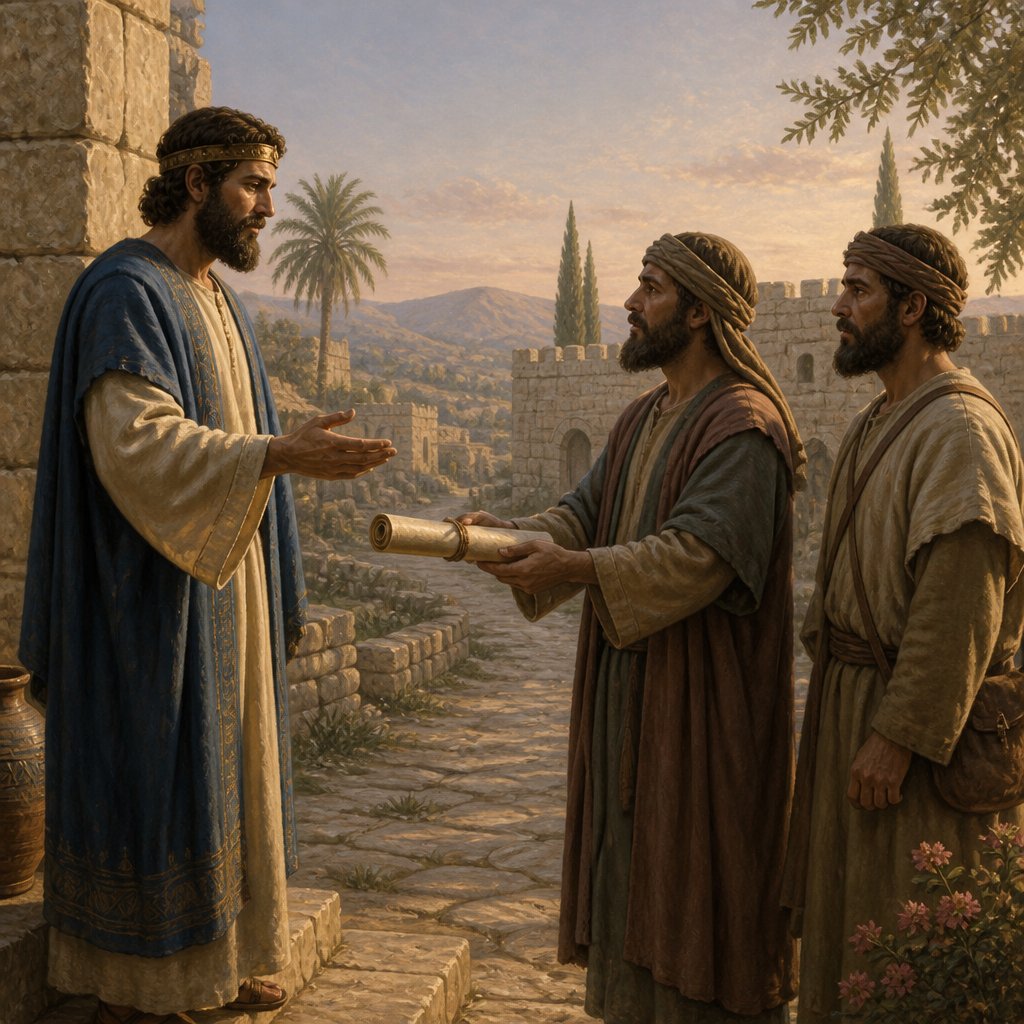
In 2 Samuel 2:5, we witness a powerful moment that echoes across the ages—David, now anointed king, sends messengers to Jabesh-gilead with a profound message of honor and gratitude. The text states, "And David sent messengers unto the men of Jabesh-gilead, and said unto them, Blessed be ye of the LORD, that ye have shewed this kindness unto your lord, even unto Saul, and have buried him." This verse not only highlights David's respect for the fallen King Saul but also reminds us of the importance of kindness and respect, even towards those who may be seen as our adversaries.
David's acknowledgment of the men of Jabesh-gilead demonstrates a significant lesson on legacy and respect. After Saul's tragic death, these men took it upon themselves to retrieve his body from the Philistines, honoring the king even in death. Their actions reflected a deep sense of loyalty and duty—a kindness that can often be overlooked in our modern context where animosity can easily substitute for respect. David's commendation is a reminder that honoring those who came before us is a pathway to true leadership and moral integrity.
When David expresses a blessing upon the men of Jabesh-gilead, he underscores that kindness, especially in the context of death, is a sacred act. It reveals the depth of their integrity and showcases the character of those who choose to act honorably, regardless of others’ opinions. We live in a world that sometimes encourages us to vilify our enemies, to celebrate the downfall of those we oppose. Yet, David’s response teaches us a different way, a way that encapsulates grace and honor.
Consider the times we might find ourselves in a conflict with someone. How often do we remember the good they have done, or the sacrifices they have made? In many ways, David challenges us to reflect on our relationships, not just through the lens of rivalry, but also through the understanding of our shared humanity. Saul may have pursued David with hostility, attempting to take his life, yet David, however, recognizes that even in Saul’s imperfections, there was a king deserving of respect and burial befitting his station.
In our own lives, we are called to be messengers of kindness. The act of honoring others, especially those who have fallen out of favor or whose deeds may not align with our perspectives, is a challenging yet noble task. Just as the men of Jabesh-gilead showed kindness by ensuring Saul had a proper burial, so too can we find ways to honor the dignity of others, regardless of our differences. Each act of kindness is a stepping stone to building a legacy that speaks of love, forgiveness, and respect.
Moreover, David’s blessing serves as an important reminder that kindness often leads to greater blessings. When we show love and compassion—especially during difficult times—we cultivate an atmosphere of peace that benefits not only us but others as well. The men of Jabesh-gilead acted courageously, risking their lives to rescue Saul's body; their kindness was a catalyst for David’s gratitude, a reminder that our actions resonate beyond our immediate context.
As we meditate on this verse, let us ask ourselves: How do we honor others in our lives, especially those we disagree with? Are we willing to extend kindness, recognizing the value in every person's story? Let us strive to emulate David's example, recognizing that our true strength lies in our ability to love deeply and honorably, bridging the gaps and darkness with the light of our kindness. In doing so, we not only reflect the character of Christ but also pave the way for a legacy of peace and goodwill that transcends even the deepest divides.
Get our apps


Artwork for 2 Samuel 2:5

2 Samuel 2:5 - "¶ And David sent messengers unto the men of Jabesh-gilead, and said unto them, Blessed be ye of the LORD, that ye have shewed this kindness unto your lord, even unto Saul, and have buried him."
"¶ And David sent messengers unto the men of Jabesh-gilead, and said unto them, Blessed be ye of the LORD, that ye have shewed this kindness unto your lord, even unto Saul, and have buried him." - 2 Samuel 2:5

2 Samuel 5:12

2 Samuel 5:16 - "And Elishama, and Eliada, and Eliphalet."

2 Samuel 5:15 - "Ibhar also, and Elishua, and Nepheg, and Japhia,"

2 Samuel 5:21 - "And there they left their images, and David and his men burned them."

2 Samuel 5:18 - "The Philistines also came and spread themselves in the valley of Rephaim."

2 Samuel 5:7 - "Nevertheless David took the strong hold of Zion: the same is the city of David."

2 Samuel 5:10 - "And David went on, and grew great, and the LORD God of hosts was with him."

2 Samuel 11:5 - "And the woman conceived, and sent and told David, and said, I am with child."

2 Samuel 5:22 - "¶ And the Philistines came up yet again, and spread themselves in the valley of Rephaim."

"And Elishama, and Eliada, and Eliphalet." - 2 Samuel 5:16

2 Samuel 3:5 - "And the sixth, Ithream, by Eglah David's wife. These were born to David in Hebron."

1 Samuel 5:2 - "When the Philistines took the ark of God, they brought it into the house of Dagon, and set it by Dagon."

2 Samuel 22:5 - "When the waves of death compassed me, the floods of ungodly men made me afraid;"

2 Samuel 5:14 - "And these be the names of those that were born unto him in Jerusalem; Shammua, and Shobab, and Nathan, and Solomon,"

2 Samuel 5:4 - "¶ David was thirty years old when he began to reign, and he reigned forty years."

2 Samuel 5:5 - "In Hebron he reigned over Judah seven years and six months: and in Jerusalem he reigned thirty and three years over all Israel and Judah."

2 Samuel 5:11 - "¶ And Hiram king of Tyre sent messengers to David, and cedar trees, and carpenters, and masons: and they built David an house."

2 Samuel 9:5 - "¶ Then king David sent, and fetched him out of the house of Machir, the son of Ammiel, from Lo-debar."

2 Samuel 1:5 - "And David said unto the young man that told him, How knowest thou that Saul and Jonathan his son be dead?"

"Ibhar also, and Elishua, and Nepheg, and Japhia," - 2 Samuel 5:15

2 Samuel 5:9 - "So David dwelt in the fort, and called it the city of David. And David built round about from Millo and inward."

2 Samuel 17:5 - "Then said Absalom, Call now Hushai the Archite also, and let us hear likewise what he saith."

2 Samuel 24:5 - "¶ And they passed over Jordan, and pitched in Aroer, on the right side of the city that lieth in the midst of the river of Gad, and toward Jazer:"

2 Samuel 5:25 - "And David did so, as the LORD had commanded him; and smote the Philistines from Geba until thou come to Gazer."

2 Samuel 7:5 - "Go and tell my servant David, Thus saith the LORD, Shalt thou build me an house for me to dwell in?"

2 Samuel 5:1 - "Then came all the tribes of Israel to David unto Hebron, and spake, saying, Behold, we are thy bone and thy flesh."

2 Samuel 8:5 - "And when the Syrians of Damascus came to succour Hadadezer king of Zobah, David slew of the Syrians two and twenty thousand men."

2 Samuel 21:5 - "And they answered the king, The man that consumed us, and that devised against us that we should be destroyed from remaining in any of the coasts of Israel,"