Building Altars of Obedience: A Reflection on 2 Samuel 24:18
“And Gad came that day to David, and said unto him, Go up, rear an altar unto the LORD in the threshingfloor of Araunah the Jebusite.” — 2 Samuel 24:18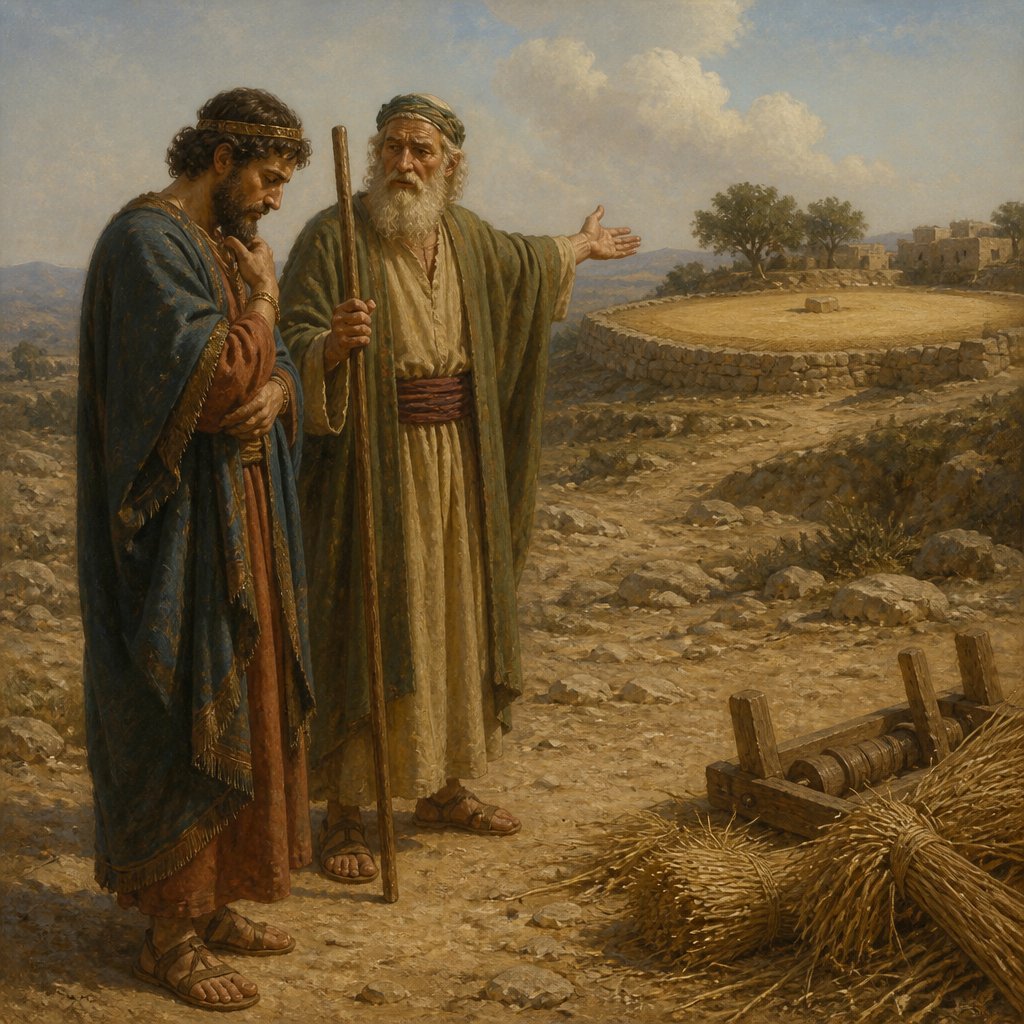
The story surrounding 2 Samuel 24 is a compelling narrative of pride, repentance, and divine mercy. In the heart of this chapter’s climax, we encounter a pivotal moment: "And Gad came that day to David, and said unto him, Go up, rear an altar unto the LORD in the threshingfloor of Araunah the Jebusite." (2 Samuel 24:18, KJV). This verse not only marks a physical act but also reflects a deeper spiritual truth about our relationship with God.
The setting of this scripture is one of tension. King David, a man after God’s own heart, finds himself ensnared in a moment of pride. After conducting a census of Israel’s fighting men, which was contrary to God’s command, David became aware of his misstep. The Lord, in His justice, sent a plague upon the people as punishment. As David witnessed the devastation around him, his heart was heavy with grief and conviction. It is in response to his sorrow and need for repentance that the prophet Gad delivers a profound command from the Lord.
Gad’s instructions are clear: David is to build an altar to the Lord. This is significant. The threshing floor of Araunah the Jebusite is the very place where David would acknowledge his sin and seek atonement before God. The act of building an altar is exceptionally symbolic in the Old Testament; it represents a place of sacrifice, worship, and communion with God. David understands that an altar must be built – not just any altar, but one that is purposed for the Lord. This signifies his decision to turn back to God with a heart of obedience and contrition.
As believers today, we find ourselves asking: What does it mean to build altars in our lives? In the haste and chaos of everyday existence, we often overlook the need for sacred moments of worship and reflection. An altar symbolizes our engagement with God – a space where we come before Him, ready to lay down our burdens and bring forth our offerings. Creating an altar could mean dedicating time each day for prayer and scripture reading or designating a physical space in our homes for worship and reflection.
Moreover, David’s choice of location is significant as well. Araunah's threshing floor is not just a convenient patch of land; it is a place of work where the grain is separated from the chaff. Spiritually, this is a metaphor for our own lives as we come before God, bringing Him the grain of our faith, stripped of our pride and sin. It bears resemblance to the New Testament principle where Jesus invites us to come to Him, to sift our lives in His presence so we can be transformed and redeemed.
As David approaches Araunah to purchase the threshing floor, we learn another vital lesson about worship. Araunah, upon recognizing the king’s intentions, offers to give him the threshing floor for free, but David insists on paying. "Neither will I offer burnt offerings unto the LORD my God of that which doth cost me nothing" (2 Samuel 24:24, KJV). This highlights the principle of sacrificial giving in worship. Our offerings to God shouldn’t come from our excess – they should cost us. An altar built from our sacrifices signifies a genuine commitment and a heart aligned with God’s will.
In conclusion, the directive given to David through Gad encapsulates much more than a mere act of building; it underscores the essence of seeking God with a repentant heart and the intention of genuine worship. In our daily lives, may we seek to erect altars – bringing before the Lord our whole selves, investing in our relationship with Him, and offering sacrifices that reflect our love and devotion. As we build these altars, let us carry forth the spirit of David: to be obedient, to seek repentance, and to offer our very best to the Lord.
Get our apps


Artwork for 2 Samuel 24:18

2 Samuel 24:18 - "And Gad came that day to David, and said unto him, Go up, rear an altar unto the LORD in the threshingfloor of Araunah the Jebusite."

"And Gad came that day to David, and said unto him, Go up, rear an altar unto the LORD in the threshingfloor of Araunah the Jebusite." - 2 Samuel 24:18

1 Samuel 18:24 - "And the servants of Saul told him, saying, On this manner spake David."

2 Samuel 18:24 - "And David sat between the two gates: and the watchman went up to the roof over the gate unto the wall, and lifted up his eyes, and looked, and behold a man running alone."

2 Samuel 24:22

2 Samuel 24:22

2 Samuel 24:22

2 Samuel 19:24

1 Samuel 2:18 - "¶ But Samuel ministered before the LORD, being a child, girded with a linen ephod."

2 Samuel 20:24 - "And Adoram was over the tribute: and Jehoshaphat the son of Ahilud was recorder:"

2 Samuel 24:19 - "And David, according to the saying of Gad, went up as the LORD commanded."

"And the servants of Saul told him, saying, On this manner spake David." - 1 Samuel 18:24

2 Samuel 5:18 - "The Philistines also came and spread themselves in the valley of Rephaim."

2 Samuel 24:6 - "Then they came to Gilead, and to the land of Tahtim-hodshi; and they came to Dan-jaan, and about to Zidon,"

2 Samuel 2:18 - "¶ And there were three sons of Zeruiah there, Joab, and Abishai, and Asahel: and Asahel was as light of foot as a wild roe."

2 Samuel 23:24 - "Asahel the brother of Joab was one of the thirty; Elhanan the son of Dodo of Beth-lehem,"

2 Samuel 11:18 - "¶ Then Joab sent and told David all the things concerning the war;"

1 Samuel 24:18 - "And thou hast shewed this day how that thou hast dealt well with me: forasmuch as when the LORD had delivered me into thine hand, thou killedst me not."

2 Samuel 22:24 - "I was also upright before him, and have kept myself from mine iniquity."

2 Samuel 17:24 - "Then David came to Mahanaim. And Absalom passed over Jordan, he and all the men of Israel with him."

1 Samuel 2:24 - "Nay, my sons; for it is no good report that I hear: ye make the LORD'S people to transgress."

2 Samuel 18:6 - "¶ So the people went out into the field against Israel: and the battle was in the wood of Ephraim;"

2 Samuel 24:11 - "For when David was up in the morning, the word of the LORD came unto the prophet Gad, David's seer, saying,"

2 Samuel 24:5 - "¶ And they passed over Jordan, and pitched in Aroer, on the right side of the city that lieth in the midst of the river of Gad, and toward Jazer:"

2 Samuel 24:8 - "So when they had gone through all the land, they came to Jerusalem at the end of nine months and twenty days."

1 Samuel 18:2 - "And Saul took him that day, and would let him go no more home to his father's house."

2 Samuel 2:24 - "Joab also and Abishai pursued after Abner: and the sun went down when they were come to the hill of Ammah, that lieth before Giah by the way of the wilderness of Gibeon."

2 Samuel 18:10 - "And a certain man saw it, and told Joab, and said, Behold, I saw Absalom hanged in an oak."

2 Samuel 8:18 - "And Benaiah the son of Jehoiada was over both the Cherethites and the Pelethites; and David's sons were chief rulers."

2 Samuel 18:1 - "And David numbered the people that were with him, and set captains of thousands and captains of hundreds over them."