What does 2 Samuel 24:18 mean?
“And Gad came that day to David, and said unto him, Go up, rear an altar unto the LORD in the threshingfloor of Araunah the Jebusite.” — 2 Samuel 24:18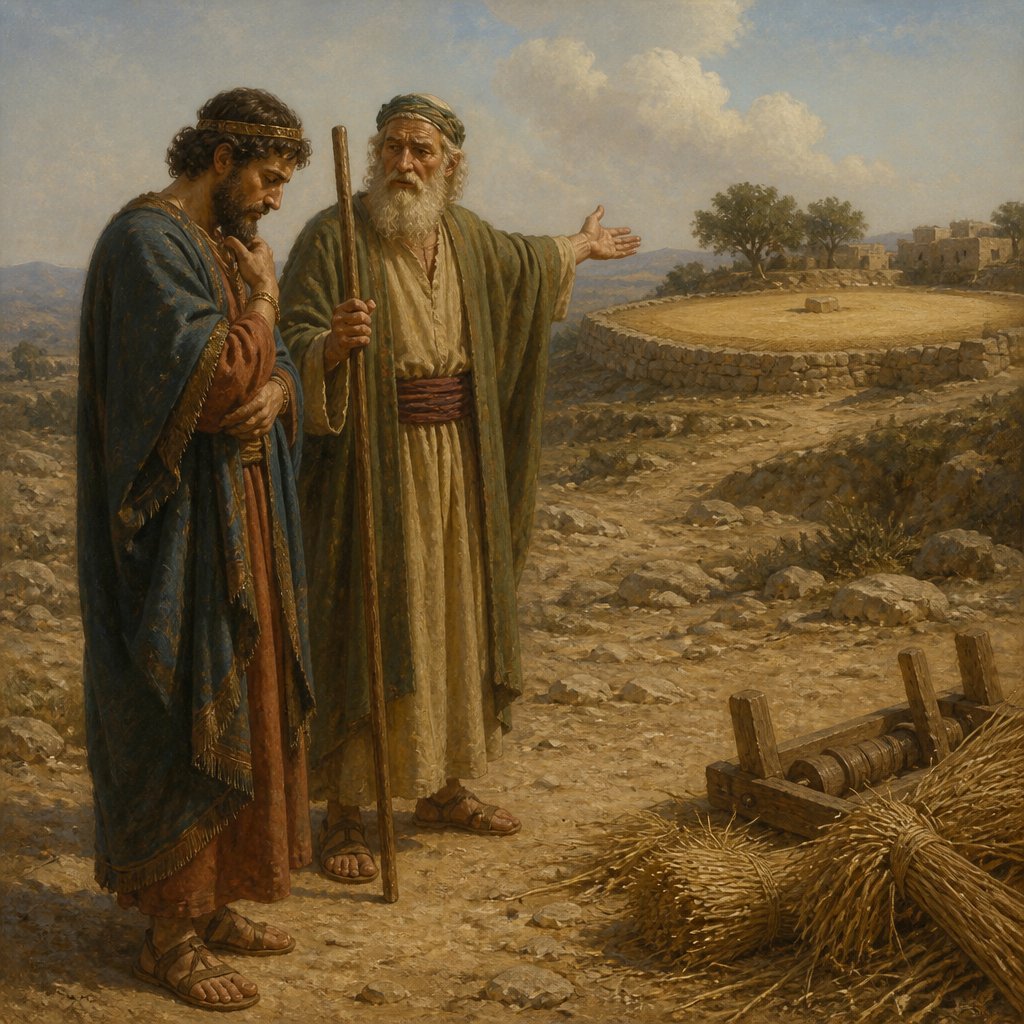
The Bible verse 2 Samuel 24:18 in the King James Version reads: "And Gad came that day to David, and said unto him, Go up, rear an altar unto the Lord in the threshingfloor of Araunah the Jebusite."
This verse comes from the book of 2 Samuel, which tells the story of King David's reign over Israel. In this particular chapter, David has sinned against the Lord by ordering a census of the people, which was seen as an act of self-reliance and a lack of trust in God. As a result, the Lord sends a plague upon the land, causing great suffering and death to the people.
In verse 18, the prophet Gad comes to David and instructs him to go and build an altar to the Lord in the threshingfloor of Araunah the Jebusite. This altar was to be a place of atonement and sacrifice, where David would seek forgiveness for his sins and plead for the Lord's mercy to end the plague.
The themes present in this verse include repentance, forgiveness, and the sovereignty of God. David's immediate response to the prophet's instructions shows his willingness to humble himself before the Lord and seek reconciliation. It also demonstrates the importance of seeking forgiveness and making amends for our sins, even as powerful and influential leaders.
The context of this verse is essential for a deeper understanding of its significance. Throughout the book of 2 Samuel, David is portrayed as a complex character, known for his great faith and devotion to the Lord, as well as his flaws and moments of moral weakness. The story of the census and its consequences serves as a reminder of the consequences of disobedience and the need for repentance and reconciliation with God.
The symbolism in this verse is also noteworthy. The act of building an altar in the threshingfloor of Araunah the Jebusite carries with it powerful symbolism. The threshingfloor was a place of separation, where the wheat was separated from the chaff, and it represents the purification and sanctification process that David needed to undergo to restore his relationship with God. Additionally, the fact that the location was owned by a Jebusite, a non-Israelite, emphasizes the inclusivity of God's forgiveness and grace, which is extended to all who seek it.
Ultimately, this verse serves as a powerful reminder of the importance of humility, repentance, and seeking forgiveness from God. It also highlights the redemptive nature of God, who offers the opportunity for reconciliation and restoration to all who turn to Him in sincere repentance. The story of David's altar at the threshingfloor of Araunah serves as a potent example of the transformative power of seeking forgiveness and the grace of God.
Get our apps


Artwork for 2 Samuel 24:18

2 Samuel 24:18 - "And Gad came that day to David, and said unto him, Go up, rear an altar unto the LORD in the threshingfloor of Araunah the Jebusite."

"And Gad came that day to David, and said unto him, Go up, rear an altar unto the LORD in the threshingfloor of Araunah the Jebusite." - 2 Samuel 24:18

1 Samuel 18:24 - "And the servants of Saul told him, saying, On this manner spake David."

2 Samuel 18:24 - "And David sat between the two gates: and the watchman went up to the roof over the gate unto the wall, and lifted up his eyes, and looked, and behold a man running alone."

2 Samuel 24:22

2 Samuel 24:22

2 Samuel 24:22

2 Samuel 19:24
1 Samuel 2:18 - "¶ But Samuel ministered before the LORD, being a child, girded with a linen ephod."

2 Samuel 20:24 - "And Adoram was over the tribute: and Jehoshaphat the son of Ahilud was recorder:"

2 Samuel 24:19 - "And David, according to the saying of Gad, went up as the LORD commanded."

"And the servants of Saul told him, saying, On this manner spake David." - 1 Samuel 18:24

2 Samuel 5:18 - "The Philistines also came and spread themselves in the valley of Rephaim."

2 Samuel 24:6 - "Then they came to Gilead, and to the land of Tahtim-hodshi; and they came to Dan-jaan, and about to Zidon,"

2 Samuel 2:18 - "¶ And there were three sons of Zeruiah there, Joab, and Abishai, and Asahel: and Asahel was as light of foot as a wild roe."

2 Samuel 23:24 - "Asahel the brother of Joab was one of the thirty; Elhanan the son of Dodo of Beth-lehem,"

2 Samuel 11:18 - "¶ Then Joab sent and told David all the things concerning the war;"

1 Samuel 24:18 - "And thou hast shewed this day how that thou hast dealt well with me: forasmuch as when the LORD had delivered me into thine hand, thou killedst me not."

2 Samuel 22:24 - "I was also upright before him, and have kept myself from mine iniquity."

2 Samuel 17:24 - "Then David came to Mahanaim. And Absalom passed over Jordan, he and all the men of Israel with him."

1 Samuel 2:24 - "Nay, my sons; for it is no good report that I hear: ye make the LORD'S people to transgress."

2 Samuel 18:6 - "¶ So the people went out into the field against Israel: and the battle was in the wood of Ephraim;"

2 Samuel 24:11 - "For when David was up in the morning, the word of the LORD came unto the prophet Gad, David's seer, saying,"

2 Samuel 24:5 - "¶ And they passed over Jordan, and pitched in Aroer, on the right side of the city that lieth in the midst of the river of Gad, and toward Jazer:"

2 Samuel 24:8 - "So when they had gone through all the land, they came to Jerusalem at the end of nine months and twenty days."

1 Samuel 18:2 - "And Saul took him that day, and would let him go no more home to his father's house."

2 Samuel 2:24 - "Joab also and Abishai pursued after Abner: and the sun went down when they were come to the hill of Ammah, that lieth before Giah by the way of the wilderness of Gibeon."

2 Samuel 18:10 - "And a certain man saw it, and told Joab, and said, Behold, I saw Absalom hanged in an oak."

2 Samuel 8:18 - "And Benaiah the son of Jehoiada was over both the Cherethites and the Pelethites; and David's sons were chief rulers."

2 Samuel 18:1 - "And David numbered the people that were with him, and set captains of thousands and captains of hundreds over them."