Understanding Peaceful Departures: Lessons from Abner's Return
“When Joab and all the host that was with him were come, they told Joab, saying, Abner the son of Ner came to the king, and he hath sent him away, and he is gone in peace.” — 2 Samuel 3:23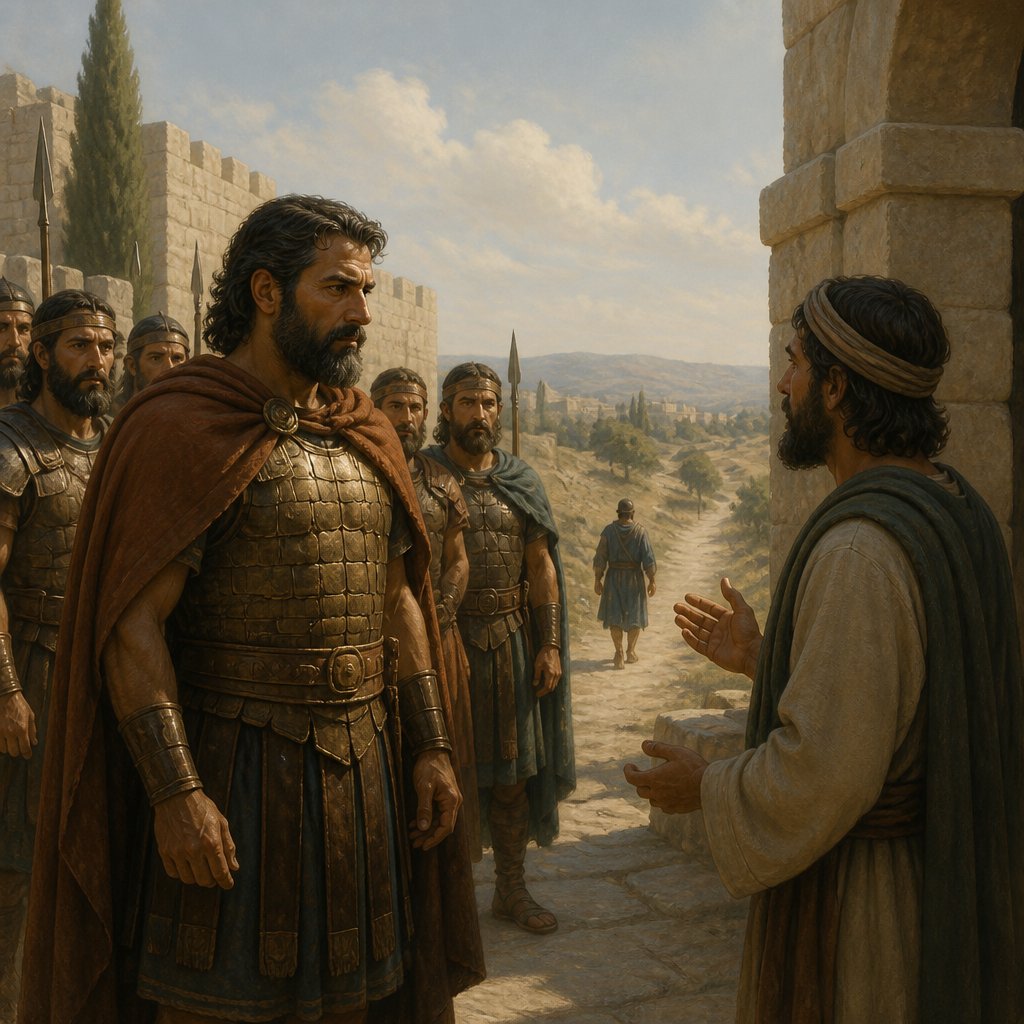
2 Samuel 3:23 says, "When Joab and all the host that was with him were come, they told Joab, saying, Abner the son of Ner came to the king, and he hath sent him away, and he is gone in peace." At first glance, this verse may appear simply as a recounting of events during a turbulent time in Israel's history. However, as we delve deeper, profound lessons regarding leadership, reconciliation, and the pursuit of peace emerge.
To set the stage, we need to recognize the larger narrative in which this verse is situated. Abner, the commander of Saul's forces, had defected to the side of David, seeking a unification of a fractured kingdom. His motives were rooted not only in political aspiration but also in a genuine desire for peace in a nation divided by conflict. He sought reconciliation, understanding the toll that constant skirmishes had taken on the people of Israel.
In this passage, the phrase "he hath sent him away, and he is gone in peace" deserves our utmost attention. Here lies a remarkable testament to the power of true leadership. David’s act of sending Abner away in peace speaks volumes about his character and vision as a leader. Rather than exacting revenge for past grievances, he chose a path marked by reconciliation. For David, the possibility of healing a nation outweighed the desire for personal retribution.
This approach aligns with the teachings of Jesus, who emphasized peacemaking over conflict. In Matthew 5:9, Jesus told us, "Blessed are the peacemakers: for they shall be called the children of God." David's actions can be viewed as prophetic of the greater calling for God's people to be instruments of peace. When we encounter conflict in our lives, the temptation is often to retaliate or hold onto grievances. Yet, the example set by David teaches us that peace requires courage and deliberate intention. It calls for humility and the willingness to forgive, even when it is hard.
As we reflect on Joab's response to Abner’s departure, we see another layer to this story. Joab, a fierce warrior and a man of action, harbored his own bitterness towards Abner due to past conflicts. He perceived Abner's navigation towards peace as a threat rather than an opportunity for reconciliation. This moment presents a critical juncture where we recognize that different responses to conflict exist. Joab acted not out of a desire for peace but rather from a place of vengeance and suspicion. His subsequent actions against Abner, driven by personal vendetta, led to devastating consequences for the kingdom.
This stark contrast between David and Joab’s responses serves as a powerful reminder for us. When faced with situations that demand forgiveness and reconciliation, we must choose our actions wisely. Are we, like David, willing to sacrifice personal desires for the greater good? Or do we find ourselves acting as Joab did, allowing past grievances to dictate our responses?
The story of Abner’s peaceful departure also carries significance for our personal relationships. As we navigate our interactions with others—friends, family, coworkers, and even adversaries—we are faced with numerous opportunities to either build bridges or erect barriers. The challenge before us is to constantly seek peace. In practical terms, this can mean initiating difficult conversations, practicing forgiveness, or allowing others the grace to be human.
In a world fraught with division and strife, we are called to be ambassadors of peace, just as King David exemplified—cultivating an environment where peace is prioritized. May our hearts be attuned to the beauty of reconciliation, knowing that in every conflict lies the potential for peace. Let us embrace the wisdom found in this humble verse from 2 Samuel, choosing to walk in love and harmony, reflecting the heart of Christ to a broken world.
Get our apps


Artwork for 2 Samuel 3:23
2 Samuel 3:23 - "When Joab and all the host that was with him were come, they told Joab, saying, Abner the son of Ner came to the king, and he hath sent him away, and he is gone in peace."
"When Joab and all the host that was with him were come, they told Joab, saying, Abner the son of Ner came to the king, and he hath sent him away, and he is gone in peace." - 2 Samuel 3:23

2 Samuel 23:3 - "The God of Israel said, the Rock of Israel spake to me, He that ruleth over men must be just, ruling in the fear of God."

2 Samuel 23:38 - "Ira an Ithrite, Gareb an Ithrite,"

2 Samuel 23:28 - "Zalmon the Ahohite, Maharai the Netophathite,"

2 Samuel 23:35 - "Hezrai the Carmelite, Paarai the Arbite,"

2 Samuel 23:27 - "Abiezer the Anethothite, Mebunnai the Hushathite,"

2 Samuel 23:25 - "Shammah the Harodite, Elika the Harodite,"

2 Samuel 23:2 - "The Spirit of the LORD spake by me, and his word was in my tongue."

2 Samuel 23:31 - "Abi-albon the Arbathite, Azmaveth the Barhumite,"

2 Samuel 23:39 - "Uriah the Hittite: thirty and seven in all."

2 Samuel 23:30 - "Benaiah the Pirathonite, Hiddai of the brooks of Gaash,"

2 samuel 23:8-21

2 Samuel 23:32 - "Eliahba the Shaalbonite, of the sons of Jashen, Jonathan,"

2 Samuel 23:33 - "Shammah the Hararite, Ahiam the son of Sharar the Hararite,"

2 Samuel 23:14 - "And David was then in an hold, and the garrison of the Philistines was then in Beth-lehem."

2 Samuel 23:26 - "Helez the Paltite, Ira the son of Ikkesh the Tekoite,"

2 Samuel 23:36 - "Igal the son of Nathan of Zobah, Bani the Gadite,"

2 Samuel 23:23 - "He was more honourable than the thirty, but he attained not to the first three. And David set him over his guard."

2 Samuel 14:23 - "So Joab arose and went to Geshur, and brought Absalom to Jerusalem."

2 Samuel 23:37 - "Zelek the Ammonite, Naharai the Beerothite, armourbearer to Joab the son of Zeruiah,"

2 Samuel 6:23 - "Therefore Michal the daughter of Saul had no child unto the day of her death."

2 Samuel 23:34 - "Eliphelet the son of Ahasbai, the son of the Maachathite, Eliam the son of Ahithophel the Gilonite,"

2 Samuel 23:24 - "Asahel the brother of Joab was one of the thirty; Elhanan the son of Dodo of Beth-lehem,"

2 Samuel 23:29 - "Heleb the son of Baanah, a Netophathite, Ittai the son of Ribai out of Gibeah of the children of Benjamin,"

2 Samuel 23:12 - "But he stood in the midst of the ground, and defended it, and slew the Philistines: and the LORD wrought a great victory."

"Shammah the Harodite, Elika the Harodite," - 2 Samuel 23:25

2 Samuel 23:22 - "These things did Benaiah the son of Jehoiada, and had the name among three mighty men."

"Ira an Ithrite, Gareb an Ithrite," - 2 Samuel 23:38

"Hezrai the Carmelite, Paarai the Arbite," - 2 Samuel 23:35