The Perils of Seeking Vengeance: Finding True Justice in God
“And they brought the head of Ish-bosheth unto David to Hebron, and said to the king, Behold the head of Ish-bosheth the son of Saul thine enemy, which sought thy life; and the LORD hath avenged my lord the king this day of Saul, and of his seed.” — 2 Samuel 4:8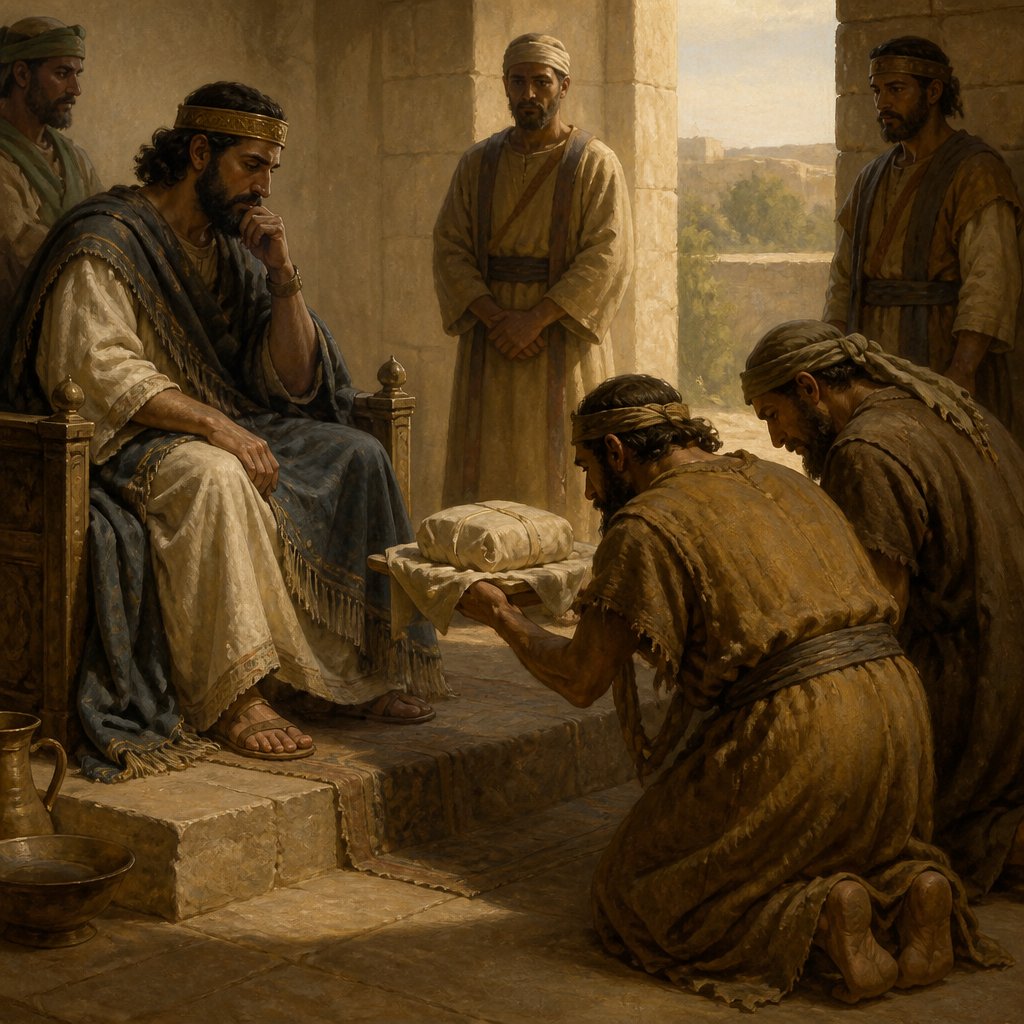
In 2 Samuel 4:8, we encounter a moment of intense emotion and action: "And they brought the head of Ish-bosheth unto David to Hebron, and said to the king, Behold the head of Ish-bosheth the son of Saul thine enemy, which sought thy life; and the LORD hath avenged my lord the king this day of Saul, and of his seed." This verse encapsulates a turning point in David's life—a moment after years of conflict and running from the wrath of Saul, the former king of Israel.
To fully appreciate the depth and implications of this event, we must delve into the context surrounding David and Saul. Saul, the anointed king of Israel, had sought to kill David out of jealousy and fear. The pursuit was not just a king hunting a rival; it was deeply personal. For many years, David lived as a fugitive, hiding in caves and wilderness, relying on God’s deliverance at every turn. In contrast, Saul's obsession hardened his heart and led him away from the Lord, ultimately leading to his downfall.
When Ish-bosheth, Saul's son, rose to power, it might have seemed to David's followers that the cycle of vengeance and conflict would continue. The men who brought Ish-bosheth's head to David saw themselves as instruments of justice, fulfilling what they believed to be God’s plan. They presented their act of violence as an act of service to David, saying, "the Lord hath avenged my lord the king this day." In their perspective, they had rid David of an enemy, the son of the man who sought his life.
But how does God view vengeance? Throughout Scripture, the concept of justice is intricately linked with mercy and grace. Romans 12:19 reminds us, "Dearly beloved, avenge not yourselves, but rather give place unto wrath: for it is written, Vengeance is mine; I will repay, saith the Lord." This divine principle starkly contrasts with the actions of these men.
What is remarkable about David's response is that he does not react with joy or appreciation for their deed. Instead, he shows profound integrity and a commitment to God’s principles. David mourns the death of Ish-bosheth, saying, "As the Lord liveth, who hath redeemed my soul out of all adversity, when one told me, saying, Behold, Saul is dead, thinking to have brought me good tidings, I took hold of him, and slew him in Ziklag, who thought that I would have given him a reward for his tidings" (2 Samuel 4:9-10).
Here, David is not only acknowledging the value of life but also recognizing the dangerous cycle of violence that vengeance breeds. Every act of revenge can lead to more bloodshed—a reminder that while our flesh might cry out for justice, the Spirit calls us to surrender our rights to God. David understood that true kingship was not about exterminating enemies but about extending mercy and righteousness. Loving one’s enemies, as Christ taught (Matthew 5:44), is a radical and often difficult command.
Ultimately, this incident serves as a clarion call for believers today. It challenges us to consider our own responses to perceived injustice and how we handle our feelings toward those who oppose us. Are we seeking vengeance, or are we entrusting our situations to God, recognizing that He knows best? We are called to be peacemakers, even in the midst of conflict, knowing that God alone is the true arbiter of justice.
As you reflect on this passage, ask yourself where you might be tempted to take justice into your own hands. Consider how you can respond with grace rather than vengeance and trust God to fight your battles, as He has promised. His ways are higher than ours, and in every situation, He is working for our ultimate good and His eternal glory.
Get our apps


Artwork for 2 Samuel 4:8

2 Samuel 4:8 - "And they brought the head of Ish-bosheth unto David to Hebron, and said to the king, Behold the head of Ish-bosheth the son of Saul thine enemy, which sought thy life; and the LORD hath avenged my lord the king this day of Saul, and of his seed."
"And they brought the head of Ish-bosheth unto David to Hebron, and said to the king, Behold the head of Ish-bosheth the son of Saul thine enemy, which sought thy life; and the LORD hath avenged my lord the king this day of Saul, and of his seed." - 2 Samuel 4:8

1 Samuel 8:4 - "Then all the elders of Israel gathered themselves together, and came to Samuel unto Ramah,"

2 Samuel 8:4 - "And David took from him a thousand chariots, and seven hundred horsemen, and twenty thousand footmen: and David houghed all the chariot horses, but reserved of them for an hundred chariots."
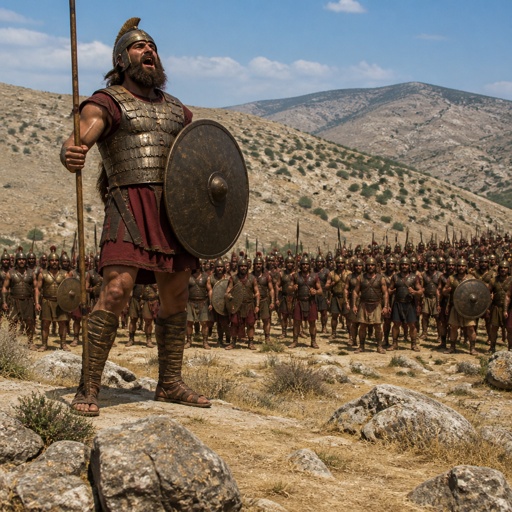
1 Samuel 17:4-8

2 Samuel 19:8

2 Samuel 19:8

2 Samuel 19:8

2 Samuel 19:8
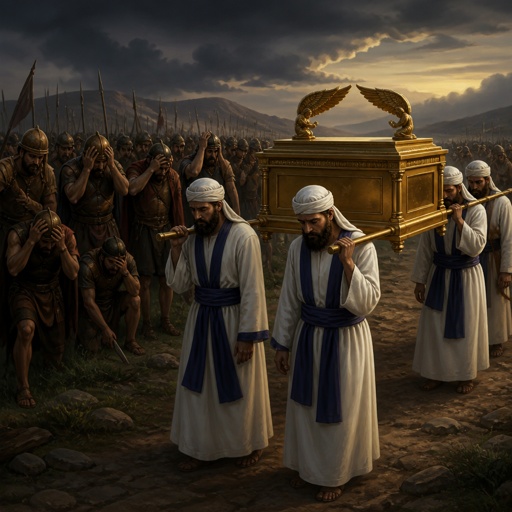
1 Samuel 4:2

2 samuel 23:8-21

2 Samuel 10:4

2 Samuel 10:4

2 Samuel 8:8 - "And from Betah, and from Berothai, cities of Hadadezer, king David took exceeding much brass."

1 Samuel 4:8 - "Woe unto us! who shall deliver us out of the hand of these mighty Gods? these are the Gods that smote the Egyptians with all the plagues in the wilderness."

2 Samuel 4:3 - "And the Beerothites fled to Gittaim, and were sojourners there until this day.)"

2 Samuel 2:8 - "¶ But Abner the son of Ner, captain of Saul's host, took Ish-bosheth the son of Saul, and brought him over to Mahanaim;"

"Then all the elders of Israel gathered themselves together, and came to Samuel unto Ramah," - 1 Samuel 8:4

2 Samuel 8:16 - "And Joab the son of Zeruiah was over the host; and Jehoshaphat the son of Ahilud was recorder;"

1 Samuel 2:4 - "The bows of the mighty men are broken, and they that stumbled are girded with strength."

2 Samuel 17:4 - "And the saying pleased Absalom well, and all the elders of Israel."

2 Samuel 22:8 - "Then the earth shook and trembled; the foundations of heaven moved and shook, because he was wroth."

2 Samuel 3:4 - "And the fourth, Adonijah the son of Haggith; and the fifth, Shephatiah the son of Abital;"

2 Samuel 8:17 - "And Zadok the son of Ahitub, and Ahimelech the son of Abiathar, were the priests; and Seraiah was the scribe;"

2 Samuel 8:7 - "And David took the shields of gold that were on the servants of Hadadezer, and brought them to Jerusalem."

2 Samuel 8:9 - "¶ When Toi king of Hamath heard that David had smitten all the host of Hadadezer,"

2 Samuel 7:4 - "¶ And it came to pass that night, that the word of the LORD came unto Nathan, saying,"

2 Samuel 14:8 - "And the king said unto the woman, Go to thine house, and I will give charge concerning thee."

2 Samuel 8:12 - "Of Syria, and of Moab, and of the children of Ammon, and of the Philistines, and of Amalek, and of the spoil of Hadadezer, son of Rehob, king of Zobah."

2 Samuel 8:18 - "And Benaiah the son of Jehoiada was over both the Cherethites and the Pelethites; and David's sons were chief rulers."