Conquering Boundaries: A Study of David's Victory
“David smote also Hadadezer, the son of Rehob, king of Zobah, as he went to recover his border at the river Euphrates.” — 2 Samuel 8:3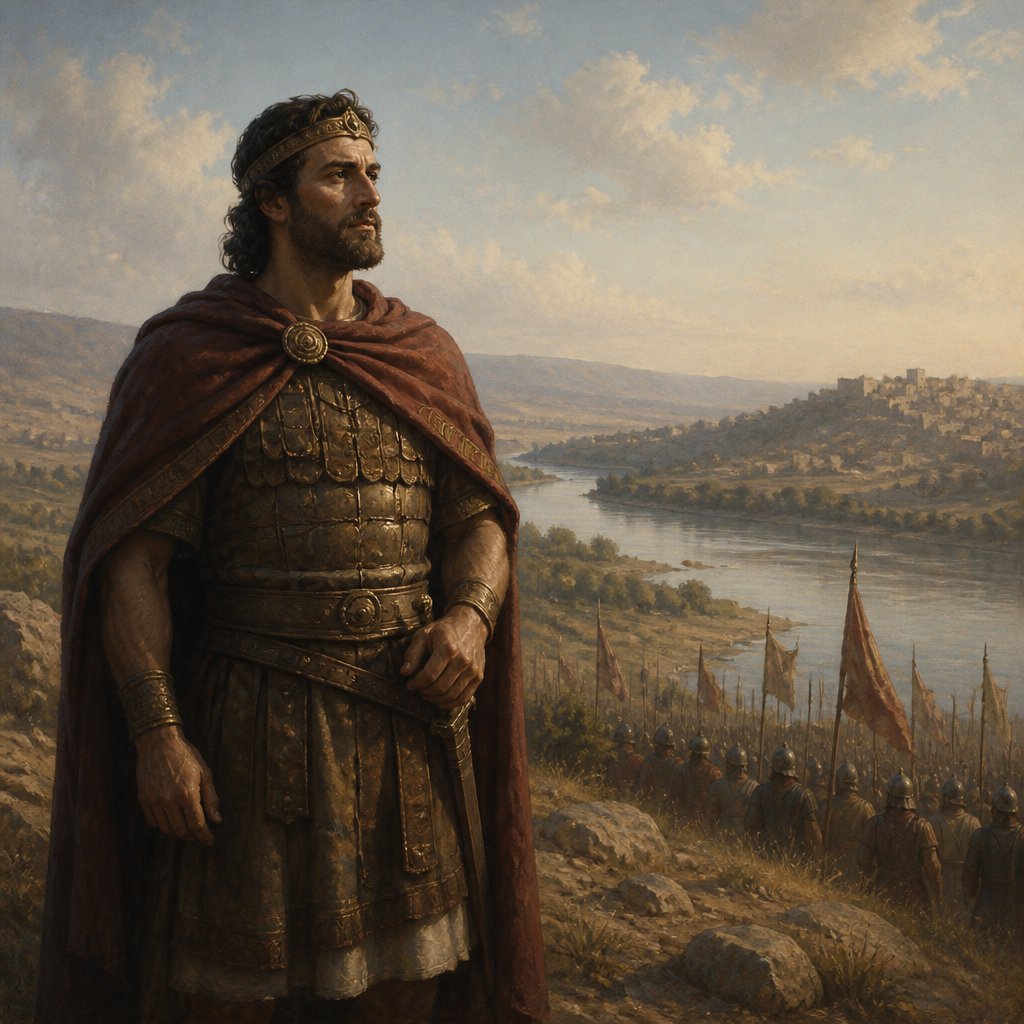
In the annals of biblical history, few figures exemplify the complexities of leadership, faith, and warfare as much as King David. Among the many accounts of his reign, 2 Samuel 8:3 stands out as a testament to both his military prowess and divine favor: "David smote also Hadadezer, the son of Rehob, king of Zobah, as he went to recover his border at the river Euphrates." This single verse encapsulates a moment of significant strategic importance, yet it also serves as a profound illustration of David's obedience to God's calling in the face of challenges.
Firstly, let's explore the historical context of this battle. The river Euphrates was not merely a geographical landmark; it represented a significant boundary of the Israelite territory. The fact that David sought to recover this border indicates his commitment to securing the land promised to the Israelites by God. Throughout Scripture, borders symbolize both physical and spiritual divides. David understood that these borders were not just delineations of land but markers of identity for God's people. By going to battle against Hadadezer, David was not only defending his territory; he was affirming Israel's sovereignty and God’s promise to His people.
In striking Hadadezer, David engaged in a confrontation with a formidable foe. Hadadezer, the king of Zobah, was a powerful ruler, and his empire posed a real threat to Israelite security. The act of ‘smote’ in this context is more than just a military action; it is also indicative of God’s empowerment of David to fulfill his royal duty. This act of warfare teaches us about the necessity of confronting challenges head-on. In our own lives, we are often faced with 'Hadadezers' — be it personal struggles, spiritual battles, or organizational challenges. Like David, we must recognize that God equips us to face these giants, urging us to reclaim lost territories in our spiritual and emotional lives.
Secondly, David's pursuit of recovery speaks volumes about God’s intentions for His people. God desires not only our victory over our adversaries but also restoration. The choice to reclaim the border signifies a divine principle that God is a God of restoration. In the same way David reclaimed the territory, we too are called to restore that which has been lost in our lives. Perhaps it is our peace, joy, or relationships that have been encroached upon by the challenges of life.
As we meditate on this verse, we are invited to reflect on the areas in our lives that may feel like they are under siege. Are there relationships needing restoration? Are there aspects of your faith that require reconsecration? Consider David’s proactive stance; he did not sit passively by while his borders were threatened. Instead, he sought God’s wisdom and strength to act. Each of us is empowered to pursue recovery in our lives, fueled by faith and a profound belief in God’s promises.
Moreover, we must not overlook the spiritual symbolism inherent in David's actions. His triumph over Hadadezer symbolizes the ultimate victory of Christ over our adversaries — sin, death, and anything that challenges our relationship with God. Just as David journeyed to the Euphrates to reclaim what was lost, we find ourselves on a lifelong journey of reclaiming our sanctification through Christ. We are reminded through David's narrative that though battles may come, the ultimate victory has already been secured in Christ.
In closing, let us be encouraged by David's actions depicted in 2 Samuel 8:3. May we step forward courageously, confronting our own Hadadezers, reclaiming spiritual territories, and resting in the power of God who equips us for victory. As we reflect on our personal and communal borders, let us intentionally seek to restore what has been lost, confident in the knowledge that God is with us, guiding our every step.
Let this serve as a reminder that within each challenge lies the potential for restoration. Take a moment to pray and ask God for guidance in recovering your borders — both in your heart and in your life. Amen.
Get our apps


Artwork for 2 Samuel 8:3

2 Samuel 8:3 - "¶ David smote also Hadadezer, the son of Rehob, king of Zobah, as he went to recover his border at the river Euphrates."
"¶ David smote also Hadadezer, the son of Rehob, king of Zobah, as he went to recover his border at the river Euphrates." - 2 Samuel 8:3

1 Samuel 8:3 - "And his sons walked not in his ways, but turned aside after lucre, and took bribes, and perverted judgment."

2 Samuel 19:8

2 Samuel 19:8

2 Samuel 19:8

2 Samuel 19:8

2 samuel 23:8-21

2 Samuel 8:8 - "And from Betah, and from Berothai, cities of Hadadezer, king David took exceeding much brass."
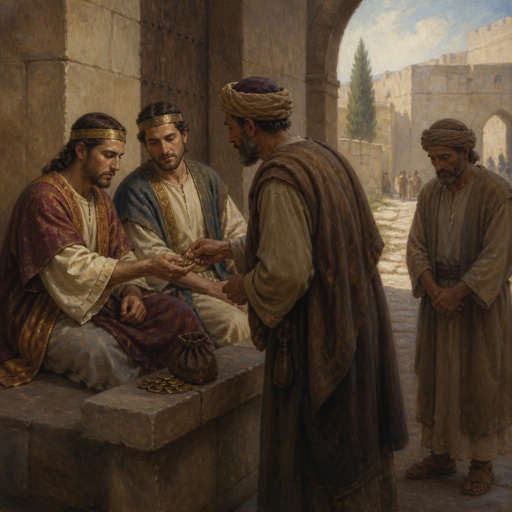
"And his sons walked not in his ways, but turned aside after lucre, and took bribes, and perverted judgment." - 1 Samuel 8:3

1 Samuel 3:8 - "And the LORD called Samuel again the third time. And he arose and went to Eli, and said, Here am I; for thou didst call me. And Eli perceived that the LORD had called the child."

2 Samuel 3:2 - "¶ And unto David were sons born in Hebron: and his firstborn was Amnon, of Ahinoam the Jezreelitess;"

2 Samuel 2:8 - "¶ But Abner the son of Ner, captain of Saul's host, took Ish-bosheth the son of Saul, and brought him over to Mahanaim;"

2 Samuel 8:16 - "And Joab the son of Zeruiah was over the host; and Jehoshaphat the son of Ahilud was recorder;"

2 Samuel 4:3 - "And the Beerothites fled to Gittaim, and were sojourners there until this day.)"

2 Samuel 8:9 - "¶ When Toi king of Hamath heard that David had smitten all the host of Hadadezer,"

2 Samuel 22:8 - "Then the earth shook and trembled; the foundations of heaven moved and shook, because he was wroth."

2 Samuel 8:15 - "And David reigned over all Israel; and David executed judgment and justice unto all his people."

2 Samuel 8:17 - "And Zadok the son of Ahitub, and Ahimelech the son of Abiathar, were the priests; and Seraiah was the scribe;"

2 Samuel 8:7 - "And David took the shields of gold that were on the servants of Hadadezer, and brought them to Jerusalem."

2 Samuel 3:4 - "And the fourth, Adonijah the son of Haggith; and the fifth, Shephatiah the son of Abital;"

2 Samuel 3:3 - "And his second, Chileab, of Abigail the wife of Nabal the Carmelite; and the third, Absalom the son of Maacah the daughter of Talmai king of Geshur;"

2 Samuel 3:33 - "And the king lamented over Abner, and said, Died Abner as a fool dieth?"

2 Samuel 3:5 - "And the sixth, Ithream, by Eglah David's wife. These were born to David in Hebron."

2 Samuel 2:3 - "And his men that were with him did David bring up, every man with his household: and they dwelt in the cities of Hebron."

2 Samuel 14:8 - "And the king said unto the woman, Go to thine house, and I will give charge concerning thee."

2 Samuel 8:12 - "Of Syria, and of Moab, and of the children of Ammon, and of the Philistines, and of Amalek, and of the spoil of Hadadezer, son of Rehob, king of Zobah."

2 Samuel 8:18 - "And Benaiah the son of Jehoiada was over both the Cherethites and the Pelethites; and David's sons were chief rulers."

2 Samuel 3:8 - "Then was Abner very wroth for the words of Ish-bosheth, and said, Am I a dog's head, which against Judah do shew kindness this day unto the house of Saul thy father, to his brethren, and to his friends, and have not delivered thee into the hand of David, that thou chargest me to day with a fault concerning this woman?"

2 Samuel 7:3 - "And Nathan said to the king, Go, do all that is in thine heart; for the LORD is with thee."