The Kindness of the King: A Testament to Grace
“And the king said, Is there not yet any of the house of Saul, that I may shew the kindness of God unto him? And Ziba said unto the king, Jonathan hath yet a son, which is lame on his feet.” — 2 Samuel 9:3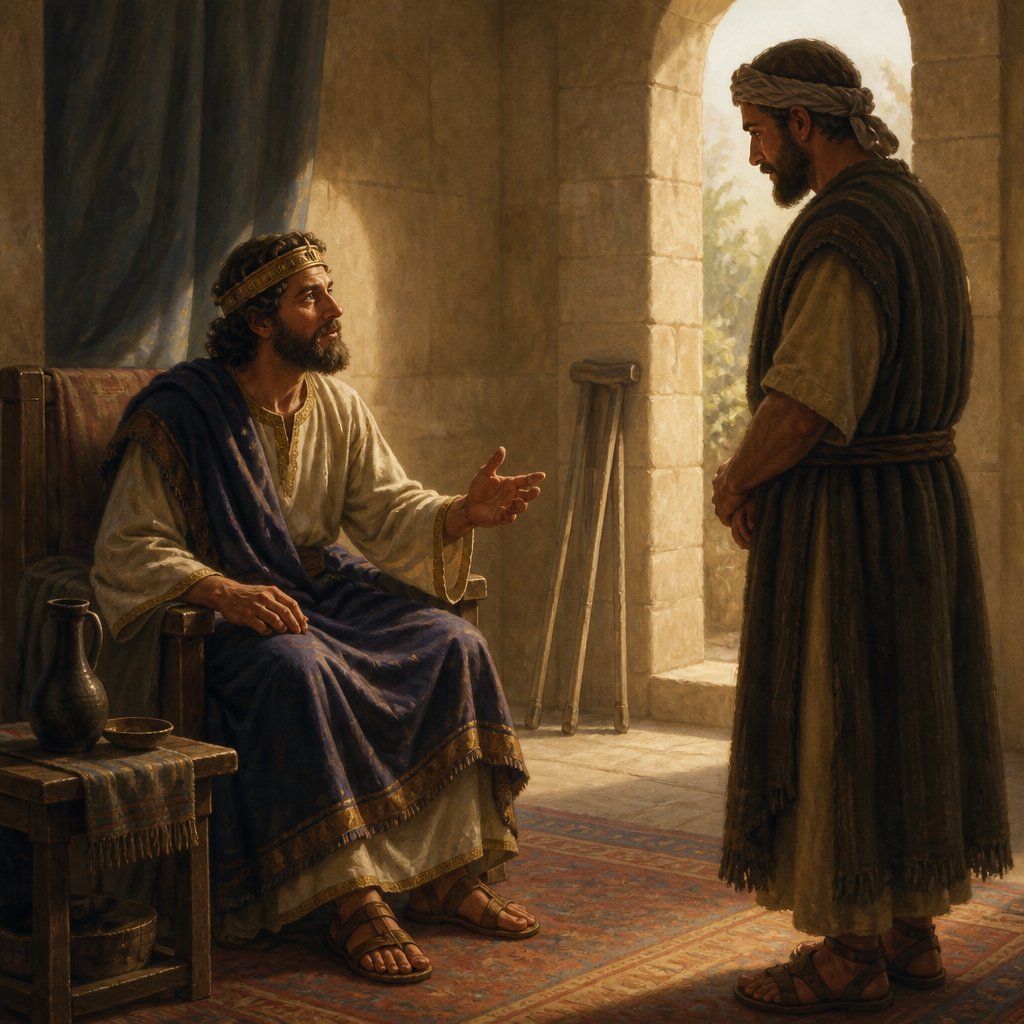
In Second Samuel 9:3, we encounter a poignant moment in the life of King David. The verse reads, "And the king said, Is there not yet any of the house of Saul, that I may shew the kindness of God unto him? And Ziba said unto the king, Jonathan hath yet a son, which is lame on his feet." This brief yet profound exchange is laden with themes of grace, mercy, and the unfathomable kindness of God.
To fully appreciate the weight of David's inquiry, it's vital to understand the historical context. David, having ascended to the throne of Israel, could have sought to eradicate any threats to his kingship, particularly from the lineage of Saul, the previous king, who had once pursued David with deadly intent. In the realm of earthly politics, it would have been justifiable for David to eliminate any potential claimants to the throne, including those remaining from Saul's household. Instead, we see an opposing approach rooted in the character of God: kindness and grace.
When David asks, "Is there not yet any of the house of Saul?" he is demonstrating a heart attuned to God’s kindness. Here we find a king demonstrating the qualities of the ultimate King of Kings. His desire to show kindness is not merely a matter of political overture; it is an intentional pursuit of grace. This kindness reflects the covenant love David had for Jonathan, Saul's son and his dear friend. Jonathan and David had made a solemn covenant of loyalty and love, pledging to look after each other's families regardless of their respective fortunes. David, inquiring about Jonathan's descendants, fulfills that promise.
Ziba’s response introduces us to Mephibosheth, Jonathan's son, who is described as "lame on his feet." While this detail may seem incidental, it is, in fact, a profound representation of our own human frailty and brokenness. Just as Mephibosheth was physically impaired, we, too, live in a broken world, burdened by sin and its consequences. David’s action towards Mephibosheth offers a beautiful illustration of how God responds to our brokenness with grace. The question we might reflect upon is how often we neglect to exhibit such intention towards those we consider unworthy or undeserving of kindness.
In our daily lives, God's kindness often calls us to look beyond appearances and circumstances. Mephibosheth, living in the shadow of his father’s legacy, could have been overlooked. Yet, it is through his disabilities that the light of God's grace shines brightest. The New Testament echoes this sentiment in Ephesians 2:8-9, stating, "For by grace are ye saved through faith; and that not of yourselves: it is the gift of God: Not of works, lest any man should boast." David, like our Savior, provides kindness not based on merit but purely from a heart of love.
Thus, our devotional call is to seek out the 'Mephibosheths' in our lives—the forgotten, the broken, the sidelined. How often do we overlook opportunities to extend kindness? God’s invitation through David is a clarion call to step into the lives of those who need compassion and grace the most.
As you meditate on this verse, ask yourself: Where is God leading you to show His kindness? Who has He placed in your path that you can bless or uplift? Let us cultivate a heart like David's, one that actively seeks to embody divine kindness, reflecting the very character of God to those around us.
In closing, may we always remember:
In every act of kindness, we manifest the grace of God. Just as David sought to show kindness to Mephibosheth, we, too, are called to demonstrate that same God-given kindness to others.
Get our apps


Artwork for 2 Samuel 9:3

2 Samuel 9:3 - "And the king said, Is there not yet any of the house of Saul, that I may shew the kindness of God unto him? And Ziba said unto the king, Jonathan hath yet a son, which is lame on his feet."
"And the king said, Is there not yet any of the house of Saul, that I may shew the kindness of God unto him? And Ziba said unto the king, Jonathan hath yet a son, which is lame on his feet." - 2 Samuel 9:3

2 Samuel 3:9 - "So do God to Abner, and more also, except, as the LORD hath sworn to David, even so I do to him;"

2 samuel 9:7 fhdhdhdhhd

1 Samuel 9:3 - "And the asses of Kish Saul's father were lost. And Kish said to Saul his son, Take now one of the servants with thee, and arise, go seek the asses."

2 Samuel 11:9
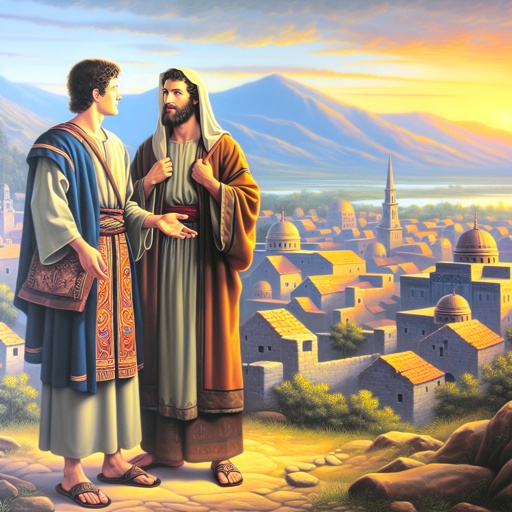
1 Samuel 9:1-2

1 Samuel 3:9 - "Therefore Eli said unto Samuel, Go, lie down: and it shall be, if he call thee, that thou shalt say, Speak, LORD; for thy servant heareth. So Samuel went and lay down in his place."

2 Samuel 3:2 - "¶ And unto David were sons born in Hebron: and his firstborn was Amnon, of Ahinoam the Jezreelitess;"

2 Samuel 4:3 - "And the Beerothites fled to Gittaim, and were sojourners there until this day.)"

2 Samuel 3:4 - "And the fourth, Adonijah the son of Haggith; and the fifth, Shephatiah the son of Abital;"

2 Samuel 2:9 - "And made him king over Gilead, and over the Ashurites, and over Jezreel, and over Ephraim, and over Benjamin, and over all Israel."

2 Samuel 3:3 - "And his second, Chileab, of Abigail the wife of Nabal the Carmelite; and the third, Absalom the son of Maacah the daughter of Talmai king of Geshur;"

2 Samuel 8:9 - "¶ When Toi king of Hamath heard that David had smitten all the host of Hadadezer,"

2 Samuel 9:9 - "¶ Then the king called to Ziba, Saul's servant, and said unto him, I have given unto thy master's son all that pertained to Saul and to all his house."

2 Samuel 6:9 - "And David was afraid of the LORD that day, and said, How shall the ark of the LORD come to me?"

2 Samuel 15:9 - "And the king said unto him, Go in peace. So he arose, and went to Hebron."

2 Samuel 3:33 - "And the king lamented over Abner, and said, Died Abner as a fool dieth?"

2 Samuel 3:5 - "And the sixth, Ithream, by Eglah David's wife. These were born to David in Hebron."
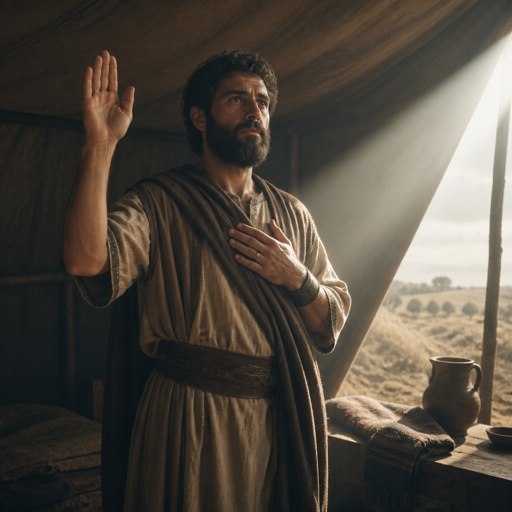
"So do God to Abner, and more also, except, as the LORD hath sworn to David, even so I do to him;" - 2 Samuel 3:9

2 Samuel 2:3 - "And his men that were with him did David bring up, every man with his household: and they dwelt in the cities of Hebron."

2 Samuel 9:1 - "And David said, Is there yet any that is left of the house of Saul, that I may shew him kindness for Jonathan's sake?"

2 Samuel 7:3 - "And Nathan said to the king, Go, do all that is in thine heart; for the LORD is with thee."

2 Samuel 3:11 - "And he could not answer Abner a word again, because he feared him."

2 Samuel 9:5 - "¶ Then king David sent, and fetched him out of the house of Machir, the son of Ammiel, from Lo-debar."

2 Samuel 11:9 - "But Uriah slept at the door of the king's house with all the servants of his lord, and went not down to his house."

2 Samuel 9:13 - "So Mephibosheth dwelt in Jerusalem: for he did eat continually at the king's table; and was lame on both his feet."

1 Samuel 2:9 - "He will keep the feet of his saints, and the wicked shall be silent in darkness; for by strength shall no man prevail."

2 Samuel 3:37 - "For all the people and all Israel understood that day that it was not of the king to slay Abner the son of Ner."

2 Samuel 22:9 - "There went up a smoke out of his nostrils, and fire out of his mouth devoured: coals were kindled by it."