United in Purpose: A Divine Calling in Unity
“Now there were in the church that was at Antioch certain prophets and teachers; as Barnabas, and Simeon that was called Niger, and Lucius of Cyrene, and Manaen, which had been brought up with Herod the tetrarch, and Saul.” — Acts 13:1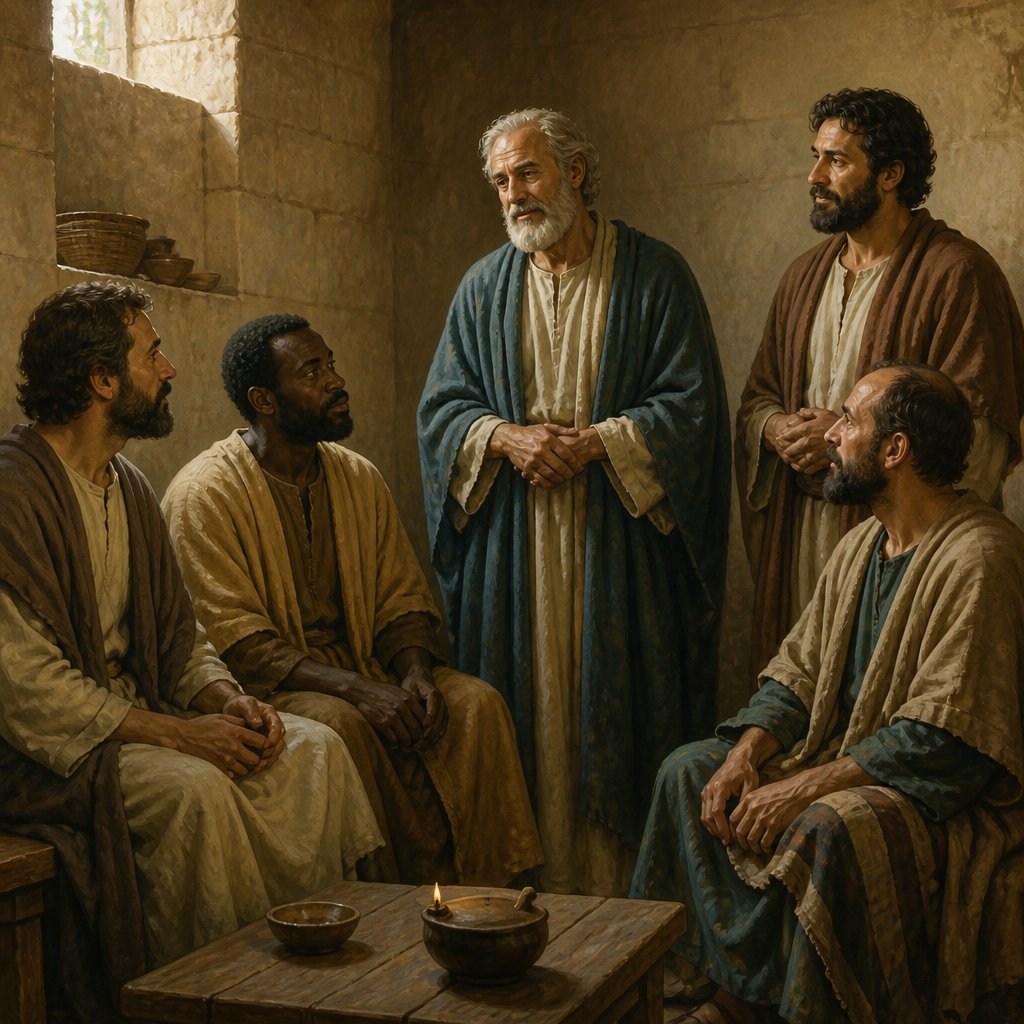
In Acts 13:1, we read, "Now there were in the church that was at Antioch certain prophets and teachers; as Barnabas, and Simeon that was called Niger, and Lucius of Cyrene, and Manaen, which had been brought up with Herod the tetrarch, and Saul." This passage elucidates the diversity within the early church, showcasing a unique gathering of leaders who were bonded together by faith and purpose. It serves as a poignant reminder of how the Holy Spirit works through community, calling individuals to a common mission while emphasizing the richness of diversity in the Body of Christ.
The church in Antioch was a melting pot of cultures and backgrounds. Each of the leaders mentioned had distinct origins and experiences yet were united in their commitment to serve God. Barnabas, known for his encouragement, came from Cyprus, Simeon, also known as Niger, is likely of African descent, Lucius hailed from Cyrene in North Africa, Manaen was raised in a palace, and Saul, of course, is known for his dramatic conversion from persecutor to apostle. This variety of backgrounds illustrates that the Gospel is not confined to one culture or class but is meant for every nation and people. The inclusion of different races, classes, and backgrounds symbolizes the heart of God for all of humanity and serves as a reminder that the church should reflect this same inclusivity.
Furthermore, this verse reminds us of the profound roles that prophets and teachers play within the church. Prophets bring forth the word of God, speaking into the life of the community with divine insight and encouragement. Teachers, on the other hand, provide the essential foundation of biblical knowledge, guiding the flock in the paths of righteousness. The church in Antioch was blessed to have both prophets and teachers, indicating a healthy balance that fosters spiritual maturity and growth. In our local churches today, we must recognize and honor the gifts of all members, allowing the Holy Spirit to work through us in various capacities, equipping us to build one another up in love.
The context of this gathering is also significant. Antioch was one of the first cities where Gentiles were incorporated into the church. The church’s leadership reflects this reality, bringing together diverse individuals to minister to a diverse congregation. The inclusion of Saul, who would later be known as Paul, is particularly noteworthy. As someone who once persecuted Christians, his presence is a living testimony of the transformation that the Gospel produces. It reassures us that regardless of our past, God's grace can redeem and repurpose us for His glory.
Moreover, this configuration of leaders serves as a model for modern Christian communities. We are called not only to gather but to work together purposefully. As proponents of unity, we must learn from the church in Antioch, seeking to embrace diversity and utilize the wide array of spiritual gifts the Holy Spirit has bestowed upon us. This is vital in becoming an effective body of Christ. We are reminded that when we come together, focusing on our common mission rather than our divisions, we can achieve feats that have eternal significance.
As we reflect on Acts 13:1, may we actively seek to embody the spirit of unity and diversity in our churches. Let us pray for our leaders, for wisdom and discernment to guide us to be the church that reflects the love and grace of Christ to a fractured world. May our gatherings lead to the unleashing of the Gospel, where every member recognizes their vital role in God’s great commission. In this collective endeavor, just as the prophets and teachers in Antioch exhibited, we too can expect God’s empowering presence to direct our paths and enrich our living witness of faith.
Get our apps


Artwork for Acts 13:1

Acts 13:1 - "Now there were in the church that was at Antioch certain prophets and teachers; as Barnabas, and Simeon that was called Niger, and Lucius of Cyrene, and Manaen, which had been brought up with Herod the tetrarch, and Saul."
"Now there were in the church that was at Antioch certain prophets and teachers; as Barnabas, and Simeon that was called Niger, and Lucius of Cyrene, and Manaen, which had been brought up with Herod the tetrarch, and Saul." - Acts 13:1

Acts 13:43

Acts 13:30 - "But God raised him from the dead:"

Acts 13:49 - "And the word of the Lord was published throughout all the region."

Acts 13:52 - "And the disciples were filled with joy, and with the Holy Ghost."

Acts 1:13 - "And when they were come in, they went up into an upper room, where abode both Peter, and James, and John, and Andrew, Philip, and Thomas, Bartholomew, and Matthew, James the son of Alphaeus, and Simon Zelotes, and Judas the brother of James."

Acts 13:37 - "But he, whom God raised again, saw no corruption."

Acts 2:13 - "Others mocking said, These men are full of new wine."

Acts 13:13 - "Now when Paul and his company loosed from Paphos, they came to Perga in Pamphylia: and John departing from them returned to Jerusalem."

Acts 23:13 - "And they were more than forty which had made this conspiracy."

Acts 18:13 - "Saying, This fellow persuadeth men to worship God contrary to the law."

Acts 24:13 - "Neither can they prove the things whereof they now accuse me."

Acts 13:18 - "And about the time of forty years suffered he their manners in the wilderness."

Acts 13:40 - "Beware therefore, lest that come upon you, which is spoken of in the prophets;"

Acts 5:13 - "And of the rest durst no man join himself to them: but the people magnified them."

Acts 13:51 - "But they shook off the dust of their feet against them, and came unto Iconium."

Acts 12:13 - "And as Peter knocked at the door of the gate, a damsel came to hearken, named Rhoda."

Acts 13:3 - "And when they had fasted and prayed, and laid their hands on them, they sent them away."

Acts 13:44 - "¶ And the next sabbath day came almost the whole city together to hear the word of God."

Acts 13:28 - "And though they found no cause of death in him, yet desired they Pilate that he should be slain."

Acts 13:12 - "Then the deputy, when he saw what was done, believed, being astonished at the doctrine of the Lord."

Acts 25:13 - "And after certain days king Agrippa and Bernice came unto Caesarea to salute Festus."

2 Chronicles 13:22 - "And the rest of the acts of Abijah, and his ways, and his sayings, are written in the story of the prophet Iddo."

Acts 15:13 - "¶ And after they had held their peace, James answered, saying, Men and brethren, hearken unto me:"

Acts 13:32 - "And we declare unto you glad tidings, how that the promise which was made unto the fathers,"

Acts 13:23 - "Of this man's seed hath God according to his promise raised unto Israel a Saviour, Jesus:"

Acts 13:9 - "Then Saul, (who also is called Paul,) filled with the Holy Ghost, set his eyes on him,"

Acts 13:5 - "And when they were at Salamis, they preached the word of God in the synagogues of the Jews: and they had also John to their minister."

"But God raised him from the dead:" - Acts 13:30