Troublers of the Peace: A Call to Bold Faith
“And brought them to the magistrates, saying, These men, being Jews, do exceedingly trouble our city,” — Acts 16:20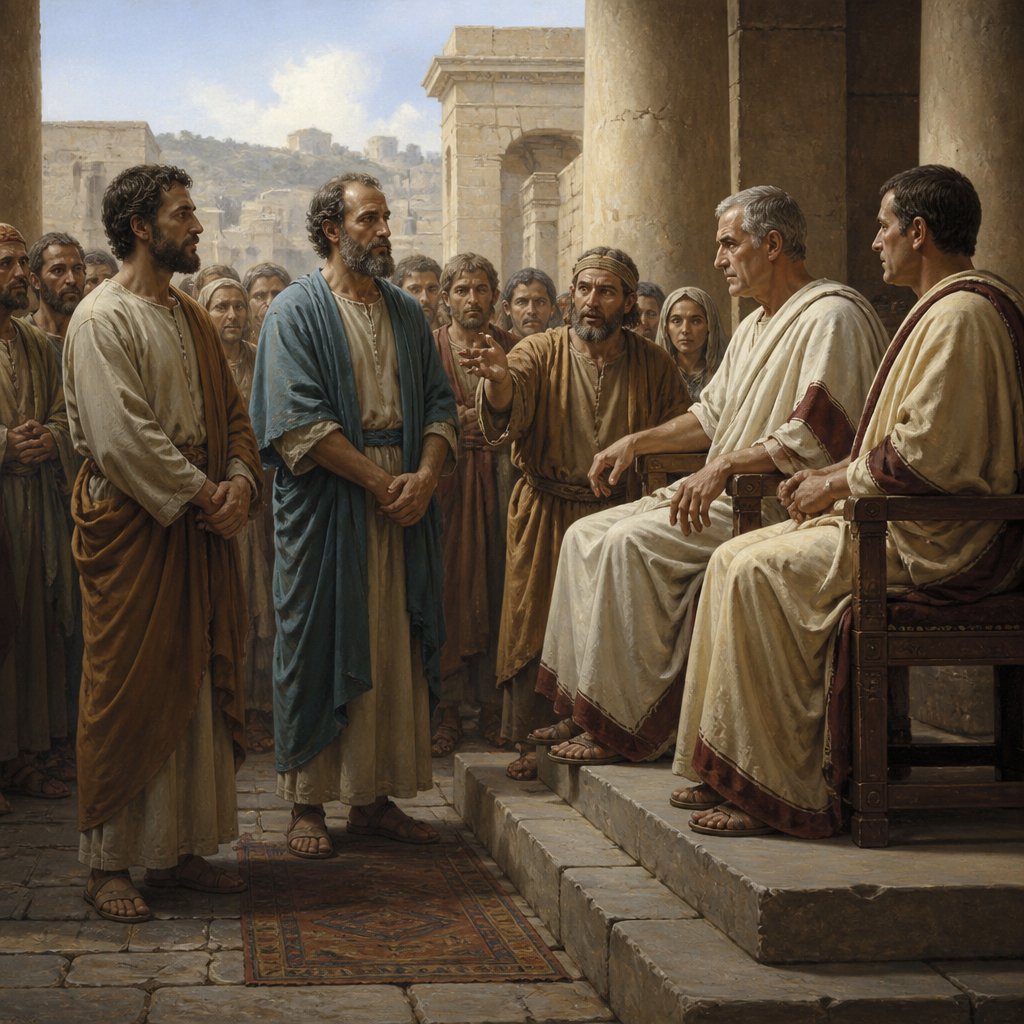
In Acts 16:20, we encounter a pivotal moment in the life of the early Church: **"And brought them to the magistrates, saying, These men, being Jews, do exceedingly trouble our city."** This verse encapsulates the tension between the burgeoning Christian faith and the established societal norms of the time. As we reflect on this passage, we discover profound insights into our walk with God, especially as we consider the roles we play in our communities and the larger world around us.
The context of this verse is significant. The Apostle Paul and his companion Silas had just performed a miraculous release of a slave girl from a spirit of divination. This act, while liberating for her, disrupted the status quo in Philippi, leading to their arrest. The magistrates' labeling of Paul and Silas as troublemakers reveals the harsh reality the early Christians faced: their faith often clashed violently with the traditions and expectations of society.
In our own lives, we may find that our faith in Jesus Christ prompts us to make decisions that 'trouble' the comfortable and complacent structures of our world. By living out the teachings of Christ, advocating for justice, mercy, and love, we might be perceived as unsettling or disruptive. We must ask ourselves: are we courageous enough to follow God's lead even when it causes distress to those around us?
This confrontation presents a challenge: to embody bold faith that yields transformative results, even at the risk of societal backlash. Paul and Silas did not hide their faith; instead, they acted in accordance with God's calling, regardless of public opinion. Their example raises important questions for us today: Are we willing to trouble the waters for the sake of the Gospel? Are we prepared to face resistance in pursuit of God's truth?
Furthermore, we see that the accusation against Paul and Silas was not just about them being Jews but about how their actions were perceived by the locals. Often, the fear of the unfamiliar breeds hostility. The message of Christ—one of love, grace, and truth—can provoke discomfort in anyone who clings tightly to the ways of the world. Thus, our guardian duty extends beyond mere actions; it changes the fabric of interactions, conversations, and ideologies within our communities.
To be 'troublers of the peace' called by God, we must distinguish between false peace—one that maintains the status quo at the expense of righteousness—and true peace that flows from living in accordance with God's will. True peace may often cause temporary turmoil or upheaval, as it challenges injustices or oppressive systems that are prevalent in society.
As we consider the trials faced by Paul and Silas, we must also remember the power of God that was made evident during their imprisonment. Instead of wallowing in despair or bitterness, they were found worshiping and praising God in the depths of a dark jail cell. Their faithfulness led to miraculous outcomes, including the conversion of the jailer and his household. This illustrates that while we may be labeled as troublemakers, our reliance on God can turn situations around for His glory.
In a world where the Gospel message is often met with resistance, let us take inspiration from Acts 16:20. Let us ask for the courage to embrace being 'troublers' for the Kingdom of God, persistent in our call to spread love, justice, and the hope of Jesus Christ. May we remind ourselves that through every challenge faced in faith, we have the opportunity to reveal the light of Christ in otherwise dark places.
Instead of allowing fear of troubling the peace to hinder our mission, let us commit to being bold, knowing that it is through such disruption that God can work mightily, changing lives and cities for His glory. Amen.
Get our apps


Artwork for Acts 16:20

Acts 16:20 - "And brought them to the magistrates, saying, These men, being Jews, do exceedingly trouble our city,"
"And brought them to the magistrates, saying, These men, being Jews, do exceedingly trouble our city," - Acts 16:20

1 Kings 16:20 - "Now the rest of the acts of Zimri, and his treason that he wrought, are they not written in the book of the chronicles of the kings of Israel?"

Acts 20:16 - "For Paul had determined to sail by Ephesus, because he would not spend the time in Asia: for he hasted, if it were possible for him, to be at Jerusalem the day of Pentecost."

Acts 3:16

Acts 3:16

"Now the rest of the acts of Zimri, and his treason that he wrought, are they not written in the book of the chronicles of the kings of Israel?" - 1 Kings 16:20

Acts 3:16

Acts 3:16

Acts 20:11

Acts 16 v18

Acts 16 v26

acts 20:7-12

Acts 16:17

Acts 9:1-20

Acts 9:1-20

Acts 20:5 - "These going before tarried for us at Troas."

Acts 2:16 - "But this is that which was spoken by the prophet Joel;"

Acts 19:20 - "So mightily grew the word of God and prevailed."

Acts 16:8 - "And they passing by Mysia came down to Troas."

Mark 16:20
Mark 16:20

Deuteronomy 20:16

Acts 20:33 - "I have coveted no man's silver, or gold, or apparel."

Acts 20:12 - "And they brought the young man alive, and were not a little comforted."
Mark 16:20

Genesis 20-16

Mark 16:20

Deuteronomy 20:16

Mark 16:20