What does Acts 16:20 mean?
“And brought them to the magistrates, saying, These men, being Jews, do exceedingly trouble our city,” — Acts 16:20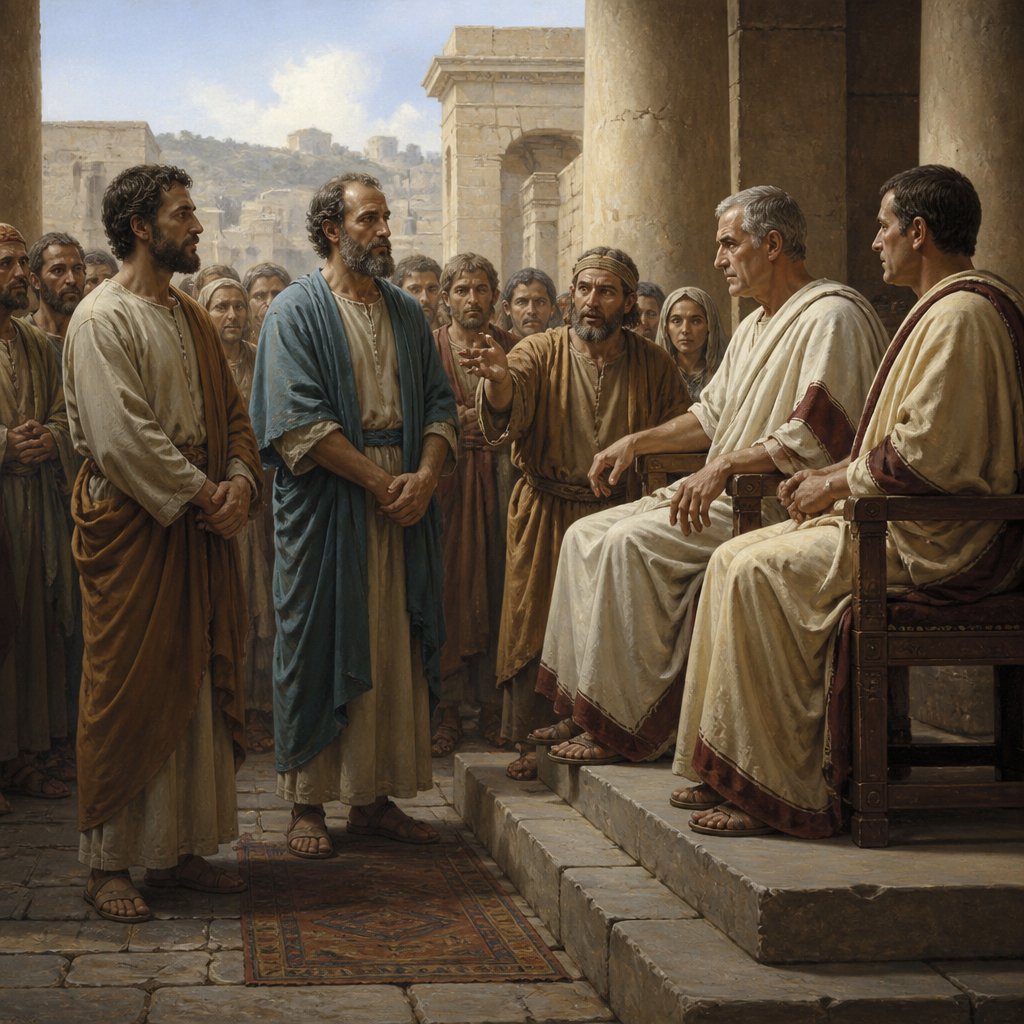
The King James Version of Acts 16:20 reads, "And brought them to the magistrates, saying, These men, being Jews, do exceedingly trouble our city."
This verse is a part of the narrative in the Book of Acts, which describes the activities of the early church and the spread of the gospel through the preaching of the apostles. In this particular passage, Paul and Silas, two of the apostles, are on a mission trip to the city of Philippi. They encounter a slave girl who is possessed by a spirit of divination, and they cast the spirit out of her. This act angers the girl's owners, who were making money off her ability to predict the future, and they bring Paul and Silas before the magistrates, accusing them of causing trouble in the city.
The theme of this verse is the opposition that the early Christians faced as they spread the message of the gospel. From the very beginning of the fledgling church, there were forces seeking to undermine and persecute the followers of Jesus. This theme is present throughout the Book of Acts, as the apostles and other believers encounter resistance, persecution, and even violence as they proclaim the message of salvation in Jesus Christ.
The context of this verse is important for understanding its significance. The city of Philippi was a Roman colony, and the inhabitants were likely devoted to the Roman gods and goddesses. When Paul and Silas cast the spirit out of the slave girl, they were challenging the spiritual and economic powers that held sway in the city. The accusation brought against them – that they were causing trouble – reflects the fear and anger of those who benefited from the status quo and did not want to see it disrupted by the message of the gospel.
The symbolism in this verse is rich and multifaceted. The fact that Paul and Silas are identified as Jews is significant, as it highlights the religious and cultural differences between the early Christians and the society in which they lived. The accusation that they were causing trouble speaks to the threat that the message of the gospel posed to the established social and religious order. The magistrates represent the authority and power of the Roman state, which would later become a major persecutor of the early church. The entire episode serves as a prelude to the trials and tribulations that the apostles and other believers would face as they continued to spread the message of Jesus Christ throughout the Roman Empire.
In conclusion, Acts 16:20 is a pivotal verse in the Book of Acts that illustrates the opposition and persecution faced by the early Christians as they sought to spread the message of the gospel. The themes of resistance, persecution, and the challenge to established powers are central to this verse, and its context in the narrative of Paul and Silas's mission to Philippi provides important insight into its significance. The accusation brought against the apostles, their identification as Jews, and their appearance before the magistrates all carry symbolic weight, pointing to the larger struggle between the message of the gospel and the established societal and religious order.
Get our apps


Artwork for Acts 16:20

Acts 16:20 - "And brought them to the magistrates, saying, These men, being Jews, do exceedingly trouble our city,"
"And brought them to the magistrates, saying, These men, being Jews, do exceedingly trouble our city," - Acts 16:20

1 Kings 16:20 - "Now the rest of the acts of Zimri, and his treason that he wrought, are they not written in the book of the chronicles of the kings of Israel?"

Acts 20:16 - "For Paul had determined to sail by Ephesus, because he would not spend the time in Asia: for he hasted, if it were possible for him, to be at Jerusalem the day of Pentecost."

Acts 3:16

Acts 3:16

"Now the rest of the acts of Zimri, and his treason that he wrought, are they not written in the book of the chronicles of the kings of Israel?" - 1 Kings 16:20

Acts 3:16

Acts 3:16

Acts 20:11

Acts 16 v18

Acts 16 v26

acts 20:7-12

Acts 16:17

Acts 9:1-20

Acts 9:1-20

Acts 20:5 - "These going before tarried for us at Troas."

Acts 2:16 - "But this is that which was spoken by the prophet Joel;"

Acts 19:20 - "So mightily grew the word of God and prevailed."

Acts 16:8 - "And they passing by Mysia came down to Troas."

Mark 16:20
Mark 16:20

Deuteronomy 20:16

Acts 20:33 - "I have coveted no man's silver, or gold, or apparel."

Acts 20:12 - "And they brought the young man alive, and were not a little comforted."
Mark 16:20

Genesis 20-16

Mark 16:20

Deuteronomy 20:16

Mark 16:20