Journeying Through Expectation: Lessons from Thessalonica
“Now when they had passed through Amphipolis and Apollonia, they came to Thessalonica, where was a synagogue of the Jews:” — Acts 17:1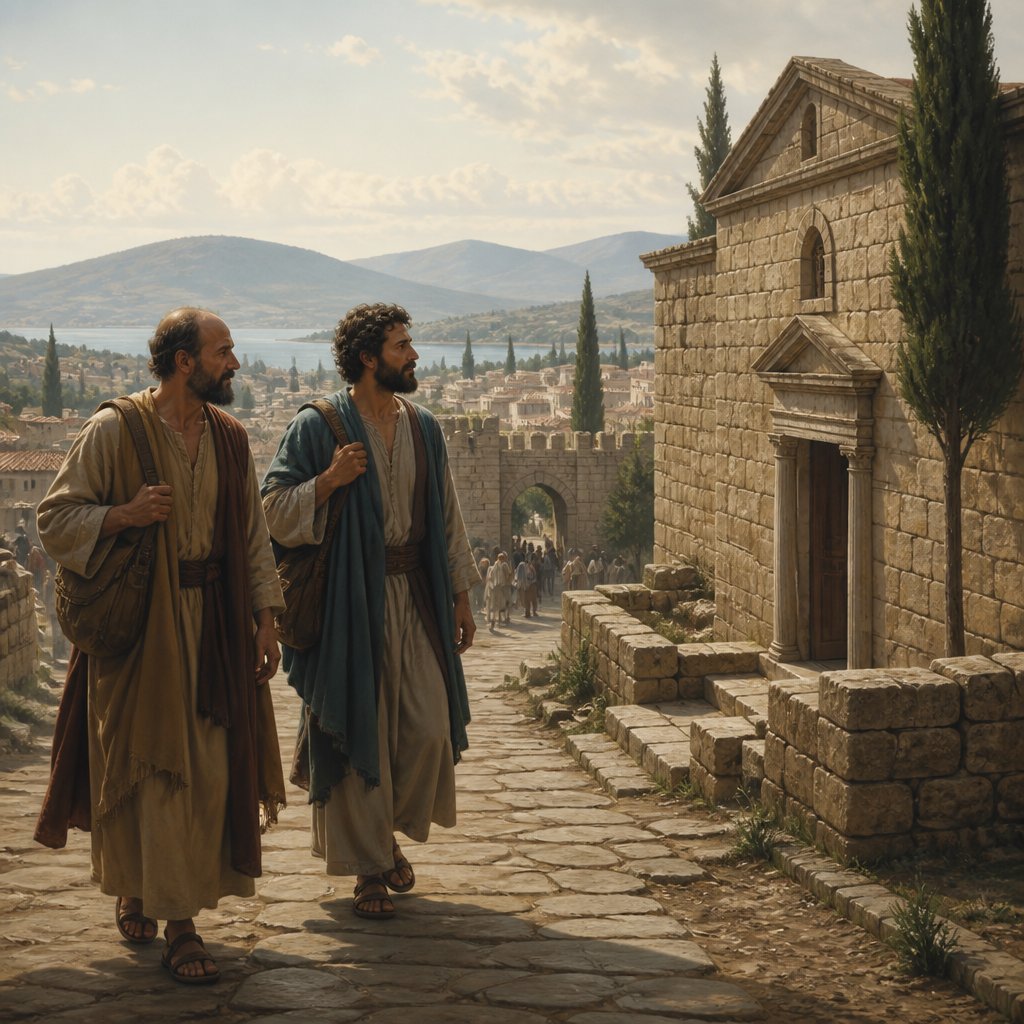
As we delve into Acts 17:1, "Now when they had passed through Amphipolis and Apollonia, they came to Thessalonica, where was a synagogue of the Jews," we find ourselves at a pivotal moment in the ministry of the Apostle Paul, accompanied by Silas. This verse encapsulates not just a geographical journey but also a spiritual expedition of purpose and expectation.
First, let’s consider the actual locations mentioned. Paul and Silas passed through Amphipolis and Apollonia, two cities emblematic of progress on their missionary journey. Amphipolis, which means "surrounded by the sea," was a strategic city in Macedonia, a hub known for its rich culture and trade. Apollonia, named after the Greek god Apollo, was also a significant center that served as a passage for travelers. Their movement through these cities indicates a broader theme in Scripture: that sometimes, the places we pass through on our journey can prepare or refine us for the next stage of our calling.
As believers, we often find ourselves navigating through similar ‘Amphipolises’ and ‘Apollonias’ in life, transitional phases where God is preparing us for something greater. These locations, while not our ultimate destination, serve significant purposes. They instill in us resilience, patience, and a deeper understanding of God’s will. It’s easy to become frustrated in these transitional periods, to question why we are not yet at our desired destination, but these moments build in us the richness of experience and faith. Paul surely gathered wisdom and strength through these encounters. From them, he could approach Thessalonica with a sense of urgency and anticipation.
Upon arriving in Thessalonica, we see Paul’s immediate action—going to the synagogue. This was his custom and reflects his strategic approach to ministry. Understanding his audience was crucial. The synagogue represented a community already familiar with the Scriptures and possessing a foundational belief in the God of Israel. Paul’s choice of this setting reveals how effective outreach often begins by meeting people where they already are, within their established contexts.
In a world filled with various ideologies and beliefs, it is vital that we engage with those around us thoughtfully. Paul teaches us that evangelism is not merely about proclamation; instead, it is about connecting with people’s hearts, understanding their backgrounds, and gently guiding them toward the truth of the Gospel. As followers of Christ, how often do we take the time to know those we wish to reach? Do we enter their ‘synagogues’—be it their places of work, culture, or family settings—ready to resonate with their experiences?
Moreover, Acts 17:1 points to the intentional nature of the divine mission. Paul did not wander aimlessly; he moved with purpose. Every step toward Thessalonica was a step in faith, underscored by a commitment to fulfill his calling as an apostle. The call to share the Gospel requires a similar intentionality from us. Are we embracing our call with fervor, or are we waiting for inspiration to strike while remaining passive in our daily routines?
Finally, let us reflect on the community Paul was stepping into. Thessalonica had a rich tapestry of culture, influence, and religion. Just like the bustling cities of our world today, Thessalonica was filled with individuals seeking meaning beyond what their current beliefs offered. Paul’s presence in their midst was one of hope—his message housed the transformative power of love and grace that only Christ provides. As we navigate through our own lives, we are called to be that beam of hope in places of darkness.
In conclusion, Acts 17:1 challenges us to consider our own journeys. Are we prepared to pass through the necessary transitional spaces in our lives, gleaning wisdom and strength along the way? Are we intentional about connecting with those in our circles, ensuring that we represent Christ authentically? Like Paul, may we move forward with purpose, ever aware that every step taken can lead us to a divine encounter in our journey of faith.
Get our apps


Artwork for Acts 17:1

Acts 17:1 - "Now when they had passed through Amphipolis and Apollonia, they came to Thessalonica, where was a synagogue of the Jews:"

"Now when they had passed through Amphipolis and Apollonia, they came to Thessalonica, where was a synagogue of the Jews:" - Acts 17:1
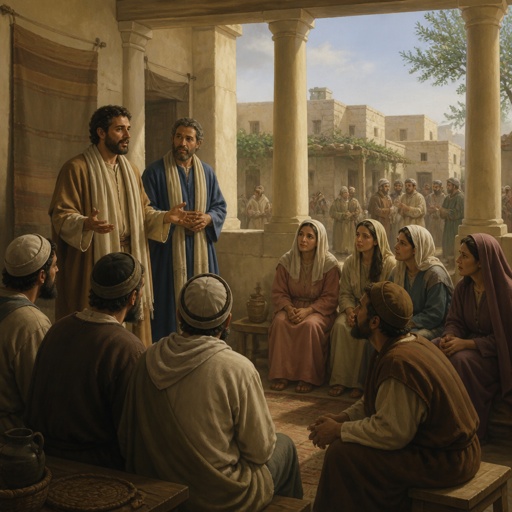
"When Paul and his companions had passed through Amphipolis and Apollonia, they came to Thessalonica, where there was a Jewish synagogue. As was his custom, Paul went into the synagogue, and on three Sabbath days he reasoned with them from the Scriptures, explaining and proving that the Messiah had to suffer and rise from the dead. “This Jesus I am proclaiming to you is the Messiah,” he said. Some of the Jews were persuaded and joined Paul and Silas, as did a large number of God-fearing Greeks and quite a few prominent women. But other Jews were jealous; so they rounded up some bad characters from the marketplace, formed a mob and started a riot in the city. They rushed to Jason’s house in search of Paul and Silas in order to bring them out to the crowd. But when they did not find them, they dragged Jason and some other believers before the city officials, shouting: “These men who have caused trouble all over the world have now come here, and Jason has welcomed them into his house. They are all defying Caesar’s decrees, saying that there is another king, one called Jesus.” When they heard this, the crowd and the city officials were thrown into turmoil. Then they made Jason and the others post bond and let them go." - Acts 17:1-9

Acts 17:1-9 - "When Paul and his companions had passed through Amphipolis and Apollonia, they came to Thessalonica, where there was a Jewish synagogue. As was his custom, Paul went into the synagogue, and on three Sabbath days he reasoned with them from the Scriptures, explaining and proving that the Messiah had to suffer and rise from the dead. “This Jesus I am proclaiming to you is the Messiah,” he said. Some of the Jews were persuaded and joined Paul and Silas, as did a large number of God-fearing Greeks and quite a few prominent women. But other Jews were jealous; so they rounded up some bad characters from the marketplace, formed a mob and started a riot in the city. They rushed to Jason’s house in search of Paul and Silas in order to bring them out to the crowd. But when they did not find them, they dragged Jason and some other believers before the city officials, shouting: “These men who have caused trouble all over the world have now come here, and Jason has welcomed them into his house. They are all defying Caesar’s decrees, saying that there is another king, one called Jesus.” When they heard this, the crowd and the city officials were thrown into turmoil. Then they made Jason and the others post bond and let them go."

Acts 14:17

Acts 17:15

Acts 1:17 - "For he was numbered with us, and had obtained part of this ministry."

Depict the events of Acts 19:14-17

create an image to show Acts 2:17

In him we live , move , and have our being Acts 17:28

Acts 2:17

Acts 2:17

"For he was numbered with us, and had obtained part of this ministry." - Acts 1:17

Acts 2:17

Acts 16:17

Acts 17:27

Acts 17:17 - "Therefore disputed he in the synagogue with the Jews, and with the devout persons, and in the market daily with them that met with him."

Acts 17:33 - "So Paul departed from among them."

Acts 8:17 - "Then laid they their hands on them, and they received the Holy Ghost."

Acts 17:8 - "And they troubled the people and the rulers of the city, when they heard these things."

Acts 20:17 - "¶ And from Miletus he sent to Ephesus, and called the elders of the church."

Acts 17:9 - "And when they had taken security of Jason, and of the other, they let them go."

Acts 21:17 - "And when we were come to Jerusalem, the brethren received us gladly."

Acts 24:17 - "Now after many years I came to bring alms to my nation, and offerings."

Acts 17:30 - "And the times of this ignorance God winked at; but now commandeth all men every where to repent:"

Acts 17:12 - "Therefore many of them believed; also of honourable women which were Greeks, and of men, not a few."

Acts 3:17 - "And now, brethren, I wot that through ignorance ye did it, as did also your rulers."

Acts 17:14 - "And then immediately the brethren sent away Paul to go as it were to the sea: but Silas and Timotheus abode there still."

Acts 26:17 - "Delivering thee from the people, and from the Gentiles, unto whom now I send thee,"

Acts 17:4 - "And some of them believed, and consorted with Paul and Silas; and of the devout Greeks a great multitude, and of the chief women not a few."