What does Acts 17:1 mean?
“Now when they had passed through Amphipolis and Apollonia, they came to Thessalonica, where was a synagogue of the Jews:” — Acts 17:1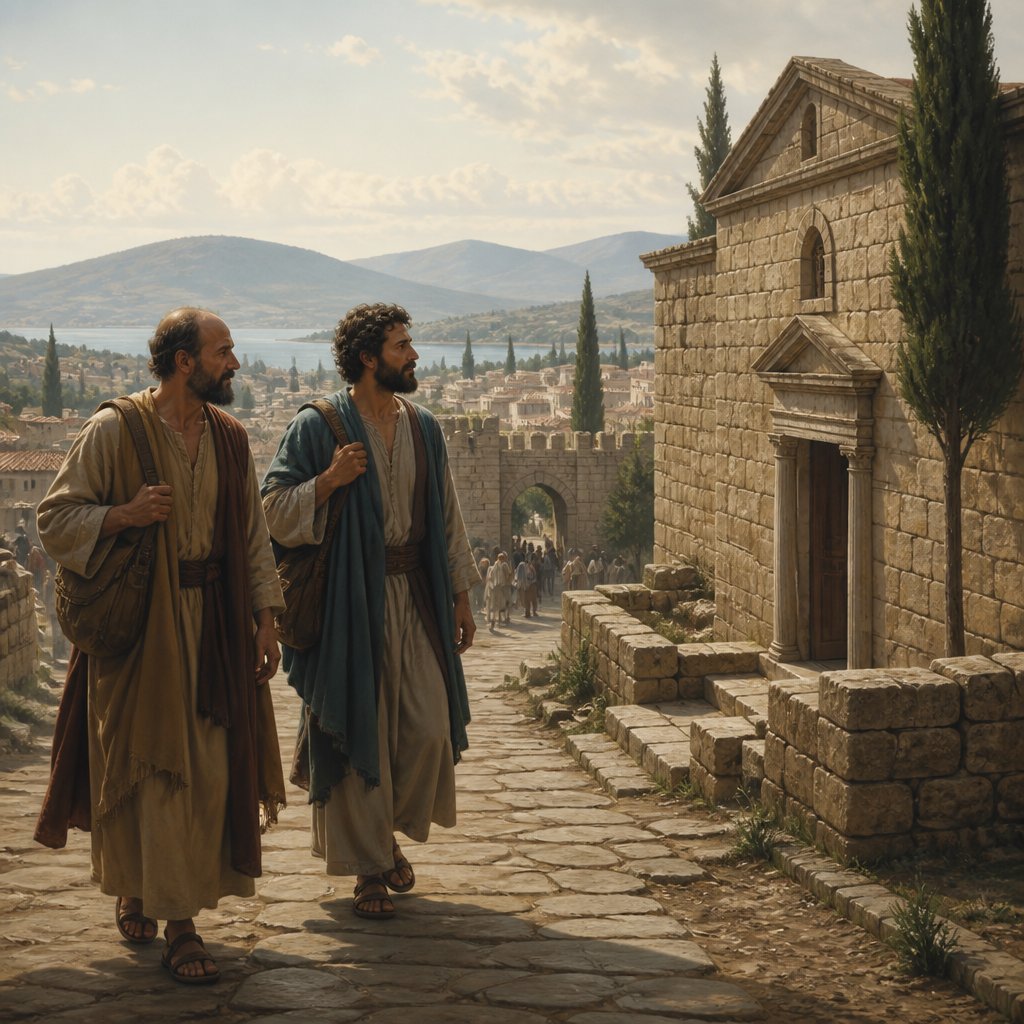
Acts 17:1 in the King James Version of the Bible reads, "Now when they had passed through Amphipolis and Apollonia, they came to Thessalonica, where was a synagogue of the Jews." This verse is a simple statement about the journey of Paul and Silas as they traveled to preach the gospel. However, within this seemingly straightforward narrative, there are deep themes, historical context, and symbolic significance that can be drawn out and examined.
First, it's important to look at the broader context of the Book of Acts. The book, traditionally attributed to Luke, is a narrative account of the early Christian church and its growth after the death and resurrection of Jesus. Acts 17:1 is part of a larger section that focuses on the missionary journeys of Paul, one of the most influential early Christian missionaries. This verse occurs in the second missionary journey, during which Paul and his companions traveled throughout Macedonia and Greece, sharing the message of Jesus Christ with both Jews and Gentiles.
The themes of Acts 17:1 are multifaceted. One theme that is evident in this verse is the importance of perseverance in the face of opposition. Throughout the Book of Acts, we see Paul and his fellow missionaries encountering resistance and hostility as they spread the message of Christianity. In the preceding chapters, Paul and Silas faced persecution and imprisonment in Philippi, yet they continued their journey undeterred. This verse serves as a reminder of the challenges and obstacles that early Christians faced in their efforts to spread the gospel, yet they remained steadfast in their mission.
Another important theme in Acts 17:1 is the universality of the gospel message. The fact that Paul and his companions went to a synagogue in Thessalonica indicates that they were continuing to fulfill Jesus' command to "go and make disciples of all nations" (Matthew 28:19). The inclusion of both Jews and Gentiles in the expansion of the Christian church reflects the universal scope of the gospel. This theme of inclusivity and the breaking down of traditional religious and cultural barriers is a crucial aspect of the early Christian mission.
The historical context of Acts 17:1 is also significant for understanding its meaning. Thessalonica was a major port city in Macedonia and an important center of trade and commerce. It was also a multicultural city, with a diverse population of both Jews and Gentiles. By choosing to preach in the synagogue, Paul was strategically targeting a community that was already open to discussions about religious beliefs and practices, as well as one that held significant influence over the surrounding region. This context underscores the strategic and intentional nature of Paul's missionary efforts, as well as the need for flexibility and adaptability in spreading the gospel to different audiences.
In addition to its thematic and historical significance, Acts 17:1 also carries symbolic weight. The journey of Paul and Silas represents the ongoing mission of the church to bring the message of salvation to all people, regardless of their background or cultural identity. The synagogues they visited symbolize the bridging of the gap between Judaism and Christianity, as well as the continuity between the Old and New Testaments. The verse also symbolizes the perseverance and determination of the early Christians in the face of opposition, as well as their commitment to fulfilling the Great Commission.
In conclusion, Acts 17:1 is a deceptively simple verse that contains deep themes, historical context, and symbolic significance. It serves as a reminder of the challenges and obstacles faced by early Christians, the universal scope of the gospel message, and the strategic nature of the early Christian mission. It also symbolizes the perseverance, inclusivity, and determination of the early church in spreading the message of Jesus Christ. This verse continues to inspire and challenge Christians today as they seek to fulfill the mission of the church in bringing the message of salvation to the ends of the earth.
Get our apps


Artwork for Acts 17:1

Acts 17:1 - "Now when they had passed through Amphipolis and Apollonia, they came to Thessalonica, where was a synagogue of the Jews:"

"Now when they had passed through Amphipolis and Apollonia, they came to Thessalonica, where was a synagogue of the Jews:" - Acts 17:1
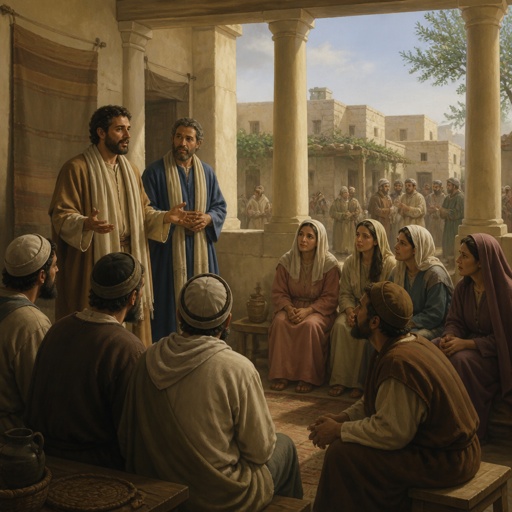
"When Paul and his companions had passed through Amphipolis and Apollonia, they came to Thessalonica, where there was a Jewish synagogue. As was his custom, Paul went into the synagogue, and on three Sabbath days he reasoned with them from the Scriptures, explaining and proving that the Messiah had to suffer and rise from the dead. “This Jesus I am proclaiming to you is the Messiah,” he said. Some of the Jews were persuaded and joined Paul and Silas, as did a large number of God-fearing Greeks and quite a few prominent women. But other Jews were jealous; so they rounded up some bad characters from the marketplace, formed a mob and started a riot in the city. They rushed to Jason’s house in search of Paul and Silas in order to bring them out to the crowd. But when they did not find them, they dragged Jason and some other believers before the city officials, shouting: “These men who have caused trouble all over the world have now come here, and Jason has welcomed them into his house. They are all defying Caesar’s decrees, saying that there is another king, one called Jesus.” When they heard this, the crowd and the city officials were thrown into turmoil. Then they made Jason and the others post bond and let them go." - Acts 17:1-9

Acts 17:1-9 - "When Paul and his companions had passed through Amphipolis and Apollonia, they came to Thessalonica, where there was a Jewish synagogue. As was his custom, Paul went into the synagogue, and on three Sabbath days he reasoned with them from the Scriptures, explaining and proving that the Messiah had to suffer and rise from the dead. “This Jesus I am proclaiming to you is the Messiah,” he said. Some of the Jews were persuaded and joined Paul and Silas, as did a large number of God-fearing Greeks and quite a few prominent women. But other Jews were jealous; so they rounded up some bad characters from the marketplace, formed a mob and started a riot in the city. They rushed to Jason’s house in search of Paul and Silas in order to bring them out to the crowd. But when they did not find them, they dragged Jason and some other believers before the city officials, shouting: “These men who have caused trouble all over the world have now come here, and Jason has welcomed them into his house. They are all defying Caesar’s decrees, saying that there is another king, one called Jesus.” When they heard this, the crowd and the city officials were thrown into turmoil. Then they made Jason and the others post bond and let them go."

Acts 14:17

Acts 17:15

Acts 1:17 - "For he was numbered with us, and had obtained part of this ministry."

Depict the events of Acts 19:14-17

create an image to show Acts 2:17

In him we live , move , and have our being Acts 17:28

Acts 2:17

Acts 2:17

"For he was numbered with us, and had obtained part of this ministry." - Acts 1:17

Acts 2:17

Acts 16:17

Acts 17:27

Acts 17:17 - "Therefore disputed he in the synagogue with the Jews, and with the devout persons, and in the market daily with them that met with him."

Acts 17:33 - "So Paul departed from among them."

Acts 8:17 - "Then laid they their hands on them, and they received the Holy Ghost."

Acts 17:8 - "And they troubled the people and the rulers of the city, when they heard these things."

Acts 20:17 - "¶ And from Miletus he sent to Ephesus, and called the elders of the church."

Acts 17:9 - "And when they had taken security of Jason, and of the other, they let them go."

Acts 21:17 - "And when we were come to Jerusalem, the brethren received us gladly."

Acts 24:17 - "Now after many years I came to bring alms to my nation, and offerings."

Acts 17:30 - "And the times of this ignorance God winked at; but now commandeth all men every where to repent:"

Acts 17:12 - "Therefore many of them believed; also of honourable women which were Greeks, and of men, not a few."

Acts 3:17 - "And now, brethren, I wot that through ignorance ye did it, as did also your rulers."

Acts 17:14 - "And then immediately the brethren sent away Paul to go as it were to the sea: but Silas and Timotheus abode there still."

Acts 26:17 - "Delivering thee from the people, and from the Gentiles, unto whom now I send thee,"

Acts 17:4 - "And some of them believed, and consorted with Paul and Silas; and of the devout Greeks a great multitude, and of the chief women not a few."