The Weight of Revelation: Understanding our Role in God’s Plan
“Then Daniel, whose name was Belteshazzar, was astonied for one hour, and his thoughts troubled him. The king spake, and said, Belteshazzar, let not the dream, or the interpretation thereof, trouble thee. Belteshazzar answered and said, My lord, the dream be to them that hate thee, and the interpretation thereof to thine enemies.” — Daniel 4:19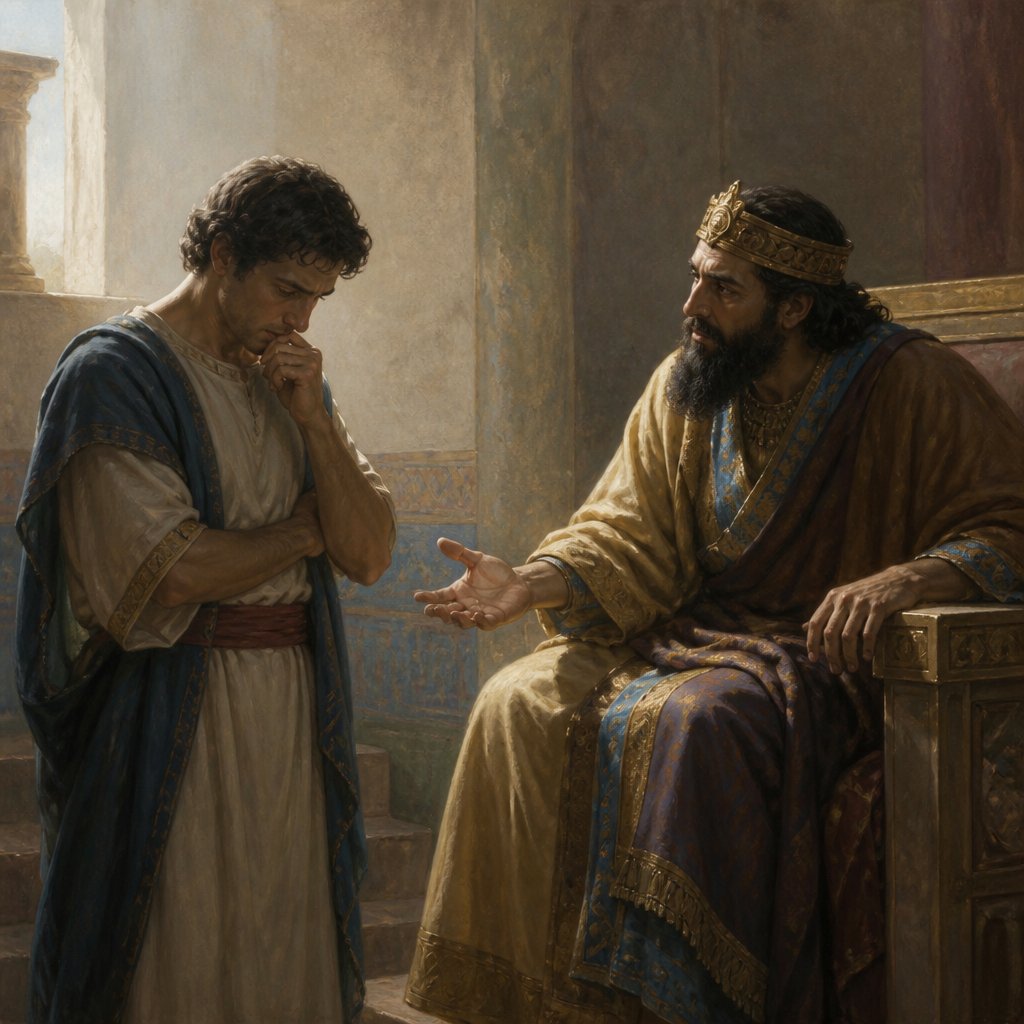
In the Book of Daniel, we encounter a profound moment of divine revelation that illustrates the gravity of interpreting God’s will. Daniel 4:19 (KJV) reads: "Then Daniel, whose name was Belteshazzar, was astonied for one hour, and his thoughts troubled him. The king spake, and said, Belteshazzar, let not the dream, or the interpretation thereof, trouble thee. Belteshazzar answered and said, My lord, the dream be to them that hate thee, and the interpretation thereof to thine enemies."
This passage captures an intense moment for Daniel, who served in the capacity of an advisor to King Nebuchadnezzar. The state of astonishment concerning the king’s dream was not just a fleeting emotional response but a deep, soul-wrenching encounter with the weight of a divine revelation. As believers, we are often called to be vessels of truth in circumstances that can provoke discomfort or fear. In Daniel’s case, the dream and its interpretation held grave implications for the king, threatening his pride and authority.
### The Struggle of Truth-Telling
Notably, Daniel's astonishment lasted for an hour, indicating the depth of his concern in conveying what the dream meant. This moment resonates with anyone who has faced the challenge of delivering hard truths. How often do we find ourselves torn between our allegiance to God and our desire to uphold the peace with those around us? Daniel’s initial silence—his troubled thoughts—reflects the internal struggle we may all face: the tension between speaking the truth and protecting the listener’s feelings.
When confronted with the king's anguish, Nebuchadnezzar sought reassurance from Daniel, suggesting that at least a portion of his fears could be eased. Yet it is crucial to note how Daniel chose to proceed. Instead of offering empty platitudes or softening the truth, he leans into the reality of the interpretation with authenticity. His response underscores a core principle of our faith: that we are called to bear witness to truth, even when it threatens to fracture our own relationships.
### The Harsh Reality of God’s Justice
Daniel recognized the brutal honesty required for the moment. "The dream be to them that hate thee, and the interpretation thereof to thine enemies." With these words, Daniel courageously declares that the vision is a warning, not a blessing. Herein lies a great lesson for us as followers of Christ. There are moments bestowed upon us to proclaim God’s judgment not for the sake of pleasure but as an act of love—a chance for repentance and transformation.
In a world where the lines between good and evil can seem blurred, our commitment to truth must remain steadfast, even when the message is one of divine warning. Daniel’s example urges us not to shy away from our roles as bearers of God’s word, understanding that the ultimate goal is not merely to condemn but to lead others towards redemption.
### When Awestruck, Trust God
As we navigate through moments that perplex or trouble us, it is essential to release our fears into the hands of our sovereign God. Like Daniel, we might feel overwhelmed by the weight of what we are called to communicate. But we can trust that God equips us with the strength to speak His truth. We must ask ourselves: Are we willing to be instruments of His message, even when it challenges the status quo? Are we prepared to carry the weight of the truth so that others may come to know His justice and mercy?
In conclusion, as we reflect on Daniel 4:19, let it be a reminder to approach our encounters with others who are in need of discernment with reverence and courage. May the life of Daniel inspire us to embrace our roles in God’s divine plan—being unafraid to speak what is true and right, maintaining our loyalty to God above all. In doing so, we may witness the transformative power of His Word in both our lives and the lives of those around us.
Get our apps


Artwork for Daniel 4:19

Daniel 4:19 - "¶ Then Daniel, whose name was Belteshazzar, was astonied for one hour, and his thoughts troubled him. The king spake, and said, Belteshazzar, let not the dream, or the interpretation thereof, trouble thee. Belteshazzar answered and said, My lord, the dream be to them that hate thee, and the interpretation thereof to thine enemies."
"¶ Then Daniel, whose name was Belteshazzar, was astonied for one hour, and his thoughts troubled him. The king spake, and said, Belteshazzar, let not the dream, or the interpretation thereof, trouble thee. Belteshazzar answered and said, My lord, the dream be to them that hate thee, and the interpretation thereof to thine enemies." - Daniel 4:19

Daniel 2:19 - "¶ Then was the secret revealed unto Daniel in a night vision. Then Daniel blessed the God of heaven."

"¶ Then was the secret revealed unto Daniel in a night vision. Then Daniel blessed the God of heaven." - Daniel 2:19

Daniel 1:19 - "And the king communed with them; and among them all was found none like Daniel, Hananiah, Mishael, and Azariah: therefore stood they before the king."

Daniel 4:15

Daniel 5:4

Daniel 7:4

Daniel 6:3-4 - "Daniel 6:3-4: Then this Daniel was preferred above the presidents and princes, because an excellent spirit was in him; and the king thought to set him over the whole realm. So the presidents and princes sought to find occasion against Daniel concerning the kingdom; but they could find none occasion nor fault; forasmuch as he was faithful, neither was there any error or fault found in him."

Daniel 4:4 - "¶ I Nebuchadnezzar was at rest in mine house, and flourishing in my palace:"

Daniel 4:13-14

Daniel 4:10-14

Daniel 4:13-14

Daniel 4:1-3

Daniel 6:19 - "Then the king arose very early in the morning, and went in haste unto the den of lions."

Daniel 12:4 - "But thou, O Daniel, shut up the words, and seal the book, even to the time of the end: many shall run to and fro, and knowledge shall be increased."

Daniel 4:28 - "¶ All this came upon the king Nebuchadnezzar."

Daniel 4:8 - "¶ But at the last Daniel came in before me, whose name was Belteshazzar, according to the name of my god, and in whom is the spirit of the holy gods: and before him I told the dream, saying,"

Daniel 4:29 - "At the end of twelve months he walked in the palace of the kingdom of Babylon."

Daniel 6:4 - "¶ Then the presidents and princes sought to find occasion against Daniel concerning the kingdom; but they could find none occasion nor fault; forasmuch as he was faithful, neither was there any error or fault found in him."

Daniel 11:19 - "Then he shall turn his face toward the fort of his own land: but he shall stumble and fall, and not be found."

Daniel 3:4 - "Then an herald cried aloud, To you it is commanded, O people, nations, and languages,"

Daniel 4:10-12 – Nebuchadnezzar’s dream of a tree.

Daniel 8:19 - "And he said, Behold, I will make thee know what shall be in the last end of the indignation: for at the time appointed the end shall be."

Daniel 5:4 - "They drank wine, and praised the gods of gold, and of silver, of brass, of iron, of wood, and of stone."
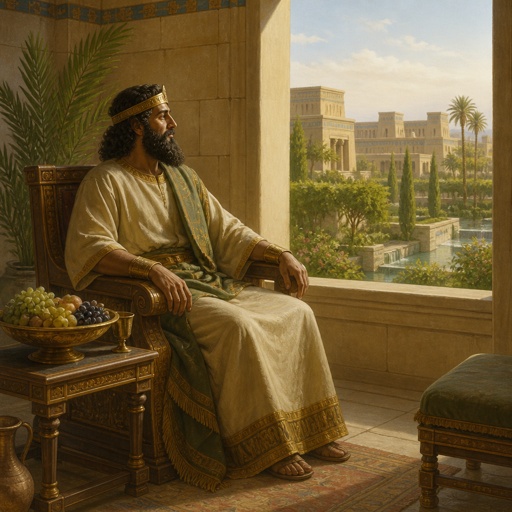
"¶ I Nebuchadnezzar was at rest in mine house, and flourishing in my palace:" - Daniel 4:4

Daniel 10:4 - "And in the four and twentieth day of the first month, as I was by the side of the great river, which is Hiddekel;"

"¶ All this came upon the king Nebuchadnezzar." - Daniel 4:28
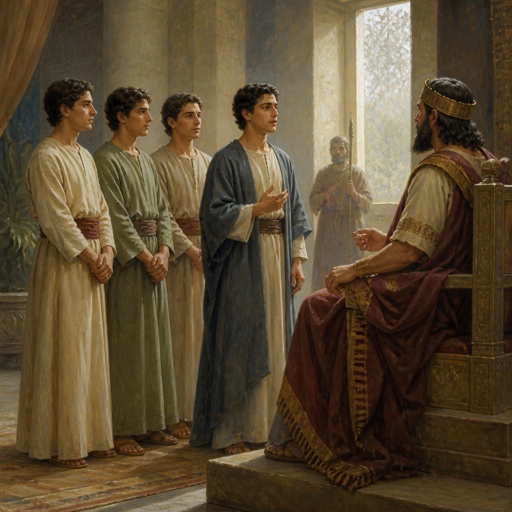
"And the king communed with them; and among them all was found none like Daniel, Hananiah, Mishael, and Azariah: therefore stood they before the king." - Daniel 1:19

Daniel 4:24 - "This is the interpretation, O king, and this is the decree of the most High, which is come upon my lord the king:"