The Sacredness of Our Offerings: A Deeper Look at Deuteronomy 12:17
“Thou mayest not eat within thy gates the tithe of thy corn, or of thy wine, or of thy oil, or the firstlings of thy herds or of thy flock, nor any of thy vows which thou vowest, nor thy freewill offerings, or heave offering of thine hand:” — Deuteronomy 12:17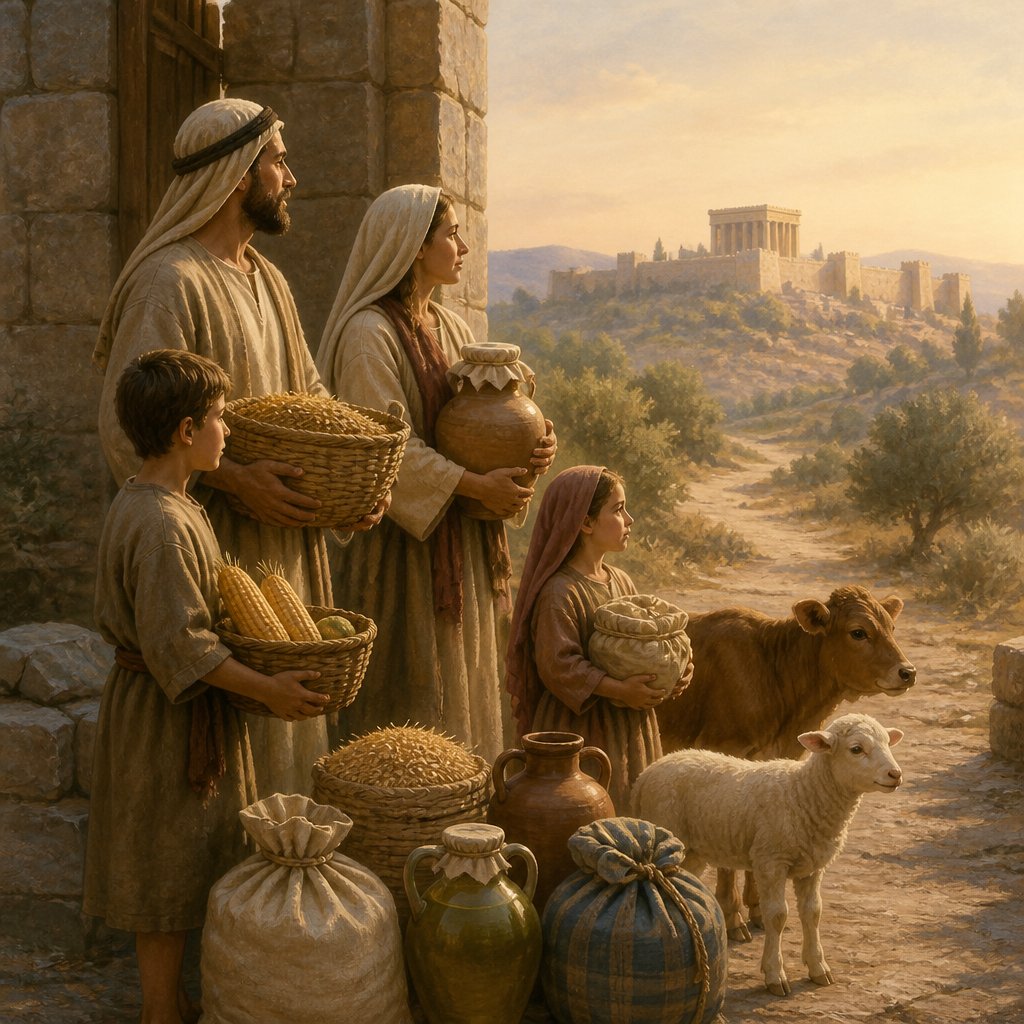
In Deuteronomy 12:17, the Lord through Moses instructs the Israelites on the proper approach to worship and the handling of their sacred offerings. The verse states, "Thou mayest not eat within thy gates the tithe of thy corn, or of thy wine, or of thy oil, or the firstlings of thy herds or of thy flock, nor any of thy vows which thou vowest, nor thy freewill offerings, or heave offering of thine hand." This admonition is not just an arbitrary restriction; rather, it serves to illuminate a profound understanding of God’s covenant with His people and the significance of their loyalty and devotion.
To understand the weight of this instruction, we must consider the cultural backdrop of ancient Israel. Agriculture and livestock were central to the livelihood of the Israelites. Their harvests and flocks were not merely economic resources but symbols of God’s providence and blessings. The tithe, or one-tenth of their produce and livestock, represented a tangible acknowledgment of God's sovereignty and their relationship with Him. By commanding that these offerings not be consumed within their own gates, God was establishing a level of reverence surrounding the sacred gifts that the Israelites brought before Him.
The idea of eating within one’s gates symbolizes familiarity and even, perhaps, a casual approach to the things that are set apart as holy. God desires His people to recognize that what is offered to Him carries a weight of significance that transcends mundane consumption. Our offerings are not to be viewed as mere commodities or transactions; they are acts of worship, incarnations of gratitude, and commitments of faith.
Furthermore, the stipulation against partaking in such offerings within their gates propelled the Israelites to bring them to centralized places of worship, specifically to the Tabernacle, and later to the Temple in Jerusalem. By doing so, the offerings became communal affairs, reinforcing the idea of community worship and unified devotion. God wanted His people to understand that worship is not isolated; it thrives in the context of community. When we worship corporately, we share in the blessings of God’s provisions, and collectively, we honor the One who provided.
This principle transcends the historical context. Today, as followers of Christ, we are not bound by the ceremonial law; however, the underlying truth about the sacredness of our offerings remains deeply relevant. The tithe of our time, talents, and treasures still calls us to reflect on their significance and how we present them back to God. Just as the Israelites were to offer their first fruits and not the leftovers, we too are invited to bring our best before the Lord.
Moreover, our spiritual vows and freewill offerings must not be taken lightly. When we commit our lives, our resources, or our service to God, we are engaged in a solemn promise. The commitment originates from a heart of gratitude and a desire to glorify God. In thus reverencing our vows and offerings, we align our lives with God's purposes, where each gift, each prayer, each act of service is vital to the flourishing of His kingdom.
To incorporate this teaching into our daily practices, we must examine how we treat our resources. Are we utilizing our talents and treasures for personal gain or a greater purpose? Do we treat our service in the church as an obligation or a privilege to serve a living God?
As we reflect on Deuteronomy 12:17, let us cultivate a spirit of reverence towards our offerings. Let our lives echo the principles embedded in this directive—by being mindful and intentional with our giving and worship, we acknowledge that all we have comes from God and belongs to Him. May our offerings reflect not only our gratitude but also our worship, as we purpose in our hearts to honor Him with our best, collectively and individually, seeking His glory above all.
Get our apps


Artwork for Deuteronomy 12:17
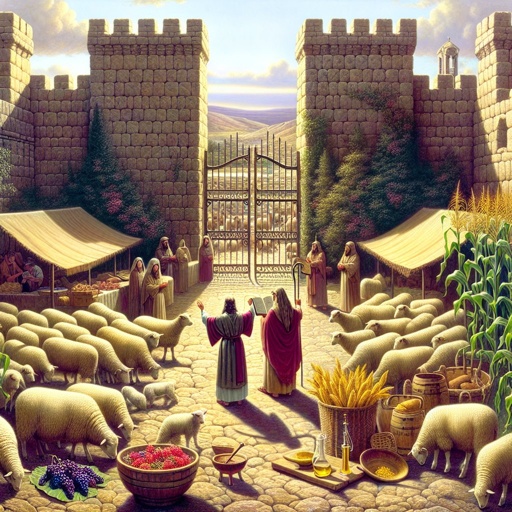
Deuteronomy 12:17 - "¶ Thou mayest not eat within thy gates the tithe of thy corn, or of thy wine, or of thy oil, or the firstlings of thy herds or of thy flock, nor any of thy vows which thou vowest, nor thy freewill offerings, or heave offering of thine hand:"
"¶ Thou mayest not eat within thy gates the tithe of thy corn, or of thy wine, or of thy oil, or the firstlings of thy herds or of thy flock, nor any of thy vows which thou vowest, nor thy freewill offerings, or heave offering of thine hand:" - Deuteronomy 12:17

Deuteronomy 17:12 - "And the man that will do presumptuously, and will not hearken unto the priest that standeth to minister there before the LORD thy God, or unto the judge, even that man shall die: and thou shalt put away the evil from Israel."

Deuteronomy 5:17 - "Thou shalt not kill."

Deuteronomy 14:17 - "And the pelican, and the gier eagle, and the cormorant,"

Deuteronomy 2:17 - "That the LORD spake unto me, saying,"

Deuteronomy 28:17 - "Cursed shall be thy basket and thy store."

"Thou shalt not kill." - Deuteronomy 5:17

Deuteronomy 23:17 - "¶ There shall be no whore of the daughters of Israel, nor a sodomite of the sons of Israel."

Deuteronomy 17:13 - "And all the people shall hear, and fear, and do no more presumptuously."

Deuteronomy 17:17 - "Neither shall he multiply wives to himself, that his heart turn not away: neither shall he greatly multiply to himself silver and gold."

Deuteronomy 4:17 - "The likeness of any beast that is on the earth, the likeness of any winged fowl that flieth in the air,"

"And the pelican, and the gier eagle, and the cormorant," - Deuteronomy 14:17

Deuteronomy 18:17 - "And the LORD said unto me, They have well spoken that which they have spoken."

Deuteronomy 14:12 - "But these are they of which ye shall not eat: the eagle, and the ossifrage, and the ospray,"

Deuteronomy 24:12 - "And if the man be poor, thou shalt not sleep with his pledge:"

Deuteronomy 12:4 - "Ye shall not do so unto the LORD your God."

Deuteronomy 27:17 - "Cursed be he that removeth his neighbour's landmark. And all the people shall say, Amen."

Genesis 17-12

"That the LORD spake unto me, saying," - Deuteronomy 2:17

Deuteronomy 24:17 - "¶ Thou shalt not pervert the judgment of the stranger, nor of the fatherless; nor take a widow's raiment to pledge:"

Deuteronomy 12:24 - "Thou shalt not eat it; thou shalt pour it upon the earth as water."

Deuteronomy 32:12 - "So the LORD alone did lead him, and there was no strange god with him."

Deuteronomy 29:17 - "And ye have seen their abominations, and their idols, wood and stone, silver and gold, which were among them:)"

Deuteronomy 8:17 - "And thou say in thine heart, My power and the might of mine hand hath gotten me this wealth."

Deuteronomy 5:12 - "Keep the sabbath day to sanctify it, as the LORD thy God hath commanded thee."

Deuteronomy 20:12 - "And if it will make no peace with thee, but will make war against thee, then thou shalt besiege it:"

Deuteronomy 25:17 - "¶ Remember what Amalek did unto thee by the way, when ye were come forth out of Egypt;"

Deuteronomy 7:17 - "If thou shalt say in thine heart, These nations are more than I; how can I dispossess them?"

Deuteronomy 17:4 - "And it be told thee, and thou hast heard of it, and enquired diligently, and, behold, it be true, and the thing certain, that such abomination is wrought in Israel:"