Understanding God’s Purpose in Creation: A Devotional on Deuteronomy 14:5
“The hart, and the roebuck, and the fallow deer, and the wild goat, and the pygarg, and the wild ox, and the chamois.” — Deuteronomy 14:5
In Deuteronomy 14:5, we find a specific listing of animals deemed clean for consumption by the Israelites: "The hart, and the roebuck, and the fallow deer, and the wild goat, and the pygarg, and the wild ox, and the chamois." At first glance, this verse may appear to be a mere dietary guideline; however, when we delve deeper into its implications, we uncover profound insights about God’s intentions for His creation and our relationship with it.
God gave the Israelites laws not just for health and hygiene, but as a means to cultivate a sense of holiness and separation from the practices of surrounding nations. The clean animals listed in this verse reflect God’s desire for His people to be holy and set apart. They serve not only as a guide for dietary restrictions but also as a reminder of the character of God Himself—a God who is concerned with what we consume, both physically and spiritually.
The hart and the roebuck are not simply animals of the wild; they symbolize gentleness and grace. By allowing the consumption of such creatures, God encourages His people to embrace qualities of humility and gentleness in their lives. We are reminded that in the pursuit of our daily endeavors, whether in our workplaces, our homes, or our friendships, we are to reflect the gentleness exhibited by these animals. Similar to the heart of a deer, our approach to life should be characterized by grace, modesty, and a willingness to serve others.
In contrast, the wild goat and the wild ox signify strength and resilience. These animals are often associated with endurance and the ability to face the challenges of life head-on. When we acknowledge that such strength is also part of God’s creation, we are reminded that trials and tribulations can be met with courage when we lean on God. As scripture reminds us, "I can do all things through Christ which strengtheneth me" (Philippians 4:13, KJV). Just as the wild ox thrives in the natural world, we too can flourish when we rely on the strength granted to us by our Creator.
Then there is the pygarg, a creature lesser-known among the clean animals. This highlights another aspect of God’s creation—the diversity and uniqueness within it. Every animal listed in Deuteronomy 14:5 has its own role and importance within the ecosystem, echoing how each member of the body of Christ has its distinct purpose (1 Corinthians 12). We are called to appreciate the individuality of one another, fostering an environment where all gifts are recognized and valued, thus building up the church collectively.
Further, the mention of these diverse animals can serve as an important reminder of stewardship. We are instructed not only to utilize what God has provided wisely but also to safeguard His creation. In exploring the deep connection between these creatures and our faith, we gather wisdom that can influence our environmental stewardship today. How can we ensure that the essence and beauty of God's creation—both the majestic hart and the humble fallow deer—are preserved for future generations?
Finally, there’s a spiritual element intertwined within this verse’s context. The animals should also lead us to reflect on the sacrificial system established within the Old Testament. Each of these animals can be seen as a foreshadowing of Christ—the ultimate sacrifice who embodies the virtues of the clean animals. His gentleness, strength, rationality, and uniqueness as the Son of God set Him apart as the Lamb of God who takes away the sins of the world. The dietary laws of old bring us to the foot of the cross where we encounter Christ—a reminder that regardless of the personal sacrifices we make for holiness, it is through Christ’s sacrifice that we are made clean.
In closing, may we take time today to reflect on Deuteronomy 14:5, considering how it illuminates God’s character, our role in creation, and the sacrificial love of Jesus. Let each creature, whether the strong wild ox or the delicate chamois, remind us of God’s intricate design and His desire for our lives to reflect His holiness, grace, and purpose.
Get our apps


Artwork for Deuteronomy 14:5

Deuteronomy 14:5 - "The hart, and the roebuck, and the fallow deer, and the wild goat, and the pygarg, and the wild ox, and the chamois."

"The hart, and the roebuck, and the fallow deer, and the wild goat, and the pygarg, and the wild ox, and the chamois." - Deuteronomy 14:5

Deuteronomy 14:14 - "And every raven after his kind,"

Deuteronomy 14:17 - "And the pelican, and the gier eagle, and the cormorant,"
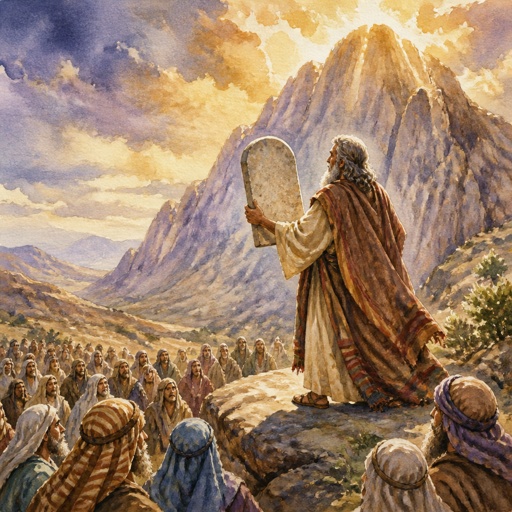
Deuteronomy 5 pictures

"And every raven after his kind," - Deuteronomy 14:14

Deuteronomy 14:16 - "The little owl, and the great owl, and the swan,"

Deuteronomy 5:17 - "Thou shalt not kill."

Deuteronomy 14:3 - "¶ Thou shalt not eat any abominable thing."

Deuteronomy 14:11 - "¶ Of all clean birds ye shall eat."

Deuteronomy 14:20 - "But of all clean fowls ye may eat."

Deuteronomy 14:13 - "And the glede, and the kite, and the vulture after his kind,"

Deuteronomy 34:5-6

Deuteronomy 5:19 - "Neither shalt thou steal."

Deuteronomy 14:18 - "And the stork, and the heron after her kind, and the lapwing, and the bat."

Deuteronomy 14:12 - "But these are they of which ye shall not eat: the eagle, and the ossifrage, and the ospray,"

Deuteronomy 5:18 - "Neither shalt thou commit adultery."

Deuteronomy 14:15 - "And the owl, and the night hawk, and the cuckow, and the hawk after his kind,"

Deuteronomy 29:14 - "Neither with you only do I make this covenant and this oath;"

Deuteronomy 28:5 - "Blessed shall be thy basket and thy store."

Deuteronomy 14:4 - "These are the beasts which ye shall eat: the ox, the sheep, and the goat,"

Deuteronomy 5:2 - "The LORD our God made a covenant with us in Horeb."

Deuteronomy 14:19 - "And every creeping thing that flieth is unclean unto you: they shall not be eaten."

Deuteronomy 25:14 - "Thou shalt not have in thine house divers measures, a great and a small."

"And the pelican, and the gier eagle, and the cormorant," - Deuteronomy 14:17

Deuteronomy 27:14 - "¶ And the Levites shall speak, and say unto all the men of Israel with a loud voice,"

Deuteronomy 14:10 - "And whatsoever hath not fins and scales ye may not eat; it is unclean unto you."

Deuteronomy 5:30 - "Go say to them, Get you into your tents again."

Deuteronomy 33:14 - "And for the precious fruits brought forth by the sun, and for the precious things put forth by the moon,"

"Thou shalt not kill." - Deuteronomy 5:17