The Divine Distinction: Understanding Holiness Through God’s Dietary Laws
“And every beast that parteth the hoof, and cleaveth the cleft into two claws, and cheweth the cud among the beasts, that ye shall eat.” — Deuteronomy 14:6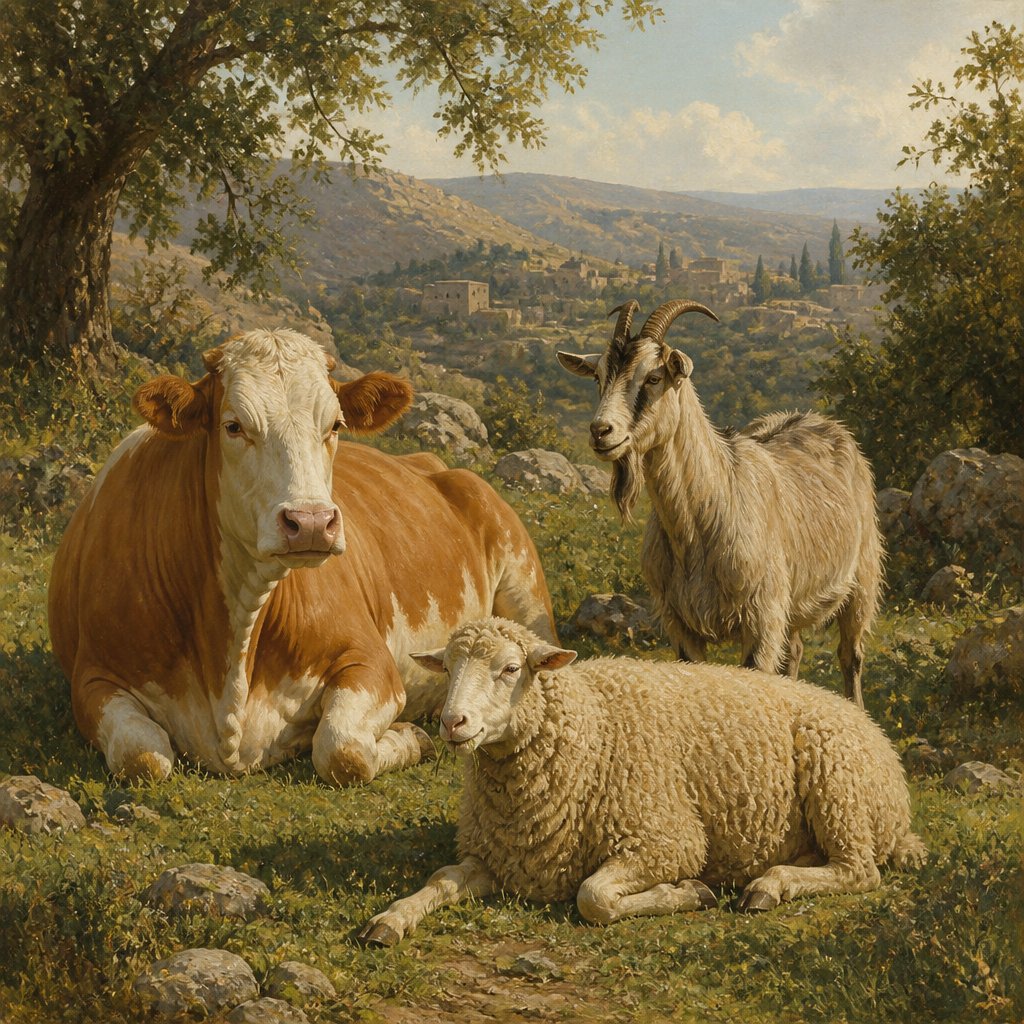
Deuteronomy 14:6 states, "And every beast that parteth the hoof, and cleaveth the cleft into two claws, and cheweth the cud among the beasts, that ye shall eat." This commandment is part of a larger set of dietary laws that God provides to the Israelites, outlining what they can and cannot eat. As we delve into this verse, we unlock not only a guideline for ancient Israel but also an invitation to reflect on the nature of holiness, the importance of obedience, and the deeper meaning behind God’s instructions.
The imagery in this verse is vivid and instructive. The phrase "parteth the hoof" and "cleaveth the cleft into two claws" gives us a clear picture of what animals are considered clean and fit for consumption. Similarly, the act of chewing the cud signifies an animal's ability to reprocess its food, a meticulous and thoughtful action in the animal world. In these details lie profound lessons about discernment and care—qualities God desires in His people. As individuals and as members of the body of Christ, we are called to reflect on what it means to be set apart.
For the Israelites, adhering to these dietary laws wasn’t merely about nutrition; it was a matter of holiness. To eat what God has sanctified is to choose a life that honors Him. The distinction between clean and unclean animals conveys God’s character—He is a God of order and distinction. By attending to these intricacies, the Israelites learned to appreciate holiness not just in their eating habits but in every facet of their lives. As modern readers of scripture, we must inquire: How does this concept of holiness manifest in our lives today?
Holiness begins with recognition. The Old Testament laws taught Israel to recognize the sacred in the mundane. Our meals, our routines, and our choices are opportunities for honoring God—as Paul writes in 1 Corinthians 10:31, "Whether therefore ye eat, or drink, or whatsoever ye do, do all to the glory of God." In our daily lives, we might not be bounded by the same dietary restrictions, but we still possess the responsibility to choose what promotes life, health, and a heart that is turned toward God.
Moreover, this verse encourages us to reflect on the nature of obedience. The Israelites were called to follow these laws not because God took pleasure in restricting them, but because He wanted to lead them into a life that was rich and abundant. Obeying the dietary laws was an act of trust and submission to God’s will—an acknowledgement that He knows what is best for them. It poses a critical question for us: Are we willing to submit our desires and choices to God, trusting His wisdom above our understanding?
As we reflect on our own lives, we can draw parallels to this ancient guideline. Just as an animal's physical traits signified whether it was clean or unclean, our lives should reflect traits of godliness—traits that exemplify Christ’s love, grace, and truth. Consider the things we 'consume' in our lives: What kinds of thoughts, entertainment, and relationships are we indulging in? Just as the Israelites had to discern what to eat, we are called to discern what nourishes our souls and what might lead us astray.
Finally, let this verse encourage us toward a deeper relationship with Christ. Jesus fulfilled all of the law, providing us the ultimate satisfaction for our soul. In Him, our true nourishment lies. As we approach our daily lives, let us do so with a desire for holiness, adopting attitudes and actions that reflect God’s heart. The laws of the Old Testament might seem distant, but they resonate with principles that lead us closer to Him.
In closing, Deuteronomy 14:6 teaches us the importance of distinction, obedience, and the nature of holiness. Let us endeavor not only to seek out what is clean and life-giving but also to celebrate the God who desires intimacy, care, and purity in every area of our lives.
Get our apps


Artwork for Deuteronomy 14:6

Deuteronomy 14:6 - "And every beast that parteth the hoof, and cleaveth the cleft into two claws, and cheweth the cud among the beasts, that ye shall eat."
"And every beast that parteth the hoof, and cleaveth the cleft into two claws, and cheweth the cud among the beasts, that ye shall eat." - Deuteronomy 14:6

Deuteronomy 6:14 - "Ye shall not go after other gods, of the gods of the people which are round about you;"

Deuteronomy 14:14 - "And every raven after his kind,"

"Ye shall not go after other gods, of the gods of the people which are round about you;" - Deuteronomy 6:14

Deuteronomy 14:17 - "And the pelican, and the gier eagle, and the cormorant,"

"And every raven after his kind," - Deuteronomy 14:14

Deuteronomy 6:6 - "And these words, which I command thee this day, shall be in thine heart:"

Deuteronomy 14:16 - "The little owl, and the great owl, and the swan,"

Deuteronomy 14:3 - "¶ Thou shalt not eat any abominable thing."

Deuteronomy 14:11 - "¶ Of all clean birds ye shall eat."

Deuteronomy 14:20 - "But of all clean fowls ye may eat."

Deuteronomy 14:13 - "And the glede, and the kite, and the vulture after his kind,"

Deuteronomy 34:5-6

Deuteronomy 14:18 - "And the stork, and the heron after her kind, and the lapwing, and the bat."

Deuteronomy 14:12 - "But these are they of which ye shall not eat: the eagle, and the ossifrage, and the ospray,"

Deuteronomy 14:15 - "And the owl, and the night hawk, and the cuckow, and the hawk after his kind,"

Deuteronomy 29:14 - "Neither with you only do I make this covenant and this oath;"

Deuteronomy 14:4 - "These are the beasts which ye shall eat: the ox, the sheep, and the goat,"

Deuteronomy 14:19 - "And every creeping thing that flieth is unclean unto you: they shall not be eaten."

Deuteronomy 25:14 - "Thou shalt not have in thine house divers measures, a great and a small."

"And the pelican, and the gier eagle, and the cormorant," - Deuteronomy 14:17

Deuteronomy 27:14 - "¶ And the Levites shall speak, and say unto all the men of Israel with a loud voice,"

Deuteronomy 14:10 - "And whatsoever hath not fins and scales ye may not eat; it is unclean unto you."

Deuteronomy 14:5 - "The hart, and the roebuck, and the fallow deer, and the wild goat, and the pygarg, and the wild ox, and the chamois."

Deuteronomy 33:14 - "And for the precious fruits brought forth by the sun, and for the precious things put forth by the moon,"

Deuteronomy 6:4 - "Hear, O Israel: The LORD our God is one LORD:"

Deuteronomy 33:6 - "¶ Let Reuben live, and not die; and let not his men be few."

Deuteronomy 10:14 - "Behold, the heaven and the heaven of heavens is the LORD'S thy God, the earth also, with all that therein is."

Deuteronomy 1:14 - "And ye answered me, and said, The thing which thou hast spoken is good for us to do."