The Purity of Sacrifice: Embracing Holy Separateness
“And there shall be no leavened bread seen with thee in all thy coast seven days; neither shall there any thing of the flesh, which thou sacrificedst the first day at even, remain all night until the morning.” — Deuteronomy 16:4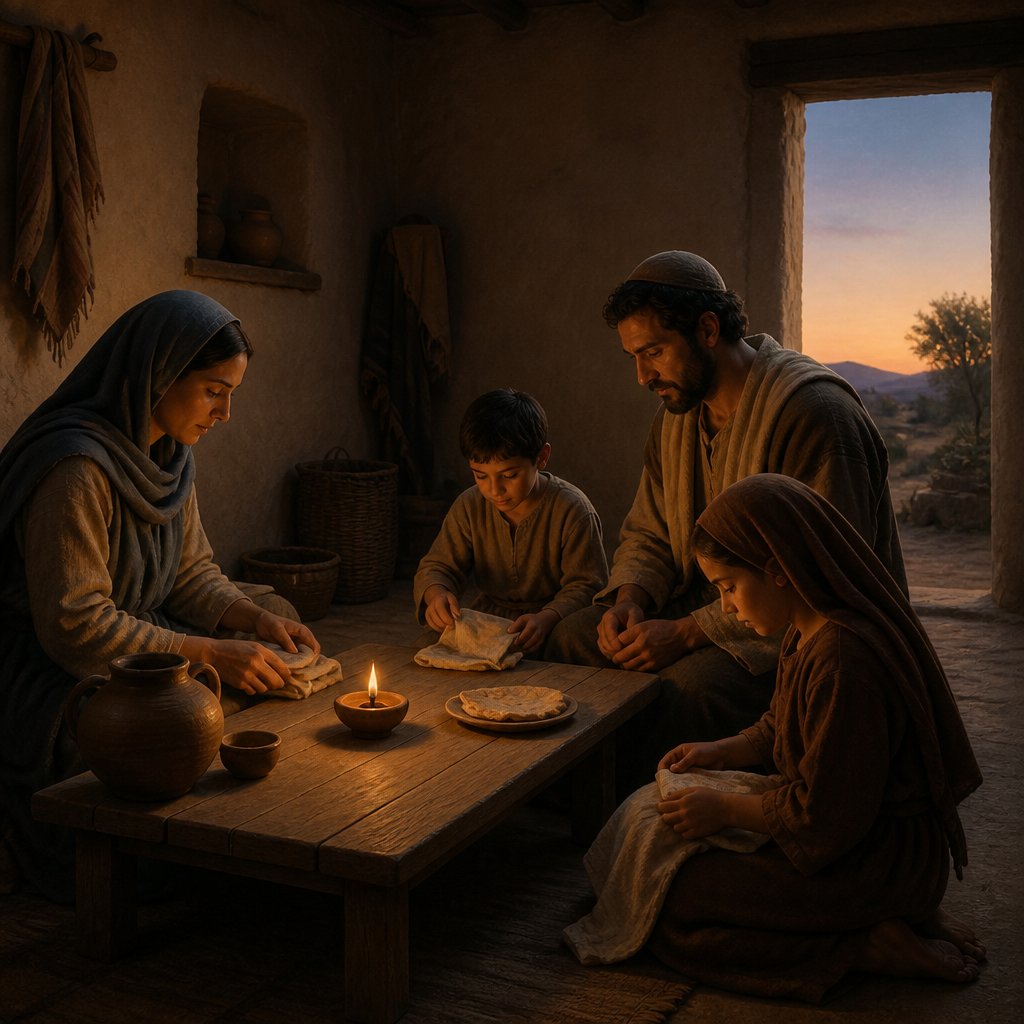
The verse from Deuteronomy 16:4 states, "And there shall be no leavened bread seen with thee in all thy coast seven days; neither shall there any thing of the flesh, which thou sacrificedst the first day at even, remain all night until the morning." These words, spoken to the Israelites in the context of their appointed feasts, carry profound spiritual significance that transcends their immediate historical application.
In this verse, the directive about leavened bread underscores a biblical principle of purity and separateness. Throughout Scripture, leaven often symbolizes sin, corruption, and the old ways of life. When God commands His people to have no leavened bread in their houses during the Feast of Unleavened Bread, He isn't simply interested in the physical absence of this food product. Rather, He is inviting His people into a deeper understanding of holiness and renewal.
The seven days of unleavened bread represent a complete cycle of purification. It is a time to examine oneself and to remove any traces of spiritual impurity or compromise. In the context of our lives today, we are called to reflect on what leaven symbolizes in our own hearts and homes. Are there attitudes, behaviors, or patterns of sin that we tolerate? Has the leaven of worldly compromise crept in, influencing our thoughts, actions, and relationships?
Additionally, the instruction regarding the leftover flesh of the sacrifice not remaining until morning emphasizes the importance of honoring God’s commandments down to the smallest detail. Sacrifices on the altar were meant to signify a complete offering unto God, and allowing any part of that offering to remain overnight could imply a lack of respect and devotion. It is a call to totality in our worship. In our modern context, how often do we offer God the leftovers of our time and energy instead of our best? When we worship, how often do we keep parts of our lives that are inconsistent with our commitment to Christ?
This devotion to God’s sacred instructions invites us to consider our own sacrifices, our own commitments, and our own lives. Like the Israelites, we participate in the larger narrative of God’s redemptive plan. Our lives are not merely private matters; they reflect the holiness and character of God to the world. Just as the Israelites were instructed to maintain a visible separation between clean and unclean, we too must exemplify a clear distinction in how we live out our faith amid a culture that often blurs the lines.
Moreover, this verse is a reminder of the urgency of obedience. The requirement that nothing unholy remain until morning exemplifies a commitment to pursue holiness in our personal lives without delay. It demonstrates the importance of acting promptly on God’s directives and not allowing procrastination or negligence to lead to spiritual decay. How many times do we intend to deal with sin within us but put it off for another day? This passage urges us to deal rightly with our lives, disposing of anything that does not honor God while it is still fresh and actionable.
In conclusion, as we meditate on Deuteronomy 16:4, we are called not only to examine the physical aspects of our lives but to engage deeply with the spiritual elements that reflect God’s holiness. May we strive to remove any 'leaven' from our hearts, maintain the purity of our sacrifices, and obey God with urgency. In doing so, we provide a testimony to the transformative power of God’s grace—and ultimately, we align our lives more closely with His perfect will.
Get our apps


Artwork for Deuteronomy 16:4
Deuteronomy 16:4 - "And there shall be no leavened bread seen with thee in all thy coast seven days; neither shall there any thing of the flesh, which thou sacrificedst the first day at even, remain all night until the morning."
"And there shall be no leavened bread seen with thee in all thy coast seven days; neither shall there any thing of the flesh, which thou sacrificedst the first day at even, remain all night until the morning." - Deuteronomy 16:4

Deuteronomy 4:16 - "Lest ye corrupt yourselves, and make you a graven image, the similitude of any figure, the likeness of male or female,"

Deuteronomy 20:16

Deuteronomy 20:16

Deuteronomy 20:16
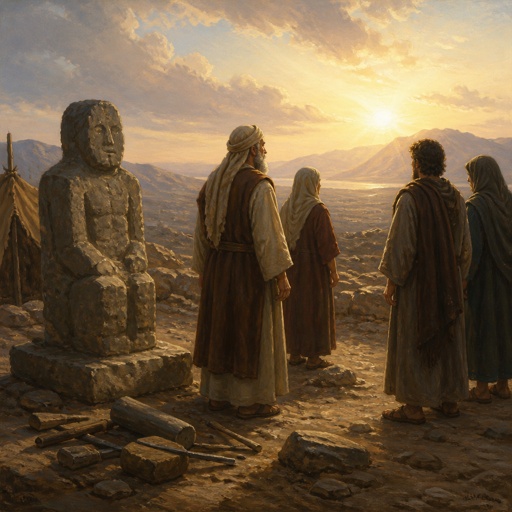
"Lest ye corrupt yourselves, and make you a graven image, the similitude of any figure, the likeness of male or female," - Deuteronomy 4:16

Deuteronomy 14:16 - "The little owl, and the great owl, and the swan,"

Deuteronomy 10:16 - "Circumcise therefore the foreskin of your heart, and be no more stiffnecked."

Deuteronomy 28:16 - "Cursed shalt thou be in the city, and cursed shalt thou be in the field."

Deuteronomy 26:4-10

Deuteronomy 26:4-10

Deuteronomy 4:4 - "But ye that did cleave unto the LORD your God are alive every one of you this day."

Deuteronomy 32:16 - "They provoked him to jealousy with strange gods, with abominations provoked they him to anger."

Deuteronomy 6:16 - "¶ Ye shall not tempt the LORD your God, as ye tempted him in Massah."

Deuteronomy 19:16 - "¶ If a false witness rise up against any man to testify against him that which is wrong;"

Deuteronomy 16:12 - "And thou shalt remember that thou wast a bondman in Egypt: and thou shalt observe and do these statutes."

Deuteronomy 25:16 - "For all that do such things, and all that do unrighteously, are an abomination unto the LORD thy God."

Deuteronomy 12:16 - "Only ye shall not eat the blood; ye shall pour it upon the earth as water."

Deuteronomy 34:1-4 – Moses views the Promised Land from Mount Nebo.

Deuteronomy 34:1-4 – Moses views the Promised Land from Mount Nebo.

Deuteronomy 34:1-4 – Moses views the Promised Land from Mount Nebo.

Deuteronomy 2:16 - "¶ So it came to pass, when all the men of war were consumed and dead from among the people,"

Deuteronomy 27:16 - "Cursed be he that setteth light by his father or his mother. And all the people shall say, Amen."

Deuteronomy 4:44 - "¶ And this is the law which Moses set before the children of Israel:"

"The little owl, and the great owl, and the swan," - Deuteronomy 14:16

Deuteronomy 12:4 - "Ye shall not do so unto the LORD your God."

Deuteronomy 33:4 - "Moses commanded us a law, even the inheritance of the congregation of Jacob."

Deuteronomy 34:1-4 – Moses views the Promised Land from Mount Nebo.

Deuteronomy 34:1-4 – Moses views the Promised Land from Mount Nebo.