Writing the Law on Our Hearts: The Call to Leadership and Obedience
“And it shall be, when he sitteth upon the throne of his kingdom, that he shall write him a copy of this law in a book out of that which is before the priests the Levites:” — Deuteronomy 17:18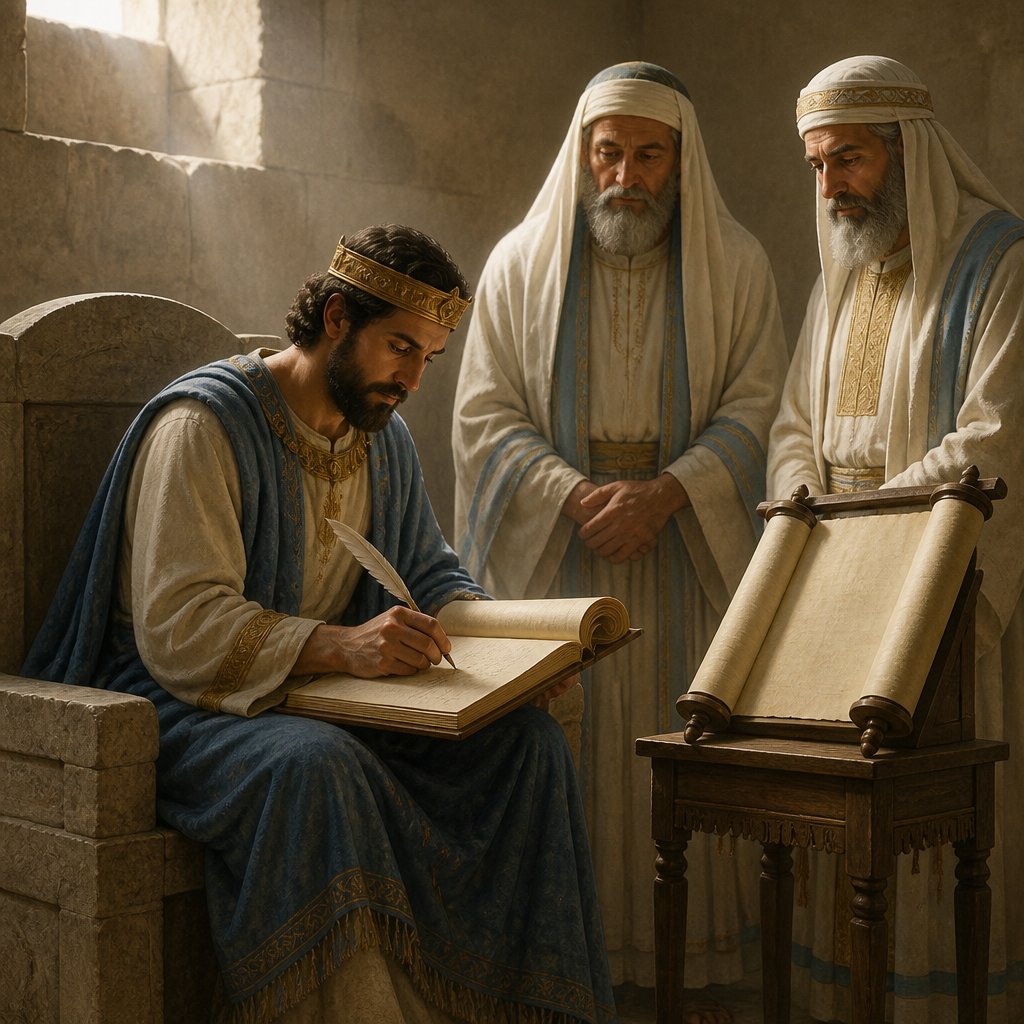
The verse from Deuteronomy 17:18 states: "And it shall be, when he sitteth upon the throne of his kingdom, that he shall write him a copy of this law in a book out of that which is before the priests the Levites." This scripture, rich in meaning and historical significance, speaks to the character and responsibilities of a leader in Israel. Yet, it transcends the political and spiritual landscape of ancient times, inviting us into a deeper understanding of God's expectation for those who seek to lead in His name today.
In the context of Deuteronomy, the people of Israel were preparing to enter the Promised Land, and God, through Moses, set forth principles that would govern their lives and leadership. The commandment for the future king to write out a copy of the law underscores the importance of personal engagement with God's Word. This act was not merely a formal exercise; it called for the leader to internalize the laws and commandments, ensuring that they would guide his rule and the nation’s conduct.
By inscribing the law, the king was to familiarize himself with the core of Israel’s identity, its covenantal relationship with God. This was more than administrative duty; it was a radical act of devotion and responsibility. God desired leaders whose hearts were aligned with His own—those who would not stray from His decrees but would govern with justice, mercy, and humility. For the Israelite king, this meant learning the depths of the law, reflecting upon its significance in his role, and allowing it to shape his character.
The imagery of writing the law speaks to us today as well. It reflects our need to not merely read God’s word but to engage actively with it, writing it upon our hearts and living it out daily. Just as the king was instructed to create this copy, we are called to make the Bible central in our lives. In the New Testament, we find echoes of this call to internalize God’s law—Jeremiah prophesied, "But this shall be the covenant that I will make with the house of Israel; After those days, saith the Lord, I will put my law in their inward parts, and write it in their hearts..." (Jeremiah 31:33).
The implication here is profound for any leader—pastors, teachers, parents, or even those leading in various social capacities. The strength of one’s leadership is intimately tied to faithfulness to God’s Word. To lead effectively is to embody the principles that come from scripture; it is to reflect the heart of God in decision-making, policies, and daily interactions.
Moreover, leaders influence those they lead. When we allow the law of God to dwell richly within us, we become examples of godliness and truth. Our conduct serves to inspire others as we navigate the complexities of our roles. The king’s commitment to God’s laws was essential, not only for his own salvation but for the spiritual health of the kingdom and future generations. Every faithful deed, every righteous decision brings glory to God and shines a light on His unchanging character.
In a world where leadership is often defined by personal gain or popularity, Deuteronomy 17:18 challenges us to reconsider what it means to lead. It calls us to deep surrender, constant study, and the application of biblical truth. Are we, as leaders, recognizing our need to write the Word of God on our hearts? Are we dedicating time and effort to understand it fully?
As we ponder this verse, let it inspire a commitment to not only study scripture but to live it out in such a way that others are drawn to the source of our wisdom and strength. Just as the king’s reign was to be rooted in God’s law, may our lives reflect the glory of Christ as we lead by example and share His love with a world yearning for guidance, stability, and truth.
Get our apps


Artwork for Deuteronomy 17:18

Deuteronomy 17:18 - "And it shall be, when he sitteth upon the throne of his kingdom, that he shall write him a copy of this law in a book out of that which is before the priests the Levites:"

Deuteronomy 17:18-20 - "And it shall be, when he sits upon the throne of his kingdom, that he shall write for himself a copy of this law in a book out of that which is before the priests the Levites: And it shall be with him, and he shall read therein all the days of his life: that he may learn to fear the LORD his God, to keep all the words of this law and these statutes, to do them: That his heart be not lifted up above his brethren, and that he turn not aside from the commandment, to the right hand, or to the left: to the end that he may prolong his days in his kingdom, he, and his children, in the midst of Israel."
"And it shall be, when he sitteth upon the throne of his kingdom, that he shall write him a copy of this law in a book out of that which is before the priests the Levites:" - Deuteronomy 17:18
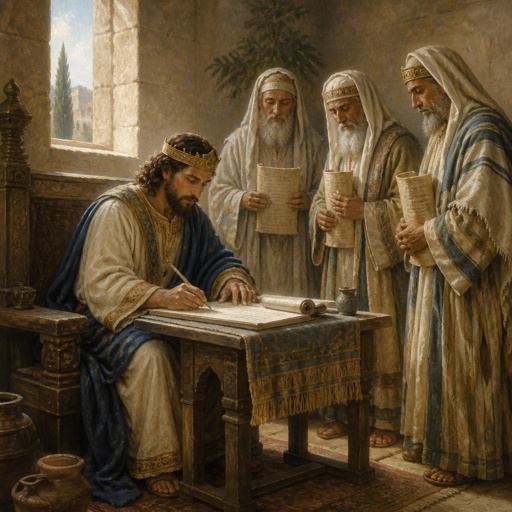
"And it shall be, when he sits upon the throne of his kingdom, that he shall write for himself a copy of this law in a book out of that which is before the priests the Levites: And it shall be with him, and he shall read therein all the days of his life: that he may learn to fear the LORD his God, to keep all the words of this law and these statutes, to do them: That his heart be not lifted up above his brethren, and that he turn not aside from the commandment, to the right hand, or to the left: to the end that he may prolong his days in his kingdom, he, and his children, in the midst of Israel." - Deuteronomy 17:18-20

Deuteronomy 18:17 - "And the LORD said unto me, They have well spoken that which they have spoken."
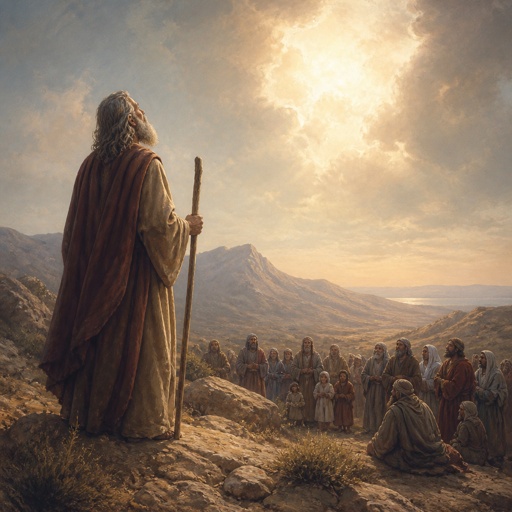
"And the LORD said unto me, They have well spoken that which they have spoken." - Deuteronomy 18:17

Deuteronomy 24:17-18 - "Do not deprive the foreigner or the fatherless of justice, or take the cloak of the widow as a pledge. Remember that you were slaves in Egypt and the Lord your God redeemed you from there. That is why I command you to do this."

Deuteronomy 5:17 - "Thou shalt not kill."

Matthew 17:17-18

Deuteronomy 14:17 - "And the pelican, and the gier eagle, and the cormorant,"

Matthew 17:17-18

Deuteronomy 2:17 - "That the LORD spake unto me, saying,"

Deuteronomy 5:18 - "Neither shalt thou commit adultery."

Deuteronomy 28:17 - "Cursed shall be thy basket and thy store."

Deuteronomy 18:11 - "Or a charmer, or a consulter with familiar spirits, or a wizard, or a necromancer."

Deuteronomy 18:13 - "Thou shalt be perfect with the LORD thy God."

John 7:17-18

John 7:17-18

John 7:17-18

John 7:17-18

Deuteronomy 22:18 - "And the elders of that city shall take that man and chastise him;"

Deuteronomy 14:18 - "And the stork, and the heron after her kind, and the lapwing, and the bat."

"Thou shalt not kill." - Deuteronomy 5:17

Deuteronomy 23:17 - "¶ There shall be no whore of the daughters of Israel, nor a sodomite of the sons of Israel."

Deuteronomy 17:13 - "And all the people shall hear, and fear, and do no more presumptuously."

Deuteronomy 17:17 - "Neither shall he multiply wives to himself, that his heart turn not away: neither shall he greatly multiply to himself silver and gold."

Genesis 18-17

Genesis 17-18

Deuteronomy 2:18 - "Thou art to pass over through Ar, the coast of Moab, this day:"

Deuteronomy 4:17 - "The likeness of any beast that is on the earth, the likeness of any winged fowl that flieth in the air,"