The Weight of Covenant: A Reflection on Deuteronomy 22:21
“Then they shall bring out the damsel to the door of her father’s house, and the men of her city shall stone her with stones that she die: because she hath wrought folly in Israel, to play the whore in her father’s house: so shalt thou put evil away from among you.” — Deuteronomy 22:21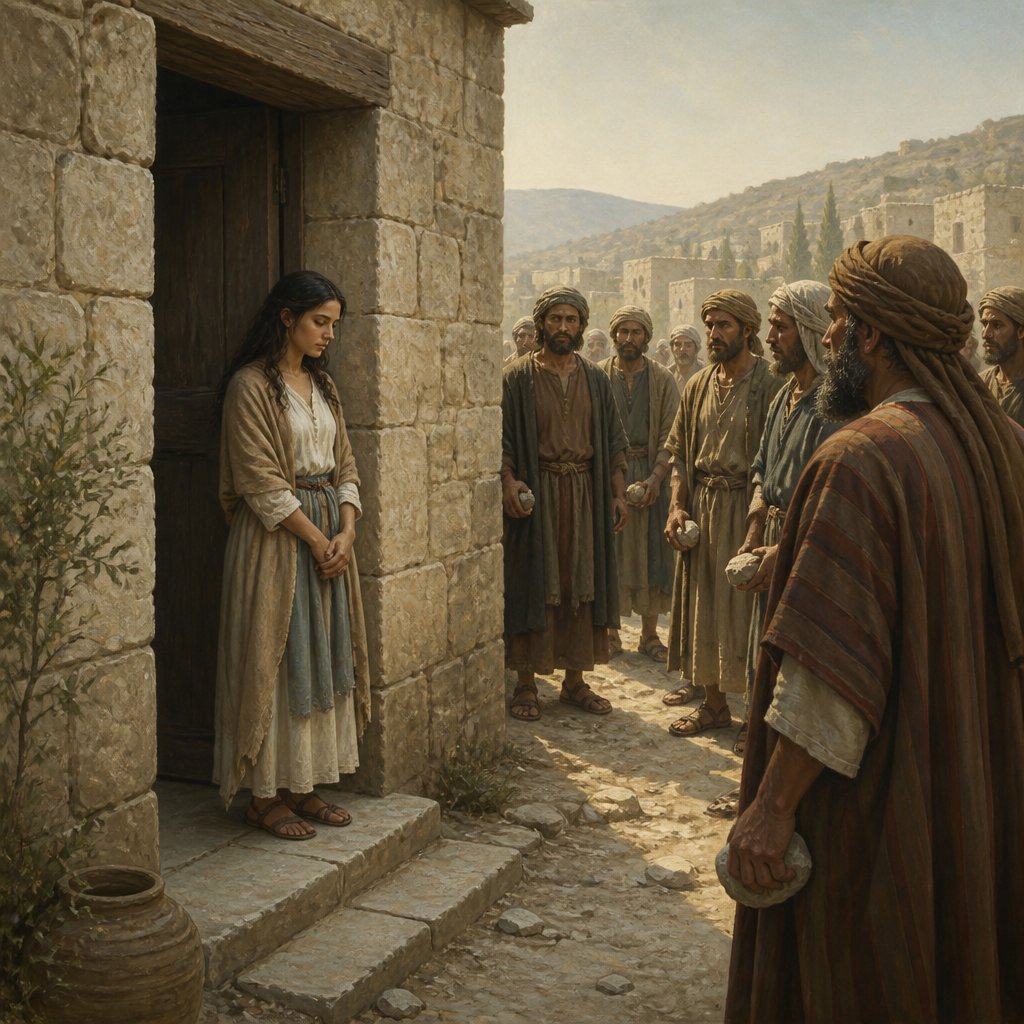
In the book of Deuteronomy, we find a legal code that is not only about societal order but also about safeguarding the sanctity of relationships and commitments. Among these laws, Deuteronomy 22:21 renders a particularly harsh decree: "Then they shall bring out the damsel to the door of her father's house, and the men of her city shall stone her with stones that she die: because she hath wrought folly in Israel, to play the whore in her father's house: so shalt thou put evil away from among you."
This verse shocks the contemporary reader, and it rightly should. The imagery of stoning reflects the severity with which ancient societies regarded sexual immorality, especially within the covenant community of Israel. In unpacking this dictum, we must approach it with an understanding of the cultural, moral, and theological contexts that underpin this scripture.
In ancient Israel, community and family identity were inseparable. The 'damsel' referenced in Deuteronomy 22:21 would have had her actions reflect not just upon herself, but upon her family and the wider community. To be a representation of one's family, a daughter carried a weight that went beyond mere expectation; it was an embodiment of familial honor. Hence, any act considered 'folly'—in this case, sexual immorality—could potentially dismantle that honor and introduce chaos into the communal life that was structured heavily around the covenant with God.
The term 'whore' in this verse is a grave accusation. It signifies a deliberate act of infidelity not just to a future husband, but to the covenant path that Israel was meant to walk—one of fidelity, commitment, and holiness. By playing the whore, she violated the sanctity of her father's household and, by extension, breached the covenant relationship Israel had with Yahweh. Thus, the law required a drastic response to preserve the moral integrity of the community.
Yet, when we explore this scripture through the lens of grace and Christ's teaching, we confront a profound tension. While Deuteronomy presents a strict guideline for behavior, the life and teachings of Jesus reflect a counter-narrative that emphasizes mercy, redemption, and restoration. In John 8, we see Jesus confronted with a similar situation where a woman caught in adultery is brought before Him. The law demanded condemnation, and yet He responds, "He that is without sin among you, let him first cast a stone at her." Herein lies the transformative power of grace that calls for accountability but pairs it with an understanding of human frailty.
As we reflect on Deuteronomy 22:21 today, we are invited to consider our own lives and the motivations behind our actions. It begs us to ask: what does it mean to honor the commitments we make, both to others and before God? Each day we are confronted with choices that can either lead us closer to or further from the God we seek to serve. It challenges us about how we confront sin within our communities. Are we prepared to hold others accountable with truth, but equally willing to extend grace, understanding, and paths to restoration?
Moreover, we must recognize that the biblical call to put away evil still resonates within the Christian faith today. Evil can manifest in numerous forms—injustice, condemnation, and exclusion, all of which dehumanize others and disregard the image of God in them. In our modern context, we are called not to stone but to love, to guide one another gently, and to embody Christ’s restorative work in the world.
In essence, Deuteronomy 22:21 serves as a sobering reminder of our responsibilities within our familial and faith communities, urging us not to treat sin lightly, while simultaneously calling us to embody a Christ-like heart that shows mercy, compassion, and a desire for restoration. Rather than a call to enact judgment, this passage can inspire a fresh commitment to uphold the sanctity of our relationships and reflect the redemptive nature of our faith, letting love lead our actions and interactions.
Get our apps


Artwork for Deuteronomy 22:21

Deuteronomy 22:21 - "Then they shall bring out the damsel to the door of her father's house, and the men of her city shall stone her with stones that she die: because she hath wrought folly in Israel, to play the whore in her father's house: so shalt thou put evil away from among you."
"Then they shall bring out the damsel to the door of her father's house, and the men of her city shall stone her with stones that she die: because she hath wrought folly in Israel, to play the whore in her father's house: so shalt thou put evil away from among you." - Deuteronomy 22:21

Deuteronomy 21:22 - "¶ And if a man have committed a sin worthy of death, and he be to be put to death, and thou hang him on a tree:"
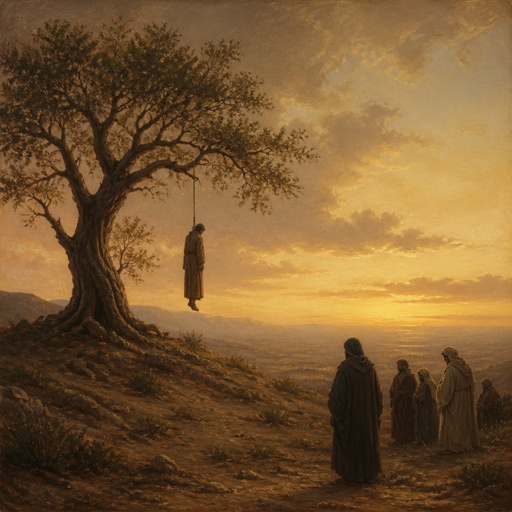
"¶ And if a man have committed a sin worthy of death, and he be to be put to death, and thou hang him on a tree:" - Deuteronomy 21:22

Deuteronomy 1.1-21

Matthew 9:21-22

Matthew 9:21-22

Matthew 9:21-22

Matthew 9:21-22

Matthew 9:21-22

Deuteronomy 22:20 - "But if this thing be true, and the tokens of virginity be not found for the damsel:"

Deuteronomy 22:10 - "¶ Thou shalt not plow with an ox and an ass together."

Deuteronomy 22:18 - "And the elders of that city shall take that man and chastise him;"

Deuteronomy 23:22 - "But if thou shalt forbear to vow, it shall be no sin in thee."

Genesis 21:22

Genesis 22-21

Deuteronomy 9:22 - "And at Taberah, and at Massah, and at Kibroth-hattaavah, ye provoked the LORD to wrath."

Deuteronomy 22:11 - "¶ Thou shalt not wear a garment of divers sorts, as of woollen and linen together."

Deuteronomy 22:13 - "¶ If any man take a wife, and go in unto her, and hate her,"

Acts 1:21-22

Deuteronomy 31:22 - "¶ Moses therefore wrote this song the same day, and taught it the children of Israel."

Deuteronomy 22:27 - "For he found her in the field, and the betrothed damsel cried, and there was none to save her."

Acts 1:21-22

Deuteronomy 3:22 - "Ye shall not fear them: for the LORD your God he shall fight for you."

Deuteronomy 22:23 - "¶ If a damsel that is a virgin be betrothed unto an husband, and a man find her in the city, and lie with her;"

Deuteronomy 33:22 - "¶ And of Dan he said, Dan is a lion's whelp: he shall leap from Bashan."

Deuteronomy 27:21 - "Cursed be he that lieth with any manner of beast. And all the people shall say, Amen."

Deuteronomy 22:30 - "¶ A man shall not take his father's wife, nor discover his father's skirt."

Deuteronomy 22:22 - "¶ If a man be found lying with a woman married to an husband, then they shall both of them die, both the man that lay with the woman, and the woman: so shalt thou put away evil from Israel."

Deuteronomy 22:28 - "¶ If a man find a damsel that is a virgin, which is not betrothed, and lay hold on her, and lie with her, and they be found;"