Prioritizing Life: Understanding Deuteronomy 22:7
“But thou shalt in any wise let the dam go, and take the young to thee; that it may be well with thee, and that thou mayest prolong thy days.” — Deuteronomy 22:7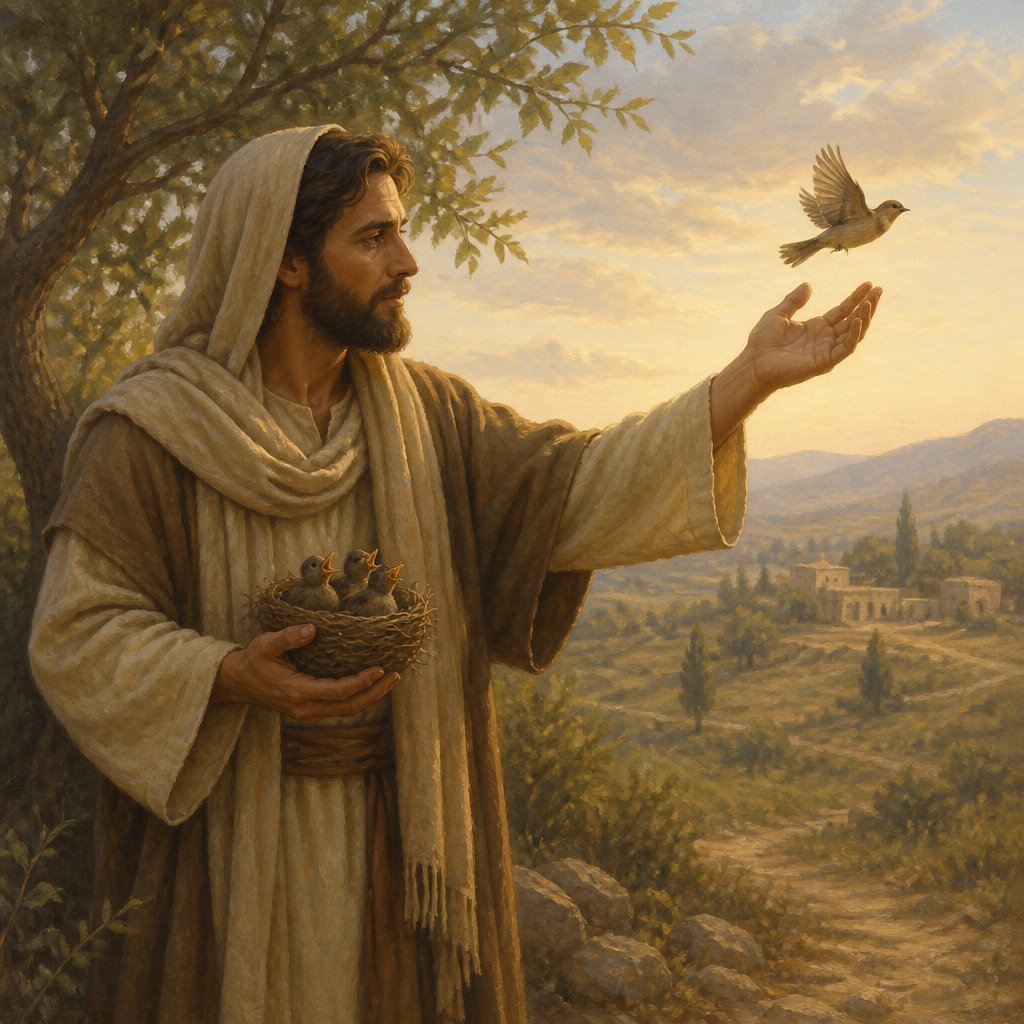
In Deuteronomy 22:7, we read a seemingly simple yet profound commandment, "But thou shalt in any wise let the dam go, and take the young to thee; that it may be well with thee, and that thou mayest prolong thy days." On the surface, this is a directive concerning the ethical treatment of animals, yet within it lies significant spiritual implications that challenge us to reflect on our own priorities and values.
The context of this commandment revolves around the responsibilities of a person towards animals. The 'dam' refers to the mother bird, while the 'young' are her offspring. God's instruction to allow the mother to go free while taking the young shows a divine concern for life, nurturing, and preservation. God desires mercy and compassion, requesting that we, as stewards of creation, make choices that honor the sanctity of life to ensure overall well-being, not only for ourselves but for all creatures under our care.
This concept of mercy extends far beyond the act of letting a bird go; it speaks to a broader understanding of God’s character. In Matthew 6:26, we find Jesus reminding us, "Behold the fowls of the air: for they sow not, neither do they reap, nor gather into barns; yet your heavenly Father feedeth them. Are ye not much better than they?" Here, we can see that God's concern encompasses all His creations. Just like the birds that He cares for, we are charged with the stewardship of the world around us, fostering a heart of compassion and responsibility.
When we delve deeper into the verse, we notice that the promise entwined with the command to let the dam go is profound: "that it may be well with thee, and that thou mayest prolong thy days.” This clause establishes a crucial principle of divine reciprocity: our acts of kindness and compassion towards others—whether they are people or animals—result in blessings returned to us. The actions we take can have significant impacts on our lives. It reveals that when we prioritize the well-being of others and act with integrity and kindness, we align ourselves with the heart of God. This aligns with Galatians 6:7 where it states, "For whatsoever a man soweth, that shall he also reap."
In a world dense with the hustle and bustle of daily demands, we can easily overlook these moments of compassionate generosity. We tell ourselves that we are too busy, or we convince ourselves that our energies are needed for our own survival. However, Deuteronomy 22:7 serves as a gentle reminder of where our priorities should lie: in preserving life and promoting peace, even in the smallest things. In showing mercy to the dam, we are called to reflect on how we can take the time to be kind in our daily lives—be it to our neighbors, the less fortunate, or even our environment.
On a practical level, how can we apply this commandment to our lives? Here are some reflective questions: What small acts of kindness can I incorporate into my daily routine? In what ways can I show compassion to those around me? How can I help protect and nurture life in my community and in the world? These questions should prompt us to seek opportunities to act selflessly and expansively.
As we embrace this commandment, let us remember that it’s not merely about the physical act of letting the dam go. It is about cultivating hearts that value life, honor God's creation, and recognize that in caring for others, we enrich our own lives. May we foster a spirit that reflects the tenderness of our Creator, ensuring that it is well with us and others as we choose to live lives of mercy and compassion.
Get our apps


Artwork for Deuteronomy 22:7

Deuteronomy 22:7 - "But thou shalt in any wise let the dam go, and take the young to thee; that it may be well with thee, and that thou mayest prolong thy days."
"But thou shalt in any wise let the dam go, and take the young to thee; that it may be well with thee, and that thou mayest prolong thy days." - Deuteronomy 22:7

Deuteronomy 7:22 - "And the LORD thy God will put out those nations before thee by little and little: thou mayest not consume them at once, lest the beasts of the field increase upon thee."

Deuteronomy 22:20 - "But if this thing be true, and the tokens of virginity be not found for the damsel:"

Deuteronomy 22:10 - "¶ Thou shalt not plow with an ox and an ass together."

Deuteronomy 22:18 - "And the elders of that city shall take that man and chastise him;"

Deuteronomy 23:22 - "But if thou shalt forbear to vow, it shall be no sin in thee."

Deuteronomy 9:22 - "And at Taberah, and at Massah, and at Kibroth-hattaavah, ye provoked the LORD to wrath."

Deuteronomy 22:11 - "¶ Thou shalt not wear a garment of divers sorts, as of woollen and linen together."

Deuteronomy 22:13 - "¶ If any man take a wife, and go in unto her, and hate her,"

Deuteronomy 31:22 - "¶ Moses therefore wrote this song the same day, and taught it the children of Israel."

Deuteronomy 22:27 - "For he found her in the field, and the betrothed damsel cried, and there was none to save her."

Deuteronomy 22:23 - "¶ If a damsel that is a virgin be betrothed unto an husband, and a man find her in the city, and lie with her;"

Deuteronomy 3:22 - "Ye shall not fear them: for the LORD your God he shall fight for you."

Deuteronomy 33:22 - "¶ And of Dan he said, Dan is a lion's whelp: he shall leap from Bashan."

Deuteronomy 22:30 - "¶ A man shall not take his father's wife, nor discover his father's skirt."

Deuteronomy 22:22 - "¶ If a man be found lying with a woman married to an husband, then they shall both of them die, both the man that lay with the woman, and the woman: so shalt thou put away evil from Israel."

Deuteronomy 22:28 - "¶ If a man find a damsel that is a virgin, which is not betrothed, and lay hold on her, and lie with her, and they be found;"

Deuteronomy 14:22 - "Thou shalt truly tithe all the increase of thy seed, that the field bringeth forth year by year."

Deuteronomy 16:22 - "Neither shalt thou set thee up any image; which the LORD thy God hateth."

Deuteronomy 21:22 - "¶ And if a man have committed a sin worthy of death, and he be to be put to death, and thou hang him on a tree:"

Psalm 22:7

Deuteronomy 22:12 - "¶ Thou shalt make thee fringes upon the four quarters of thy vesture, wherewith thou coverest thyself."

Deuteronomy 3:7 - "But all the cattle, and the spoil of the cities, we took for a prey to ourselves."

Psalms 22:7

Genesis 22-7

Revelation 7:22

"But if this thing be true, and the tokens of virginity be not found for the damsel:" - Deuteronomy 22:20

Deuteronomy 5:7 - "Thou shalt have none other gods before me."

Deuteronomy 15:22 - "Thou shalt eat it within thy gates: the unclean and the clean person shall eat it alike, as the roebuck, and as the hart."