The Weight of Righteousness: A Deeper Look at Justice and Community Holiness
“Then ye shall bring them both out unto the gate of that city, and ye shall stone them with stones that they die; the damsel, because she cried not, being in the city; and the man, because he hath humbled his neighbour’s wife: so thou shalt put away evil from among you.” — Deuteronomy 22:24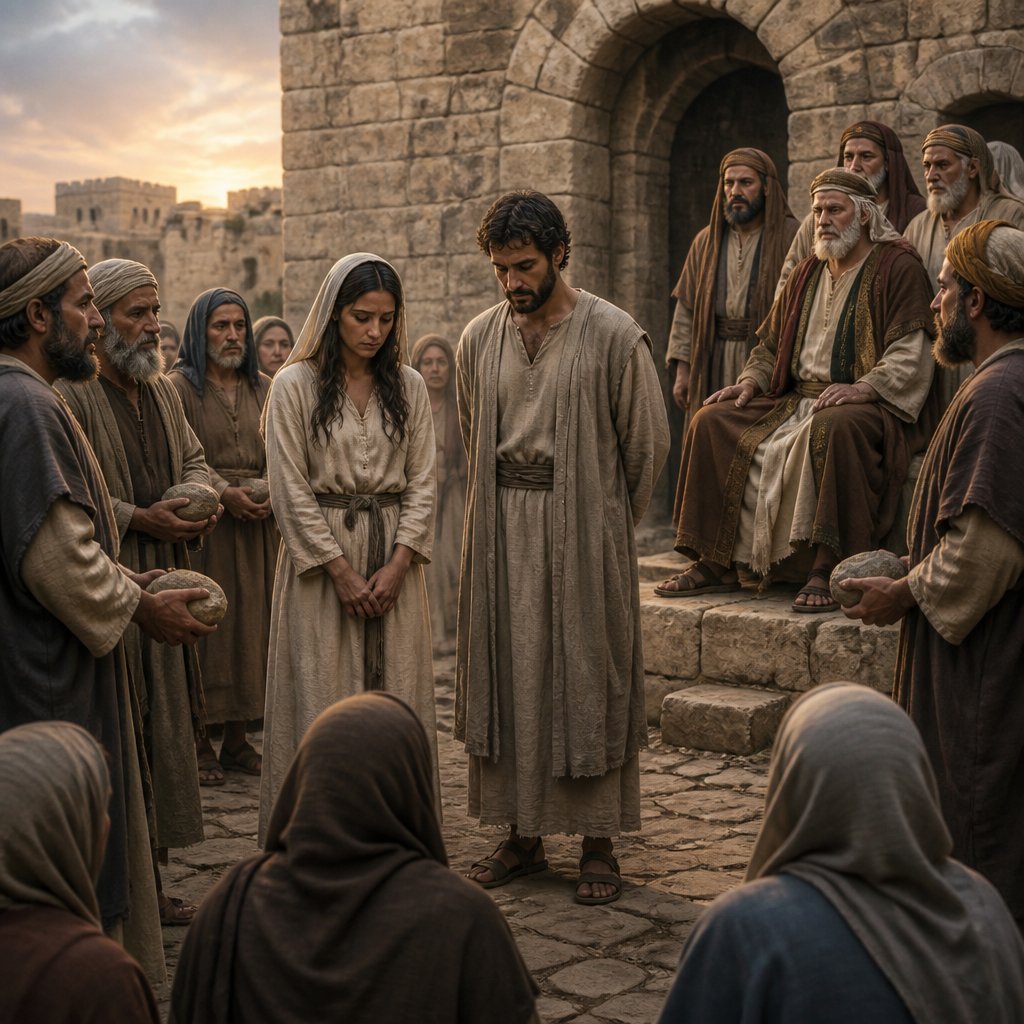
The verse Deuteronomy 22:24 states, "Then ye shall bring them both out unto the gate of that city, and ye shall stone them with stones that they die; the damsel, because she cried not, being in the city; and the man, because he hath humbled his neighbour's wife: so thou shalt put away evil from among you." At first glance, such a directive may seem harsh, severe, and profoundly alien to our contemporary understanding of justice and morality. However, when we delve deeper into the context of this scripture, we uncover significant insights regarding community purity, responsibility towards one another, and the serious nature of sin.
In ancient Israel, the community's holiness and adherence to God's laws were of utmost importance. The societal structure was built on a foundation of communal identity with God. The laws given to Israel were designed not only as a framework for individual behavior but as boundaries that nurtured the well-being of the entire community. In this particular passage, God is addressing a grievous sin – adultery, which is illustrated through a scenario involving a man and a young woman, stressing the severe consequences for both parties.
The description of the punishment is a mirror reflecting the seriousness with which God views consent, honor, and the sanctity of marital relationships. For the man, his act of lowering himself to debasing his neighbor's wife demonstrates a blatant disregard for both God and man. The woman, described as failing to cry out, signifies a deeper cultural expectation. In the ancient Near Eastern society, a woman's voice was expected to be heard, especially in times when she was in danger. By not crying out, she bore guilt that could not be overlooked in the eyes of the community.
This passage confronts us with the notion of accountability within our communities. What does it mean when one fails to protect or speak up against injustice? This scripture reminds us that our actions, or lack thereof, can have dire consequences not only for ourselves but also for those around us. Moreover, we should ask ourselves, as members of a faith community: Are we upholding the values of righteousness and mutual respect? Are we speaking out against the wrongs we witness, or are we remaining silent in the comfort of our lives?
The phrase, "so thou shalt put away evil from among you" encapsulates the heart of this command. It is not merely about administering punishment; rather, it speaks to the irrevocable act of maintaining the holiness and sanctity of the community. If sin is allowed to fester, it breeds more sin and ultimately leads to the disintegration of communal bonds. Therefore, the approach God lays out in this text serves as a deterrent against sin, a social mechanism designed to preserve the integrity of community life.
In our modern context, the application of this passage calls for a delicate balance of love, justice, truth, and grace. While we might not practice stoning, the principles stand firm. We must confront sin and injustice in our communities with godly wisdom. That could mean confronting a friend about their immoral choices or addressing systemic injustice within larger societal structures.
Furthermore, this verse also leads us into a deeper theological reflection: the gravity of sin and its effect on our relationship with God. As followers of Christ, we understand that through His sacrifice, the law's heavy demands have shifted. However, the call to holiness remains. We are called to ensure that our lives reflect the nature of Christ – one of love, justice, grace, and righteousness.
As we dwell upon Deuteronomy 22:24, let us pray for the courage to speak up against wrongs, the wisdom to uphold righteousness, and the grace to extend forgiveness. May we strive to be beacons of light in a world often plagued by darkness. May our communities reflect God’s glory, serving to put away evil by choosing righteousness, embracing accountability, and embodying love.
Get our apps


Artwork for Deuteronomy 22:24
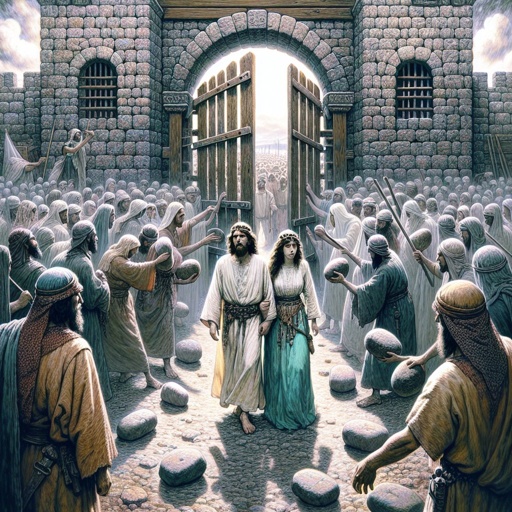
Deuteronomy 22:24 - "Then ye shall bring them both out unto the gate of that city, and ye shall stone them with stones that they die; the damsel, because she cried not, being in the city; and the man, because he hath humbled his neighbour's wife: so thou shalt put away evil from among you."
"Then ye shall bring them both out unto the gate of that city, and ye shall stone them with stones that they die; the damsel, because she cried not, being in the city; and the man, because he hath humbled his neighbour's wife: so thou shalt put away evil from among you." - Deuteronomy 22:24

Deuteronomy 24:22 - "And thou shalt remember that thou wast a bondman in the land of Egypt: therefore I command thee to do this thing."

James 2:2-4
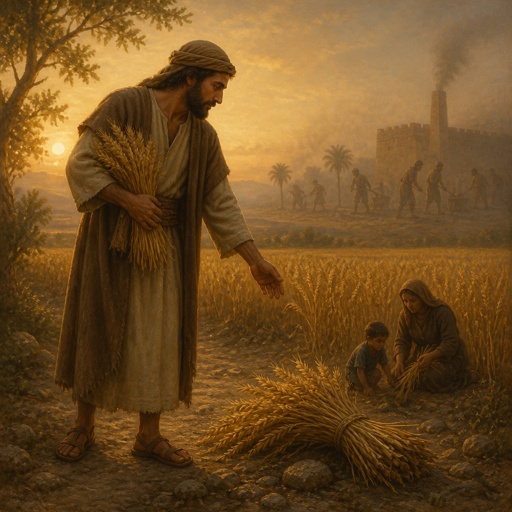
"And thou shalt remember that thou wast a bondman in the land of Egypt: therefore I command thee to do this thing." - Deuteronomy 24:22

Genesis 24-22

Genesis 22-24

Deuteronomy 24:12 - "And if the man be poor, thou shalt not sleep with his pledge:"

Deuteronomy 22:20 - "But if this thing be true, and the tokens of virginity be not found for the damsel:"

Deuteronomy 22:10 - "¶ Thou shalt not plow with an ox and an ass together."

Deuteronomy 4:24 - "For the LORD thy God is a consuming fire, even a jealous God."

Deuteronomy 12:24 - "Thou shalt not eat it; thou shalt pour it upon the earth as water."

Deuteronomy 22:18 - "And the elders of that city shall take that man and chastise him;"

Deuteronomy 23:22 - "But if thou shalt forbear to vow, it shall be no sin in thee."

Jude 9:22-24

2 Samuel 24:22

2 Samuel 24:22

2 Samuel 24:22

Genesis 3:22-24

Deuteronomy 9:22 - "And at Taberah, and at Massah, and at Kibroth-hattaavah, ye provoked the LORD to wrath."

Deuteronomy 1:24 - "And they turned and went up into the mountain, and came unto the valley of Eshcol, and searched it out."

Deuteronomy 22:11 - "¶ Thou shalt not wear a garment of divers sorts, as of woollen and linen together."

Deuteronomy 22:13 - "¶ If any man take a wife, and go in unto her, and hate her,"

Deuteronomy 9:24 - "Ye have been rebellious against the LORD from the day that I knew you."

Deuteronomy 27:24 - "Cursed be he that smiteth his neighbour secretly. And all the people shall say, Amen."

Deuteronomy 31:22 - "¶ Moses therefore wrote this song the same day, and taught it the children of Israel."

Deuteronomy 22:27 - "For he found her in the field, and the betrothed damsel cried, and there was none to save her."
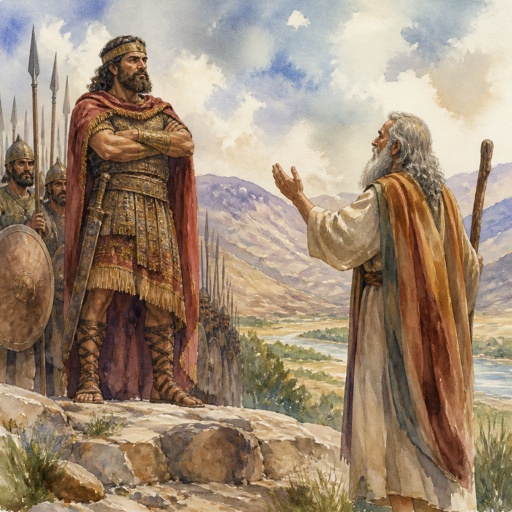
Sihon king of heshbon and Moses in Deuteronomy 2:24-37

Deuteronomy 24:17 - "¶ Thou shalt not pervert the judgment of the stranger, nor of the fatherless; nor take a widow's raiment to pledge:"

Deuteronomy 24:6 - "¶ No man shall take the nether or the upper millstone to pledge: for he taketh a man's life to pledge."