The Legacy of Love: Embracing Responsibility in Community
“If brethren dwell together, and one of them die, and have no child, the wife of the dead shall not marry without unto a stranger: her husband’s brother shall go in unto her, and take her to him to wife, and perform the duty of an husband’s brother unto her.” — Deuteronomy 25:5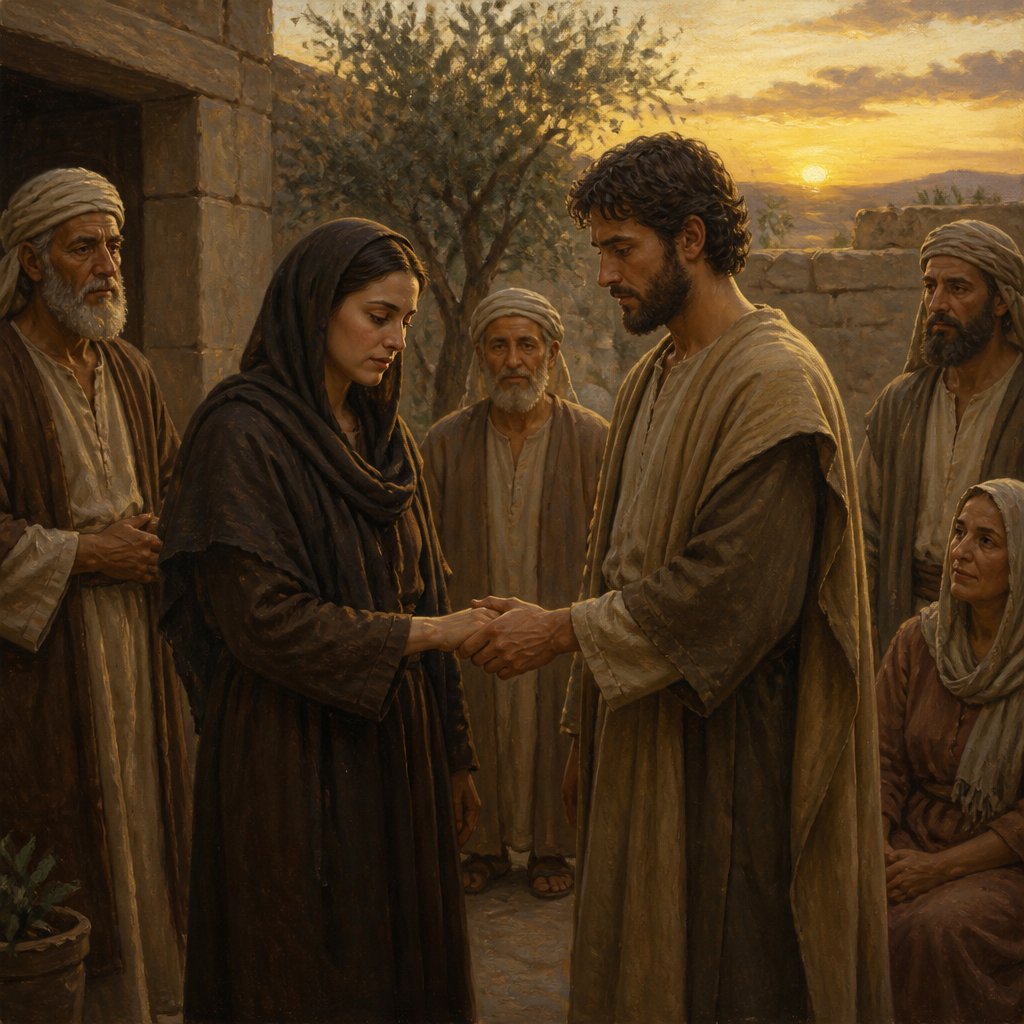
The verse from Deuteronomy 25:5 (KJV), “If brethren dwell together, and one of them die, and have no child, the wife of the dead shall not marry without unto a stranger: her husband's brother shall go in unto her, and take her to him to wife, and perform the duty of an husband's brother unto her,” may appear, at first glance, to address an ancient custom that seems foreign to our modern sensibilities. Yet, nestled within this command is a profound depth of relational responsibility, community engagement, and the legacy of love that continues to carry relevance today.
This verse speaks to a specific cultural practice known as levirate marriage—a provision established to ensure the continuation of a family line and the protection of widows. In the ancient Near Eastern context, a family's name, inheritance, and blessings were closely tied to offspring. The loss of a brother, especially one without children, left a significant void, not only in the family but also in the covenant community of Israel. Thus, it was not merely about social rules but about the sacred honoring of family ties and communal duty. The brother’s obligation to take his deceased brother’s wife and care for her embodies a willingness to shoulder not just individual sorrow but collective grief and responsibility.
In a world that often promotes individualism, this instruction challenges us to rethink our responsibilities to one another. As members of families, communities, and churches, we are called to look beyond our immediate needs and to embrace the needs of those around us. The act of taking a widow as a husband reflects not only the seriousness of family commitment but also sheds light on God’s heart for vulnerable individuals in society. Widows often found themselves in precarious situations, without protection or provision, so the levirate marriage acted as a divine safeguard.
When we consider the implications of this ancient law, we must ask ourselves how we fulfill our responsibilities to those who are grieving or in need within our communities. The sentiment of Jesus, who emphasized love and compassion over mere rule-following, reverberates through the actions dictated by Deuteronomy 25:5. In the New Testament, Jesus' engagement with widows, such as his compassionate response to the widow of Nain (Luke 7:11-17), demonstrates the heart of God toward those who grieve. With Christ, we find a model that calls us to action: to love, support, and uplift those who are marginalized, reflecting the same principles of community embedded in the law He came not to abolish but to fulfill.
Moreover, the imagery of marriage within this context also speaks to the idea of covenant. As the brother takes on the role of husband to his brother’s widow, he is not merely providing her with social status; he is entering into a covenant relationship that demands faithfulness, compassion, and loyalty. This covenant aspect extends to our relationship with God and with each other. When we commit to one another, we reflect the nature of God’s unwavering promise to His people. Our marriages and relationships should mirror the covenantal love that binds and supports each other through life’s trials.
In light of this, we are called to develop a community that is responsive and engaged—one that does not turn away from the struggles of others, but rather steps into them with compassion and support. Just as the brother in Deuteronomy was tasked with caring for his sister-in-law, we too are to recognize the needs of those around us and take an active role in addressing them.
In conclusion, Deuteronomy 25:5 invites us to consider how we can enact God's love through proactive support for those around us. As we are reminded of the importance of community and covenant, let us embrace our responsibilities with grace, ensuring that we are the hands and feet of Christ, bringing hope, healing, and love to the hearts of those who need it most. Let us strive to honor the legacy of love within our families and communities, reflecting God's relentless commitment to us.
Get our apps


Artwork for Deuteronomy 25:5

Deuteronomy 25:5 - "¶ If brethren dwell together, and one of them die, and have no child, the wife of the dead shall not marry without unto a stranger: her husband's brother shall go in unto her, and take her to him to wife, and perform the duty of an husband's brother unto her."
"¶ If brethren dwell together, and one of them die, and have no child, the wife of the dead shall not marry without unto a stranger: her husband's brother shall go in unto her, and take her to him to wife, and perform the duty of an husband's brother unto her." - Deuteronomy 25:5

Deuteronomy 5:25 - "Now therefore why should we die? for this great fire will consume us: if we hear the voice of the LORD our God any more, then we shall die."

Deuteronomy 25:13 - "¶ Thou shalt not have in thy bag divers weights, a great and a small."

Deuteronomy 25:4 - "¶ Thou shalt not muzzle the ox when he treadeth out the corn."

Deuteronomy 31:25 - "That Moses commanded the Levites, which bare the ark of the covenant of the LORD, saying,"

Deuteronomy 25:14 - "Thou shalt not have in thine house divers measures, a great and a small."

Deuteronomy 5 pictures

Deuteronomy 33:25 - "Thy shoes shall be iron and brass; and as thy days, so shall thy strength be."

Deuteronomy 25:10 - "And his name shall be called in Israel, The house of him that hath his shoe loosed."

Deuteronomy 25:16 - "For all that do such things, and all that do unrighteously, are an abomination unto the LORD thy God."

Deuteronomy 5:17 - "Thou shalt not kill."

Deuteronomy 27:25 - "Cursed be he that taketh reward to slay an innocent person. And all the people shall say, Amen."

Genesis 25:5

Deuteronomy 34:5-6

Deuteronomy 5:19 - "Neither shalt thou steal."

Deuteronomy 5:18 - "Neither shalt thou commit adultery."

Deuteronomy 25:17 - "¶ Remember what Amalek did unto thee by the way, when ye were come forth out of Egypt;"

Deuteronomy 28:5 - "Blessed shall be thy basket and thy store."

Deuteronomy 3:25 - "I pray thee, let me go over, and see the good land that is beyond Jordan, that goodly mountain, and Lebanon."

Deuteronomy 25:1 - "If there be a controversy between men, and they come unto judgment, that the judges may judge them; then they shall justify the righteous, and condemn the wicked."

Deuteronomy 32:25 - "The sword without, and terror within, shall destroy both the young man and the virgin, the suckling also with the man of gray hairs."

"Now therefore why should we die? for this great fire will consume us: if we hear the voice of the LORD our God any more, then we shall die." - Deuteronomy 5:25

Deuteronomy 5:2 - "The LORD our God made a covenant with us in Horeb."

1 Thessalonians 5:25 - "Brethren, pray for us."

Deuteronomy 25:8 - "Then the elders of his city shall call him, and speak unto him: and if he stand to it, and say, I like not to take her;"

Deuteronomy 22:25 - "¶ But if a man find a betrothed damsel in the field, and the man force her, and lie with her: then the man only that lay with her shall die:"

Deuteronomy 6:25 - "And it shall be our righteousness, if we observe to do all these commandments before the LORD our God, as he hath commanded us."

Deuteronomy 5:30 - "Go say to them, Get you into your tents again."

Deuteronomy 25:6 - "And it shall be, that the firstborn which she beareth shall succeed in the name of his brother which is dead, that his name be not put out of Israel."