The Legacy of Moses: Embracing Mourning and Celebrating Leadership
“And the children of Israel wept for Moses in the plains of Moab thirty days: so the days of weeping and mourning for Moses were ended.” — Deuteronomy 34:8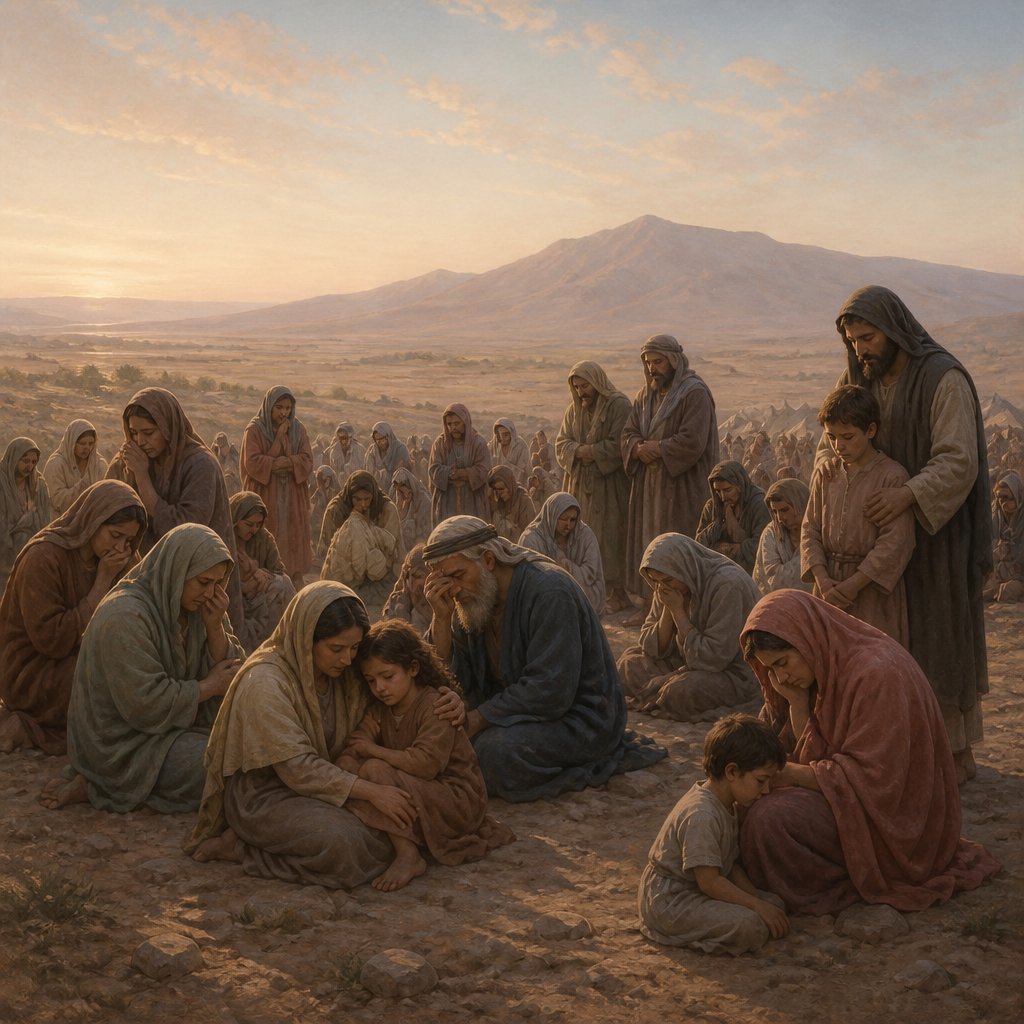
In the quiet plains of Moab, a significant chapter in the history of Israel closed with the death of Moses. The biblical account in Deuteronomy 34:8 (KJV) reveals that the children of Israel wept for Moses for thirty days, their mourning heavy with the weight of loss and love. “And the children of Israel wept for Moses in the plains of Moab thirty days: so the days of weeping and mourning for Moses were ended.” This moment not only reflects the void left by a great leader but also encapsulates the profound relationship between a leader and their people, highlighting the deep emotions that arise in times of loss.
As we ponder over this verse, we are invited to reflect on Moses’ legacy. Conceptualized as one of the greatest prophets, Moses was a man marked by humility, dedication, and a steadfast commitment to God’s will. He was a divider of the Red Sea, a lawgiver on Mount Sinai, and a faithful shepherd of God’s people through the wilderness. His life was a mirror of God’s character—a tapestry woven with threads of faith, perseverance, and sacrifice.
The weeping and mourning of the Israelites reveal how deeply Moses was woven into the fabric of their lives. For thirty days, they expressed their grief, a period significant not only in its length but in its weight of remembrance. Mourning can be an essential part of healing, allowing us to honor and remember those who have impacted our lives. In their grief, Israel was processing the loss of not just a leader, but a friend, a liberator, and a guiding light during tumultuous times.
Moses’ leadership fluctuated between moments of triumph and trials. When the Egyptians pursued them, Moses stood firm in faith, trusting God’s plan; when doubt permeated the camp, he interceded on their behalf, pleading for mercy. His ability to mediate between God and the Israelites illustrated the depth of his role—not merely as a ruler but as a servant-leader. This is a call to each of us, emphasizing the importance of empathy, connection, and humility in leadership.
The thirty-day period of mourning serves as a communal remembrance, suggesting that grief is not solely an individual journey but often a collective experience. As believers, mourning with those who mourn and celebrating the legacies left behind are integral parts of our walk with God and with each other. In Romans 12:15, we are reminded, “Rejoice with them that do rejoice, and weep with them that weep.” The act of weeping together fosters community and Christian unity; it binds people closer together in shared experiences.
Ultimately, after these days of mourning came to an end, life continued with Joshua appointed to lead the people into the Promised Land. This transition highlights a theme of hope within mourning. While the Israelites grieved the departure of their beloved leader, they were also being prepared for the new chapter that lay ahead. God does not leave us in our mourning; instead, He brings forth new beginnings from our sorrow. In our own lives, we may find ourselves navigating loss, whether through the parting of loved ones, transitions in life, or the endings of seasons. God invites us to acknowledge our grief while also being open to the new things He is doing in our midst.
In this light, let us not shy away from our moments of sadness but embrace them as opportunities to reflect, remember, and renew our trust in God’s providential care. As we mourn, we can also choose to honor the legacies left by those who have influenced our paths, giving thanks for their contributions and drawing inspiration from their lives. Like the children of Israel, may our tears pave the way for gratitude, remembrance, and a steadfast hope for the journey ahead.
Get our apps


Artwork for Deuteronomy 34:8

Deuteronomy 34:8 - "¶ And the children of Israel wept for Moses in the plains of Moab thirty days: so the days of weeping and mourning for Moses were ended."
"¶ And the children of Israel wept for Moses in the plains of Moab thirty days: so the days of weeping and mourning for Moses were ended." - Deuteronomy 34:8

Deuteronomy 34:5-6

Deuteronomy 34:1-4 – Moses views the Promised Land from Mount Nebo.

Deuteronomy 34:1-4 – Moses views the Promised Land from Mount Nebo.

Deuteronomy 34:1-4 – Moses views the Promised Land from Mount Nebo.

Deuteronomy 1:34 - "And the LORD heard the voice of your words, and was wroth, and sware, saying,"

Deuteronomy 34:1-4 – Moses views the Promised Land from Mount Nebo.

Deuteronomy 34:1-4 – Moses views the Promised Land from Mount Nebo.

Deuteronomy 34:3 - "And the south, and the plain of the valley of Jericho, the city of palm trees, unto Zoar."

Deuteronomy 34:1-4 – Moses views the Promised Land from Mount Nebo.

Deuteronomy 34:1-4 – Moses views the Promised Land from Mount Nebo.

Deuteronomy 32:34 - "Is not this laid up in store with me, and sealed up among my treasures?"

Deuteronomy 34:5 - "¶ So Moses the servant of the LORD died there in the land of Moab, according to the word of the LORD."

Deuteronomy 34:10 - "¶ And there arose not a prophet since in Israel like unto Moses, whom the LORD knew face to face,"

Deuteronomy 34:2 - "And all Naphtali, and the land of Ephraim, and Manasseh, and all the land of Judah, unto the utmost sea,"

Deuteronomy 28:34 - "So that thou shalt be mad for the sight of thine eyes which thou shalt see."

Deuteronomy 34:12 - "And in all that mighty hand, and in all the great terror which Moses shewed in the sight of all Israel."

Proverbs 8:34-36

Deuteronomy 34:7 - "¶ And Moses was an hundred and twenty years old when he died: his eye was not dim, nor his natural force abated."

deuteronomy 31 8

Deuteronomy 31:8

Deuteronomy 34:6 - "And he buried him in a valley in the land of Moab, over against Beth-peor: but no man knoweth of his sepulchre unto this day."

Isaiah 34:8 - "For it is the day of the LORD'S vengeance, and the year of recompences for the controversy of Zion."

Deuteronomy 34:11 - "In all the signs and the wonders, which the LORD sent him to do in the land of Egypt to Pharaoh, and to all his servants, and to all his land,"

Deuteronomy 2:34 - "And we took all his cities at that time, and utterly destroyed the men, and the women, and the little ones, of every city, we left none to remain:"

Deuteronomy 8:8 - "A land of wheat, and barley, and vines, and fig trees, and pomegranates; a land of oil olive, and honey;"

Ezra 8:34 - "By number and by weight of every one: and all the weight was written at that time."
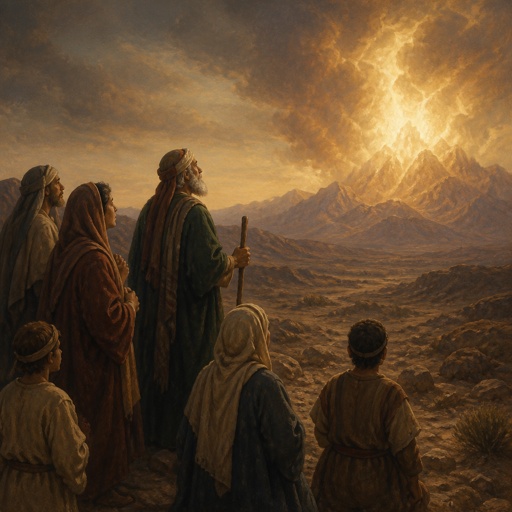
"And the LORD heard the voice of your words, and was wroth, and sware, saying," - Deuteronomy 1:34

Psalms 34:8 - "O taste and see that the LORD is good: blessed is the man that trusteth in him."