The Divine Rhythm of Work and Rest
“Six days thou shalt labour, and do all thy work:” — Deuteronomy 5:13
**Devotional on Deuteronomy 5:13: "Six days thou shalt labour, and do all thy work:"**
In today’s fast-paced world, where busyness often equates to productivity and success, it is vital to reflect on the wisdom imparted in Deuteronomy 5:13. This commandment from God not only outlines the necessity of work but also embeds within it the seeds of balance and rest. Scripture uses the framework of six days of labor as an assurance that our work has purpose and is ordained by God.
To understand the significance of this verse, we must first explore what it means to labor. The Hebrew word for work, “עָבַד” (avad), connotes not just physical toil, but also dedication and service. This calling to labor encompasses all aspects of our lives—whether in our professional endeavors, our responsibilities at home, or our service in our communities. Each of these roles is a vital part of our existence and an opportunity to manifest God’s kingdom here on earth.
God’s directive to labor for six days indicates that work is not merely a necessity for survival but a divinely sanctioned activity that contributes to our personal growth and the welfare of others. Each day of labor is an opportunity to cultivate not just our skills, but also our character. Through challenges faced at work, patience is developed, integrity is tested, and resilience is forged. In essence, work refines us, shaping us into images of Christ as we navigate our everyday tasks.
However, this call to labor comes with a crucial component: the seventh day. While our focus today is on the six days of work, we cannot overlook the significance that follows. The commandment continues beyond verse 13 and introduces the concept of the Sabbath—a day of rest. "But the seventh day is the sabbath of the LORD thy God" (Exodus 20:10). This invitation to pause is as critical as the labor itself. God, in His infinite wisdom, understands our need for rest and rejuvenation.
In a society that glorifies overwork, we must remember the example set by our Creator. After creating the universe in six days, He rested on the seventh. This divine model teaches us that rest is not an indication of weakness or laziness but is part of the sacred rhythm of life. It is in rest that we recharge spiritually, mentally, and physically. For the Christian, rest is a time for reflection, rejuvenation, and a deeper relationship with God. On the Sabbath, we find clarity, inspiration, and the strength to continue our work with a renewed spirit.
Furthermore, the practice of work and rest invites us to look beyond the surface of daily tasks. It becomes an act of worship. Every project undertaken, every errand completed, and every service rendered can be a reflection of our love for God. As we labor, our work should echo the qualities of God—faithfulness, creativity, and excellence. In this way, our labor becomes an offering.
Ultimately, God’s commandments were not given to impose constraints on our lives but to guide us into a more fulfilling existence. When we embrace His directives, we experience the fruits of balance. God desires a rhythm in our lives; a cadence of work and rest that ultimately leads us to a fuller understanding of our purpose.
As we go forth each day, let us embody the spirit of Deuteronomy 5:13. Let us apply our hearts and hands to our work, remembering that each task holds intrinsic value in God’s plan. And let us also carve out sacred moments of rest, drawing closer to our Father who delights in a relationship with us. In this divine rhythm of labor and repose, we uncover not only our purpose but also the heart of our Creator.
Get our apps


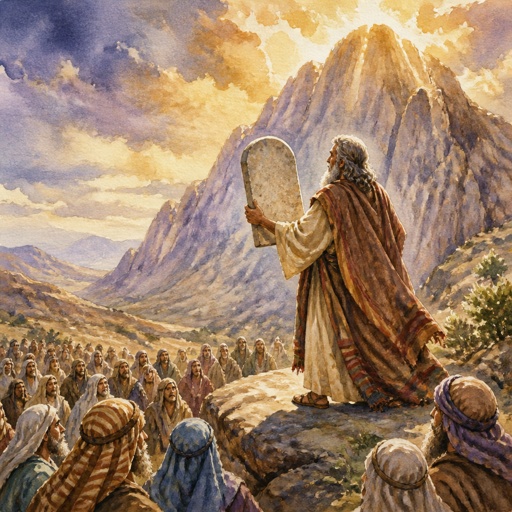
Artwork for Deuteronomy 5:13

Deuteronomy 5:13 - "Six days thou shalt labour, and do all thy work:"

"Six days thou shalt labour, and do all thy work:" - Deuteronomy 5:13
Deuteronomy 5 pictures

Deuteronomy 5:17 - "Thou shalt not kill."

Deuteronomy 34:5-6

Deuteronomy 5:19 - "Neither shalt thou steal."

Deuteronomy 14:13 - "And the glede, and the kite, and the vulture after his kind,"

Deuteronomy 18:13 - "Thou shalt be perfect with the LORD thy God."

Deuteronomy 5:18 - "Neither shalt thou commit adultery."

Deuteronomy 28:5 - "Blessed shall be thy basket and thy store."

Deuteronomy 17:13 - "And all the people shall hear, and fear, and do no more presumptuously."

Deuteronomy 5:2 - "The LORD our God made a covenant with us in Horeb."

Deuteronomy 25:13 - "¶ Thou shalt not have in thy bag divers weights, a great and a small."

Deuteronomy 22:13 - "¶ If any man take a wife, and go in unto her, and hate her,"

Deuteronomy 5:30 - "Go say to them, Get you into your tents again."

"Thou shalt not kill." - Deuteronomy 5:17

Deuteronomy 13:1 - "If there arise among you a prophet, or a dreamer of dreams, and giveth thee a sign or a wonder,"

Deuteronomy 5:7 - "Thou shalt have none other gods before me."

Deuteronomy 1:5 - "On this side Jordan, in the land of Moab, began Moses to declare this law, saying,"

Deuteronomy 5:5 - "(I stood between the LORD and you at that time, to shew you the word of the LORD: for ye were afraid by reason of the fire, and went not up into the mount;) saying,"

Deuteronomy 5:20 - "Neither shalt thou bear false witness against thy neighbour."

Deuteronomy 5:4 - "The LORD talked with you face to face in the mount out of the midst of the fire,"

Deuteronomy 32:5 - "They have corrupted themselves, their spot is not the spot of his children: they are a perverse and crooked generation."

Deuteronomy 14:5 - "The hart, and the roebuck, and the fallow deer, and the wild goat, and the pygarg, and the wild ox, and the chamois."

Deuteronomy 5:10 - "And shewing mercy unto thousands of them that love me and keep my commandments."

Deuteronomy 5:12 - "Keep the sabbath day to sanctify it, as the LORD thy God hath commanded thee."

Deuteronomy 6:13 - "Thou shalt fear the LORD thy God, and serve him, and shalt swear by his name."

Deuteronomy 13:11 - "And all Israel shall hear, and fear, and shall do no more any such wickedness as this is among you."

Deuteronomy 27:13 - "And these shall stand upon mount Ebal to curse; Reuben, Gad, and Asher, and Zebulun, Dan, and Naphtali."

Deuteronomy 12:13 - "Take heed to thyself that thou offer not thy burnt offerings in every place that thou seest:"