The Paradox of Wealth and Joy
“A feast is made for laughter, and wine maketh merry: but money answereth all things.” — Ecclesiastes 10:19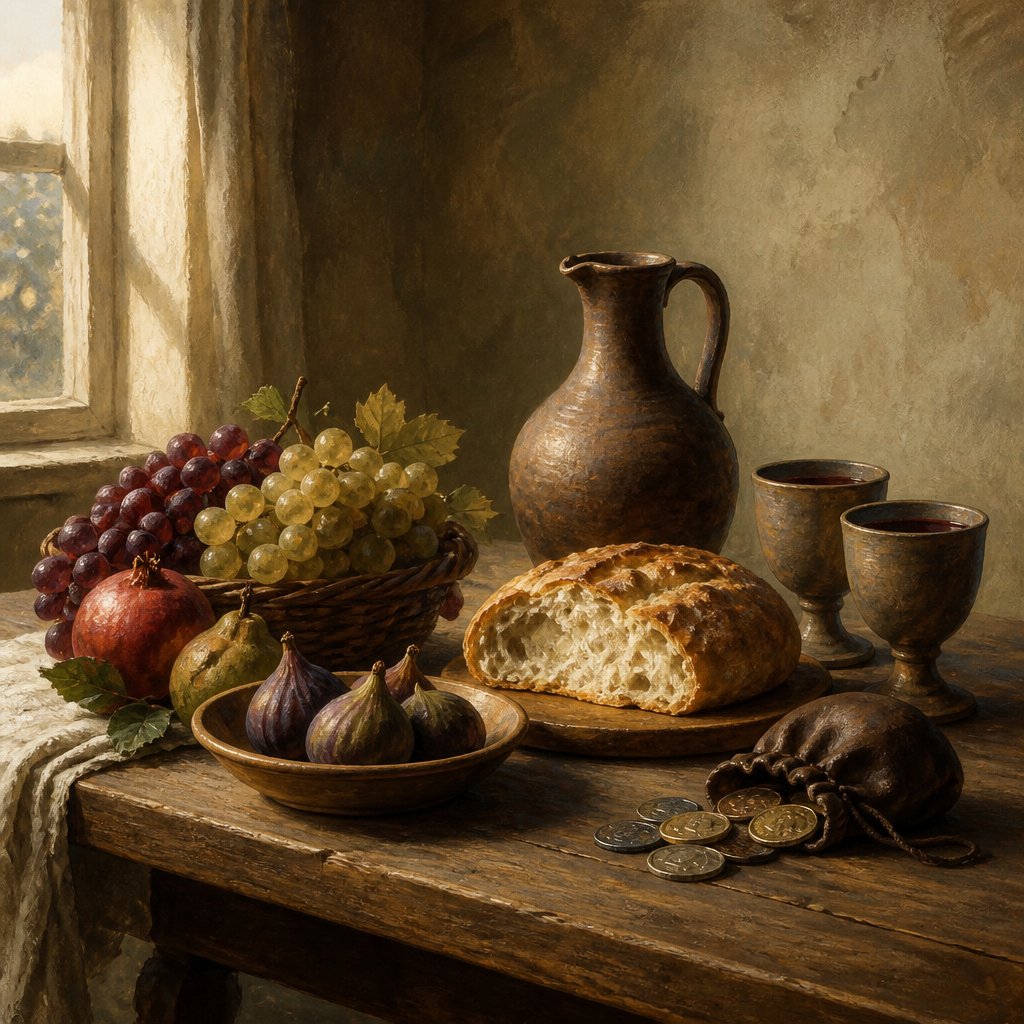
**Ecclesiastes 10:19** states: "A feast is made for laughter, and wine maketh merry: but money answereth all things." This verse serves as a profound reflection on the interplay between the joys of life and the practical realities we face. In this devotional, we will explore how this wisdom from Ecclesiastes provides insight into our pursuit of happiness, contentment, and our relationship with wealth.
Solomon, the author of Ecclesiastes, presents a unique perspective on the nature of life’s pleasures and the function of money in our lives. At first glance, this verse appears to juxtapose two contrasting themes – the joy derived from a feast and merriment against the reliability and necessity of money. However, a deeper examination reveals a nuanced commentary on human existence and priorities.
**Laughter and Joy**
The first part of the verse reminds us that feasts are made for laughter and gatherings are often times for celebrating joy, community, and relationships. When we think of a feast, we think of an abundance of food, companionship, and laughter echoing through the room. These elements are necessary for a rich and full life. Laughter indeed is a balm; it brings relief from the stresses of daily life and invites us to experience moments of pure joy. Proverbs 17:22 emphasizes this sentiment: "A merry heart doeth good like a medicine: but a broken spirit drieth the bones."
These moments of joy and connection remind us that life’s greatest blessings often come from shared experiences rather than material wealth. A banquet filled with laughter can provide warmth and support that no amount of money can replicate. It indicates that life's true fulfillment comes through relationships and experiences rather than possessions.
**The Role of Money**
While laughter and joy are essential, the latter part of the verse introduces an undeniable truth: "but money answereth all things." This phrase has sparked much reflection and debate. Solomon, with unparalleled wisdom, acknowledges that money is a necessary tool in our lives. It facilitates the satisfaction of various needs and desires; it can provide security in uncertain times, fund education and health, and enable us to enjoy life's pleasures.
Yet, this acknowledgment does not diminish the value of laughter or communal feasting. Instead, it underscores the complexity of existence; money may not buy happiness, but it is a means through which our needs are addressed. While it may not answer life's deepest, most spiritual questions—such as those of purpose and fulfillment—it does provide answers to many practical matters and can aid in the pursuit of joy when used wisely.
**Finding Balance**
The tension presented in this verse is a call for balance. Whether it's through gatherings or financial planning, we must not allow money to overshadow the importance of the joy found in relationships and shared experiences. Jesus encourages us not to be consumed by the pursuit of riches, as seen in Matthew 6:24: "No man can serve two masters: for either he will hate the one, and love the other; or else he will hold to the one, and despise the other. Ye cannot serve God and mammon."
True joy comes from prioritizing our relationships with God and others over our financial pursuits. Money is useful, but it must serve a higher purpose. When we align our financial decisions with our values of love, kindness, and community, we utilize money as a tool for creating joy rather than a master that dominates our lives.
**Embracing the Wisdom**
As we ponder the lessons of Ecclesiastes 10:19, let us remind ourselves of the freedom found in simplicity and connection. Let us gather with loved ones, share hearty meals, and embrace laughter as sacred moments of worship and gratitude. While money will always be a reality we interact with, it should never replace the joy and fulfillment found in our relationships with God and others. In this balance, we can discover true contentment that resonates far beyond the physical world.
Get our apps


Artwork for Ecclesiastes 10:19

Ecclesiastes 10:19 - "¶ A feast is made for laughter, and wine maketh merry: but money answereth all things."
"¶ A feast is made for laughter, and wine maketh merry: but money answereth all things." - Ecclesiastes 10:19

Ecclesiastes 7:19 - "Wisdom strengtheneth the wise more than ten mighty men which are in the city."

Ecclesiastes 10:10 - "If the iron be blunt, and he do not whet the edge, then must he put to more strength: but wisdom is profitable to direct."

Ecclesiastes 10:6 - "Folly is set in great dignity, and the rich sit in low place."

Ecclesiastes 10:11 - "Surely the serpent will bite without enchantment; and a babbler is no better."

Ecclesiastes 10:18 - "¶ By much slothfulness the building decayeth; and through idleness of the hands the house droppeth through."

Ecclesiastes 10:12 - "The words of a wise man's mouth are gracious; but the lips of a fool will swallow up himself."

Ecclesiastes 10:13 - "The beginning of the words of his mouth is foolishness: and the end of his talk is mischievous madness."

Ecclesiastes 10:2 - "A wise man's heart is at his right hand; but a fool's heart at his left."

Ecclesiastes 10:5 - "There is an evil which I have seen under the sun, as an error which proceedeth from the ruler:"

Ecclesiastes 12:10 - "The preacher sought to find out acceptable words: and that which was written was upright, even words of truth."

Ecclesiastes 10:15 - "The labour of the foolish wearieth every one of them, because he knoweth not how to go to the city."

Ecclesiastes 10:7 - "I have seen servants upon horses, and princes walking as servants upon the earth."

Ecclesiastes 3:10 - "I have seen the travail, which God hath given to the sons of men to be exercised in it."

Ecclesiastes 5:10 - "He that loveth silver shall not be satisfied with silver; nor he that loveth abundance with increase: this is also vanity."

Ecclesiastes 10:16 - "¶ Woe to thee, O land, when thy king is a child, and thy princes eat in the morning!"

Ecclesiastes 10:8 - "He that diggeth a pit shall fall into it; and whoso breaketh an hedge, a serpent shall bite him."

Ecclesiastes 10:9 - "Whoso removeth stones shall be hurt therewith; and he that cleaveth wood shall be endangered thereby."

Ecclesiastes 10:4 - "If the spirit of the ruler rise up against thee, leave not thy place; for yielding pacifieth great offences."

Ecclesiastes 1:10 - "Is there any thing whereof it may be said, See, this is new? it hath been already of old time, which was before us."

Ecclesiastes 7:10 - "Say not thou, What is the cause that the former days were better than these? for thou dost not enquire wisely concerning this."

"Surely the serpent will bite without enchantment; and a babbler is no better." - Ecclesiastes 10:11

Ecclesiastes 11:10 - "Therefore remove sorrow from thy heart, and put away evil from thy flesh: for childhood and youth are vanity."

Ecclesiastes 6:10 - "That which hath been is named already, and it is known that it is man: neither may he contend with him that is mightier than he."

Ecclesiastes 10:17 - "Blessed art thou, O land, when thy king is the son of nobles, and thy princes eat in due season, for strength, and not for drunkenness!"

Ecclesiastes 4:10 - "For if they fall, the one will lift up his fellow: but woe to him that is alone when he falleth; for he hath not another to help him up."

"Folly is set in great dignity, and the rich sit in low place." - Ecclesiastes 10:6

Ecclesiastes 10:1 - "Dead flies cause the ointment of the apothecary to send forth a stinking savour: so doth a little folly him that is in reputation for wisdom and honour."

Ecclesiastes 10:3 - "Yea also, when he that is a fool walketh by the way, his wisdom faileth him, and he saith to every one that he is a fool."