The Power of Steadfastness in Adversity
“If the spirit of the ruler rise up against thee, leave not thy place; for yielding pacifieth great offences.” — Ecclesiastes 10:4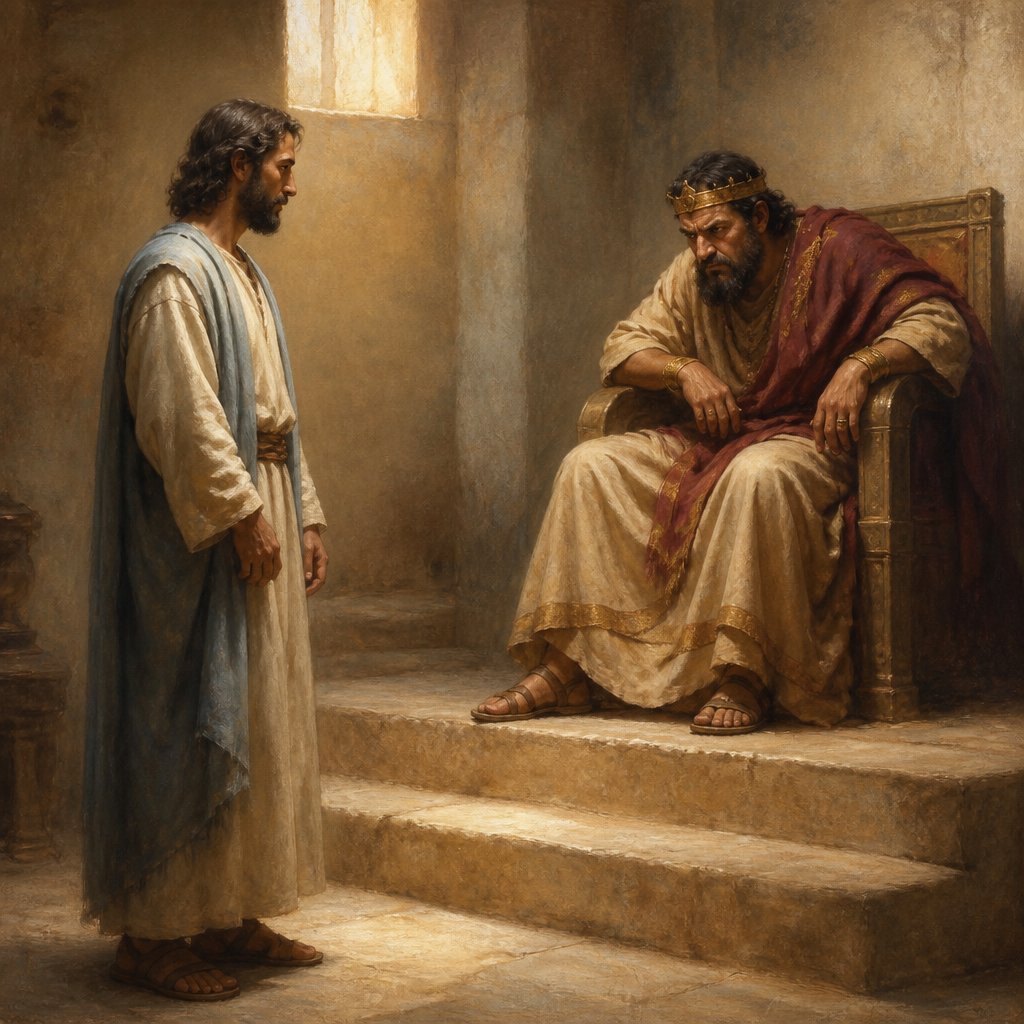
In the book of Ecclesiastes, Chapter 10, Verse 4 states: "If the spirit of the ruler rise up against thee, leave not thy place; for yielding pacifieth great offences." This verse strikes at the core of human relationships and interactions, particularly in the context of authority and conflict. As followers of Christ, we are frequently challenged by the environments we find ourselves in, whether they be professional, social, or even familial. Understanding and applying the truth of this verse can provide us with guidance and strength in times of trial.
The phrase "If the spirit of the ruler rise up against thee" evokes images of power dynamics that are often at play in our lives. A ruler symbolizes any authority figure—be it a boss, a teacher, a parent, or a leader in the church. When faced with opposition or anger from such figures, our instinct might be to flee, to run from the discomfort or threat posed by their authority. However, the wisdom imparted in this passage counsels us against such an impulse.
"Leave not thy place" is a powerful affirmation of steadfastness. It encourages believers to stand firm in their positions, roles, or beliefs despite the challenges presented by those in authority. The term ‘place’ can be interpreted not just as a physical location but also as a metaphor for our integrity and purpose. When adversity strikes, we should anchor ourselves more firmly to our faith and purpose rather than succumbing to fear or despair. Standing our ground reflects our commitment to our values; it shows our willingness to endure hardships for the sake of truth and righteousness.
Often, it is in our response to adversity that our character is revealed. When the ruler rises up in anger or discontent, it can lead to severe temptations to retaliate or to become defensive. The human mind naturally desires to resolve conflicts through confrontation; however, the second half of the verse provides a profound insight: "for yielding pacifieth great offences." This tells us that there is a remarkable strength in yielding—a willingness to compromise or to let go, which can diffuse tension that has the potential to escalate into something more damaging.
From a biblical perspective, Jesus exemplified this idea of yielding. In Matthew 5:39, He advises, "But I say unto you, That ye resist not evil: but whosoever shall smite thee on thy right cheek, turn to him the other also." This is not an invitation to be weak; rather, it is a call to display extraordinary strength under pressure. Yielding does not mean giving up one’s beliefs or values; it means responding with wisdom and calmness, which can lead to greater resolutions and peace. The act of yielding can turn away wrath and bring healing to both the aggressor and the oppressed. It is a demonstration of grace.
In our day-to-day lives, we will encounter conflicts and challenges, often spurred by those in authority over us. Instead of reacting impulsively, let us take a moment to reflect on Ecclesiastes 10:4. Ask yourself: How can I stand firm in my truth while also exhibiting grace and composure? What can I learn from this situation that will help me grow in faith and character?
Ultimately, this verse serves as a reminder that God calls us to be peacemakers (as seen in Matthew 5:9), and sometimes that means enduring trials without losing heart. We should remember that our hope and refuge are in the Lord, who empowers us to rise above conflicts and embody the peace of Christ.
As we meditate on these words, let us pray for the wisdom and strength to remain steadfast and yielding, trusting that even in conflict, God is at work within us and our circumstances.
Get our apps


Artwork for Ecclesiastes 10:4

Ecclesiastes 10:4 - "If the spirit of the ruler rise up against thee, leave not thy place; for yielding pacifieth great offences."
"If the spirit of the ruler rise up against thee, leave not thy place; for yielding pacifieth great offences." - Ecclesiastes 10:4

Ecclesiastes 4:10 - "For if they fall, the one will lift up his fellow: but woe to him that is alone when he falleth; for he hath not another to help him up."

"Two are better than one, because they have a good return for their labor: If either of them falls down, one can help the other up. But pity anyone who falls and has no one to help them up." - Ecclesiastes 4:9-10

Ecclesiastes 4:9-10 - "Two are better than one, because they have a good return for their labor: If either of them falls down, one can help the other up. But pity anyone who falls and has no one to help them up."

Ecclesiastes 10:10 - "If the iron be blunt, and he do not whet the edge, then must he put to more strength: but wisdom is profitable to direct."

Ecclesiastes 10:6 - "Folly is set in great dignity, and the rich sit in low place."

Ecclesiastes 10:11 - "Surely the serpent will bite without enchantment; and a babbler is no better."

Ecclesiastes 4:7 - "Then I returned, and I saw vanity under the sun."

Ecclesiastes 10:18 - "¶ By much slothfulness the building decayeth; and through idleness of the hands the house droppeth through."

Ecclesiastes 10:19 - "¶ A feast is made for laughter, and wine maketh merry: but money answereth all things."

Ecclesiastes 3:4 - "A time to weep, and a time to laugh; a time to mourn, and a time to dance;"

Ecclesiastes 4:4 - "¶ Again, I considered all travail, and every right work, that for this a man is envied of his neighbour. This is also vanity and vexation of spirit."

Ecclesiastes 10:12 - "The words of a wise man's mouth are gracious; but the lips of a fool will swallow up himself."

Ecclesiastes 10:13 - "The beginning of the words of his mouth is foolishness: and the end of his talk is mischievous madness."

Ecclesiastes 10:2 - "A wise man's heart is at his right hand; but a fool's heart at his left."

Ecclesiastes 4:5 - "The fool foldeth his hands together, and eateth his own flesh."

Ecclesiastes 7:4 - "The heart of the wise is in the house of mourning; but the heart of fools is in the house of mirth."

Ecclesiastes 10:5 - "There is an evil which I have seen under the sun, as an error which proceedeth from the ruler:"

Ecclesiastes 12:10 - "The preacher sought to find out acceptable words: and that which was written was upright, even words of truth."

Ecclesiastes 10:15 - "The labour of the foolish wearieth every one of them, because he knoweth not how to go to the city."

Ecclesiastes 10:7 - "I have seen servants upon horses, and princes walking as servants upon the earth."

Ecclesiastes 3:10 - "I have seen the travail, which God hath given to the sons of men to be exercised in it."

Ecclesiastes 6:4 - "For he cometh in with vanity, and departeth in darkness, and his name shall be covered with darkness."

Ecclesiastes 1:4 - "One generation passeth away, and another generation cometh: but the earth abideth for ever."

Ecclesiastes 4:9 - "¶ Two are better than one; because they have a good reward for their labour."

Ecclesiastes 5:10 - "He that loveth silver shall not be satisfied with silver; nor he that loveth abundance with increase: this is also vanity."

Ecclesiastes 10:16 - "¶ Woe to thee, O land, when thy king is a child, and thy princes eat in the morning!"

Ecclesiastes 10:8 - "He that diggeth a pit shall fall into it; and whoso breaketh an hedge, a serpent shall bite him."

Ecclesiastes 10:9 - "Whoso removeth stones shall be hurt therewith; and he that cleaveth wood shall be endangered thereby."