The Weight of Expectation: Embracing the Reality of God's Timing
“If the clouds be full of rain, they empty themselves upon the earth: and if the tree fall toward the south, or toward the north, in the place where the tree falleth, there it shall be.” — Ecclesiastes 11:3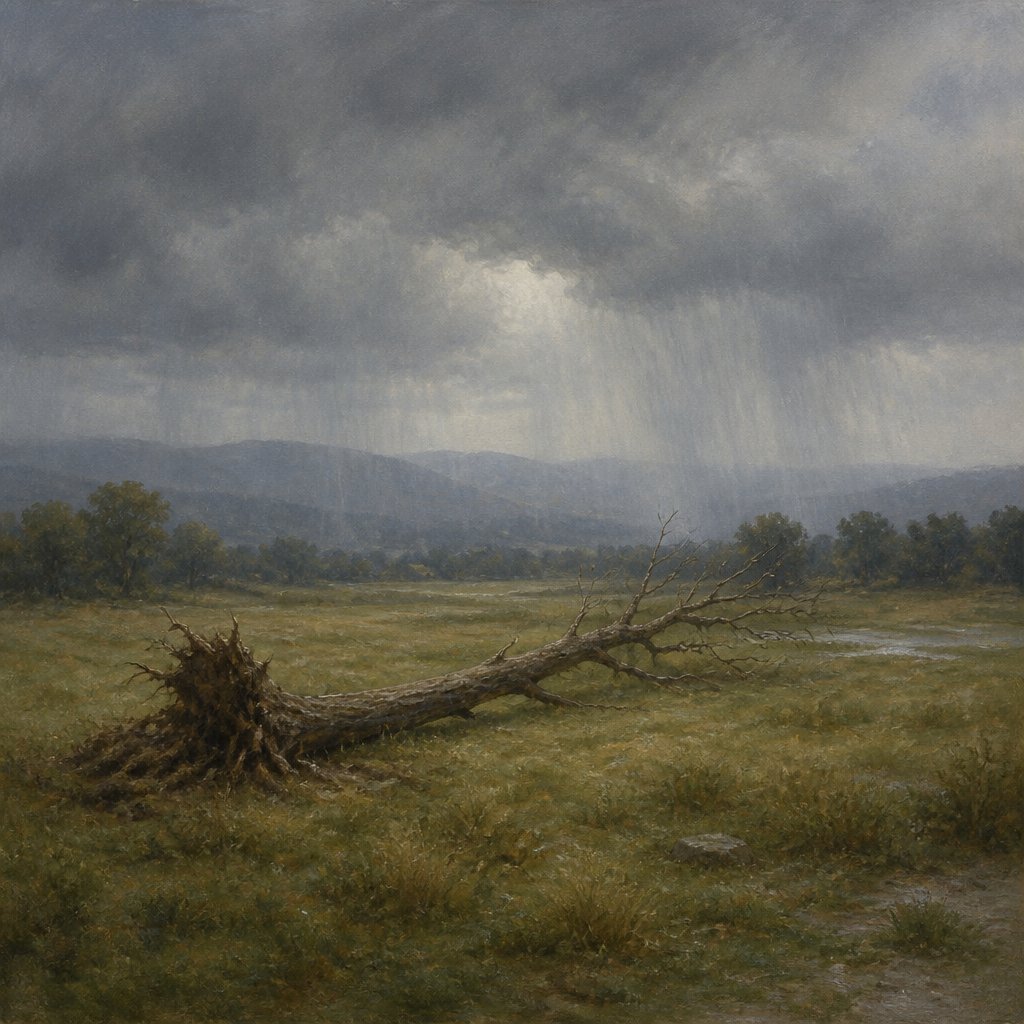
Ecclesiastes 11:3 (KJV) states, "If the clouds be full of rain, they empty themselves upon the earth: and if the tree fall toward the south, or toward the north, in the place where the tree falleth, there it shall be." This profound verse offers us a glimpse into the balance of divine providence and natural law.
The imagery of clouds filled with rain speaks to us of the inevitable cycles of life and blessings that come from God’s handiwork in nature. When the clouds have absorbed so much water, they are compelled by their very nature to let go, to instantiate what they have carried. This metaphor reflects the reality of human life where every event, every personal burden, every prayer, at some point reaches a fullness. We see this in our own lives when we carry dreams, hopes, and even sorrows: there comes an appointed time when they must manifest, whether in blessings, realizations, or lessons learned.
The first part of this verse serves as a powerful reminder of God’s providence. The act of rain descending upon the earth symbolizes God's persistent and abundant grace. Just as the clouds can hold only so much rain before releasing it, we too have a maximum capacity for what we can endure, understand, or receive. Are we ready to be like those clouds? When the time comes, are we prepared to let go of what weighs us down or to release the blessings that we have gathered? It prompts us not just to wait passively but to actively prepare ourselves for what God is doing within us, around us, and through us.
Contrastingly, the latter part of Ecclesiastes 11:3 reminds us of the realities of fate and acceptance. When a tree falls, it establishes a finality that can’t be altered. "In the place where the tree falleth, there it shall be." We often find ourselves resistant to life’s circumstances, striving to control outcomes or revert to ideal scenarios. Yet, this text urges us to grapple with the end results of our actions and decisions. What has fallen in our lives cannot be moved—it requires us to adapt and respond to our changed landscapes. This is where we must lean deeply into our faith.
In this fallen world, disappointment is inevitable. Trees fall in ways we do not choose, and circumstances shift out of our control. The call is not to despair but to find purpose even in barrenness, acknowledging that God's hand is still at work. The discipline of acceptance is crucial; it reminds us that while we cannot change the past, we have the power to shape our responses and cultivate hope for the future.
To truly embrace the wisdom found in this verse means surrendering the illusion of control, understanding that God operates in ways that transcend our immediate perception of time and chance. So often, we view life circumstances through a lens of frustration or sadness—the fallen trees of our lives that cannot be moved. However, we must remember that just as God is the master of the clouds, He is also the overseer of the forests. He knows how to bring life from fallen wood, how to use our missteps to create thoroughfares of grace.
Today, take time to reflect on the clouds in your life: What blessings are on the brink of coming forth? Are you holding back, fearful of the change that the release might bring? Simultaneously, consider the trees that have fallen. Are there remnants you’ve been clinging to that God is urging you to accept? In embracing both sides of this verse, we forge a path of greater faith—anticipating the outpouring of blessings while also settling amidst the realities of life’s unpredictable nature.
Let us encourage one another to find rest in the presence of the One who controls the clouds and the ancient trees. For in Him, both the rain and the fall serve a purpose that we may not yet see, but are promised to reveal His grandeur and care for our lives.
Get our apps


Artwork for Ecclesiastes 11:3

Ecclesiastes 11:3 - "If the clouds be full of rain, they empty themselves upon the earth: and if the tree fall toward the south, or toward the north, in the place where the tree falleth, there it shall be."
"If the clouds be full of rain, they empty themselves upon the earth: and if the tree fall toward the south, or toward the north, in the place where the tree falleth, there it shall be." - Ecclesiastes 11:3

Ecclesiastes 1:11

Ecclesiastes 3:11 - "He hath made every thing beautiful in his time: also he hath set the world in their heart, so that no man can find out the work that God maketh from the beginning to the end."
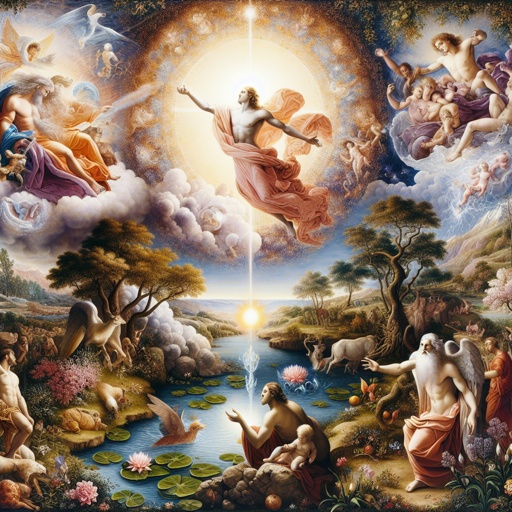
Ecclesiastes 3:11. 11 He has made everything beautiful in its time. He has also set eternity in the human heart; yet no one can fathom what God has done from beginning to end.

Ecclesiastes 3:11. 11 He has made everything beautiful in its time. He has also set eternity in the human heart; yet no one can fathom what God has done from beginning to end.

Ecclesiastes 3:1

Ecclesiastes 3:3 - "A time to kill, and a time to heal; a time to break down, and a time to build up;"

Ecclesiastes 3:7-8

Ecclesiastes 7:11 - "¶ Wisdom is good with an inheritance: and by it there is profit to them that see the sun."

Ecclesiastes 10:11 - "Surely the serpent will bite without enchantment; and a babbler is no better."

Ecclesiastes 3:1 – "There is a time for everything, and a season for every activity under the heavens."

Ecclesiastes 11:7 - "¶ Truly the light is sweet, and a pleasant thing it is for the eyes to behold the sun:"

Ecclesiastes 6:11 - "¶ Seeing there be many things that increase vanity, what is man the better?"

Ecclesiastes 3:9 - "What profit hath he that worketh in that wherein he laboureth?"

Ecclesiastes 3:1 - "To every thing there is a season, and a time to every purpose under the heaven:"

Ecclesiastes 3:4 - "A time to weep, and a time to laugh; a time to mourn, and a time to dance;"

Ecclesiastes 3:8 - "A time to love, and a time to hate; a time of war, and a time of peace."

Ecclesiastes 11:1 - "Cast thy bread upon the waters: for thou shalt find it after many days."

Ecclesiastes 11:4 - "He that observeth the wind shall not sow; and he that regardeth the clouds shall not reap."

Ecclesiastes 3:6 - "A time to get, and a time to lose; a time to keep, and a time to cast away;"

Ecclesiastes 7:3 - "Sorrow is better than laughter: for by the sadness of the countenance the heart is made better."

Ecclesiastes 12:11 - "The words of the wise are as goads, and as nails fastened by the masters of assemblies, which are given from one shepherd."

Ecclesiastes 4:11 - "Again, if two lie together, then they have heat: but how can one be warm alone?"

Ecclesiastes 3:7 - "A time to rend, and a time to sew; a time to keep silence, and a time to speak;"

Ecclesiastes 11:2 - "Give a portion to seven, and also to eight; for thou knowest not what evil shall be upon the earth."

Ecclesiastes 5:11 - "When goods increase, they are increased that eat them: and what good is there to the owners thereof, saving the beholding of them with their eyes?"

Ecclesiastes 3:21 - "Who knoweth the spirit of man that goeth upward, and the spirit of the beast that goeth downward to the earth?"

Ecclesiastes 3:2 - "A time to be born, and a time to die; a time to plant, and a time to pluck up that which is planted;"

Ecclesiastes 3:16 - "¶ And moreover I saw under the sun the place of judgment, that wickedness was there; and the place of righteousness, that iniquity was there."