What does Ecclesiastes 11:3 mean?
“If the clouds be full of rain, they empty themselves upon the earth: and if the tree fall toward the south, or toward the north, in the place where the tree falleth, there it shall be.” — Ecclesiastes 11:3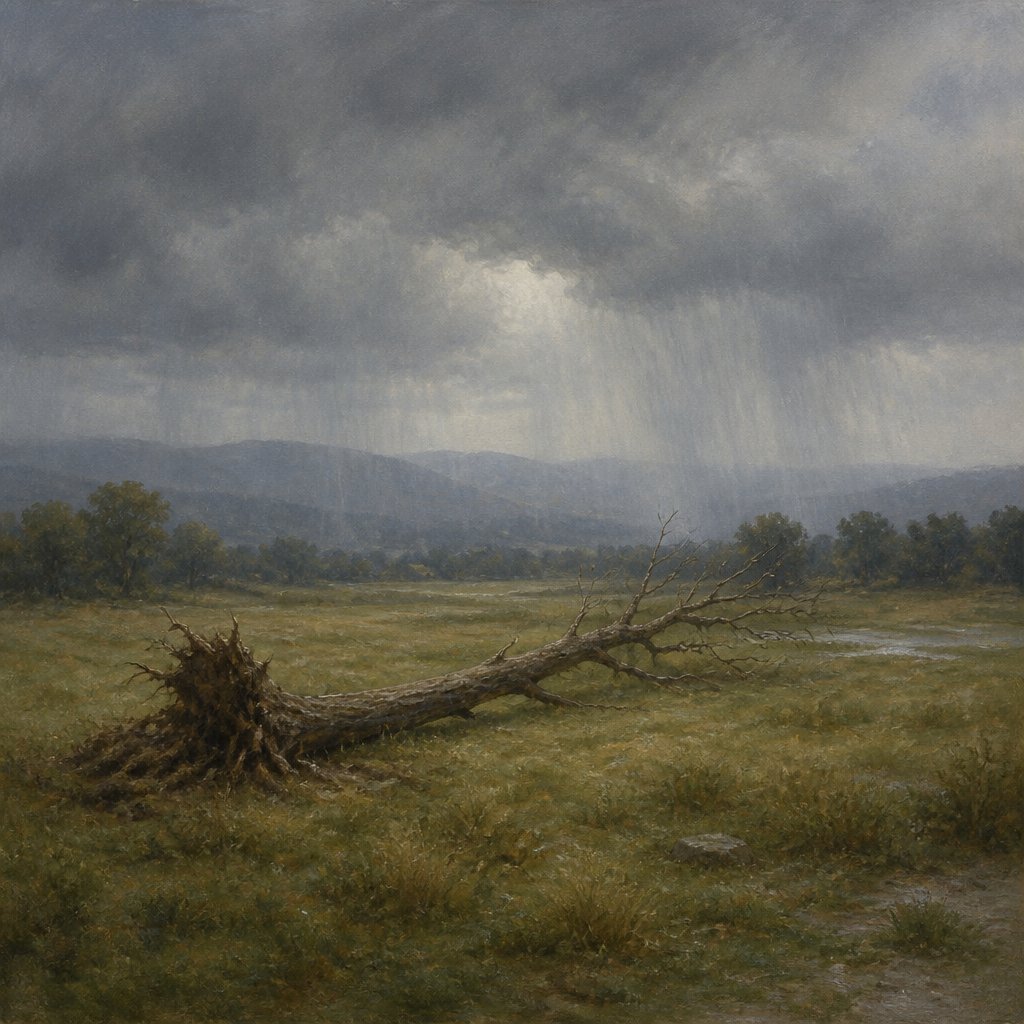
Ecclesiastes 11:3 from the King James Version of the Bible reads, "If the clouds be full of rain, they empty themselves upon the earth: and if the tree fall toward the south, or toward the north, in the place where the tree falleth, there it shall be." This verse reflects the wise and insightful words of King Solomon as he reflects on the nature of life and the unpredictability of the world.
To understand the deeper meaning behind this verse, it is important to consider the context in which it was written. The book of Ecclesiastes is known for its reflections on the vanity of life and the futility of human pursuits. It is a book of wisdom and existential ponderings, attributed to King Solomon, the wise and wealthy king of Israel. This particular verse falls within a section that discusses the uncertainties of life and the inability of humans to fully comprehend or control the world around them.
In Ecclesiastes 11:1-6, Solomon provides advice on living wisely in a world filled with uncertainties. He uses vivid imagery to illustrate his point, drawing from nature to highlight the unpredictability of life. In this verse, he speaks of the natural processes of rain and the falling of a tree to convey the idea that there are forces beyond human control. Just as the clouds release their rain without regard for human desires, and a falling tree lands in a place determined by external factors, so too are the events of life beyond human manipulation. This serves as a reminder that humans are not in control of everything and should be humble in the face of the unknown.
One of the themes present in this verse is the concept of unpredictability and the limitations of human understanding. Solomon emphasizes that, just as the natural world operates according to its own laws and forces, so do the events of life unfold in ways that are beyond human comprehension. This idea is related to the broader theme of the book of Ecclesiastes, which explores the limitations of human wisdom and the fleeting nature of worldly pursuits. This verse encourages readers to acknowledge the unpredictability of life and to approach it with humility and wisdom.
Another theme that can be derived from this verse is the idea of acceptance and resignation to the will of God. By using the examples of natural processes, Solomon reminds the reader that there are larger forces at work in the world that are beyond human control. This reflects the broader biblical concept of trusting in God's providence and recognizing His sovereignty over all things. The verse encourages a mindset of acceptance and trust in God's plan, even when faced with uncertainty and unpredictability.
The symbolism in this verse lies in the natural imagery used by Solomon. The clouds full of rain represent the abundance of blessings or resources, while the emptying of the clouds onto the earth represents the natural flow and distribution of these blessings. The falling tree symbolizes the unexpected twists and turns of life, and the lack of control that humans have over their circumstances. These symbols serve to convey the message of the verse in a vivid and relatable manner, making it easier for the reader to grasp the underlying wisdom.
In conclusion, Ecclesiastes 11:3 is a poignant reminder of life's unpredictability and the limitations of human understanding. It encourages readers to approach life with humility and trust in God's providence, even in the face of uncertainty. The verse uses vivid natural imagery to convey its message and is part of the broader themes present in the book of Ecclesiastes. Its timeless wisdom continues to resonate with readers, offering a perspective that transcends the boundaries of time and culture.
Get our apps


Artwork for Ecclesiastes 11:3
Ecclesiastes 11:3 - "If the clouds be full of rain, they empty themselves upon the earth: and if the tree fall toward the south, or toward the north, in the place where the tree falleth, there it shall be."
"If the clouds be full of rain, they empty themselves upon the earth: and if the tree fall toward the south, or toward the north, in the place where the tree falleth, there it shall be." - Ecclesiastes 11:3

Ecclesiastes 1:11

Ecclesiastes 3:11 - "He hath made every thing beautiful in his time: also he hath set the world in their heart, so that no man can find out the work that God maketh from the beginning to the end."
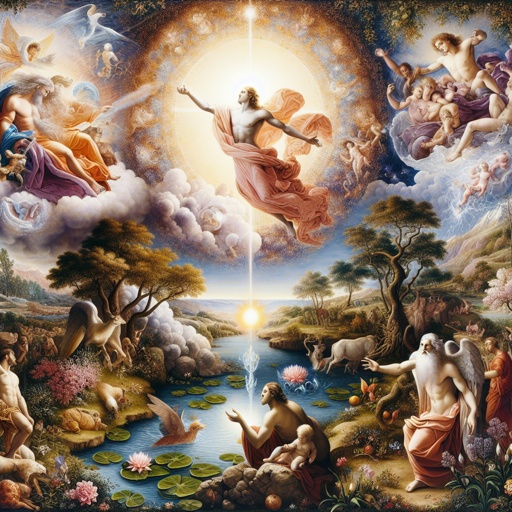
Ecclesiastes 3:11. 11 He has made everything beautiful in its time. He has also set eternity in the human heart; yet no one can fathom what God has done from beginning to end.

Ecclesiastes 3:11. 11 He has made everything beautiful in its time. He has also set eternity in the human heart; yet no one can fathom what God has done from beginning to end.

Ecclesiastes 3:1

Ecclesiastes 3:3 - "A time to kill, and a time to heal; a time to break down, and a time to build up;"

Ecclesiastes 3:7-8

Ecclesiastes 7:11 - "¶ Wisdom is good with an inheritance: and by it there is profit to them that see the sun."

Ecclesiastes 10:11 - "Surely the serpent will bite without enchantment; and a babbler is no better."

Ecclesiastes 3:1 – "There is a time for everything, and a season for every activity under the heavens."

Ecclesiastes 11:7 - "¶ Truly the light is sweet, and a pleasant thing it is for the eyes to behold the sun:"

Ecclesiastes 6:11 - "¶ Seeing there be many things that increase vanity, what is man the better?"

Ecclesiastes 3:9 - "What profit hath he that worketh in that wherein he laboureth?"

Ecclesiastes 3:1 - "To every thing there is a season, and a time to every purpose under the heaven:"

Ecclesiastes 3:4 - "A time to weep, and a time to laugh; a time to mourn, and a time to dance;"

Ecclesiastes 3:8 - "A time to love, and a time to hate; a time of war, and a time of peace."

Ecclesiastes 11:1 - "Cast thy bread upon the waters: for thou shalt find it after many days."

Ecclesiastes 11:4 - "He that observeth the wind shall not sow; and he that regardeth the clouds shall not reap."

Ecclesiastes 3:6 - "A time to get, and a time to lose; a time to keep, and a time to cast away;"

Ecclesiastes 7:3 - "Sorrow is better than laughter: for by the sadness of the countenance the heart is made better."

Ecclesiastes 12:11 - "The words of the wise are as goads, and as nails fastened by the masters of assemblies, which are given from one shepherd."

Ecclesiastes 4:11 - "Again, if two lie together, then they have heat: but how can one be warm alone?"

Ecclesiastes 3:7 - "A time to rend, and a time to sew; a time to keep silence, and a time to speak;"

Ecclesiastes 11:2 - "Give a portion to seven, and also to eight; for thou knowest not what evil shall be upon the earth."

Ecclesiastes 5:11 - "When goods increase, they are increased that eat them: and what good is there to the owners thereof, saving the beholding of them with their eyes?"

Ecclesiastes 3:21 - "Who knoweth the spirit of man that goeth upward, and the spirit of the beast that goeth downward to the earth?"

Ecclesiastes 3:2 - "A time to be born, and a time to die; a time to plant, and a time to pluck up that which is planted;"

Ecclesiastes 3:16 - "¶ And moreover I saw under the sun the place of judgment, that wickedness was there; and the place of righteousness, that iniquity was there."