The Pursuit of Meaning: Wisdom and Folly in Our Lives
“I sought in mine heart to give myself unto wine, yet acquainting mine heart with wisdom; and to lay hold on folly, till I might see what was that good for the sons of men, which they should do under the heaven all the days of their life.” — Ecclesiastes 2:3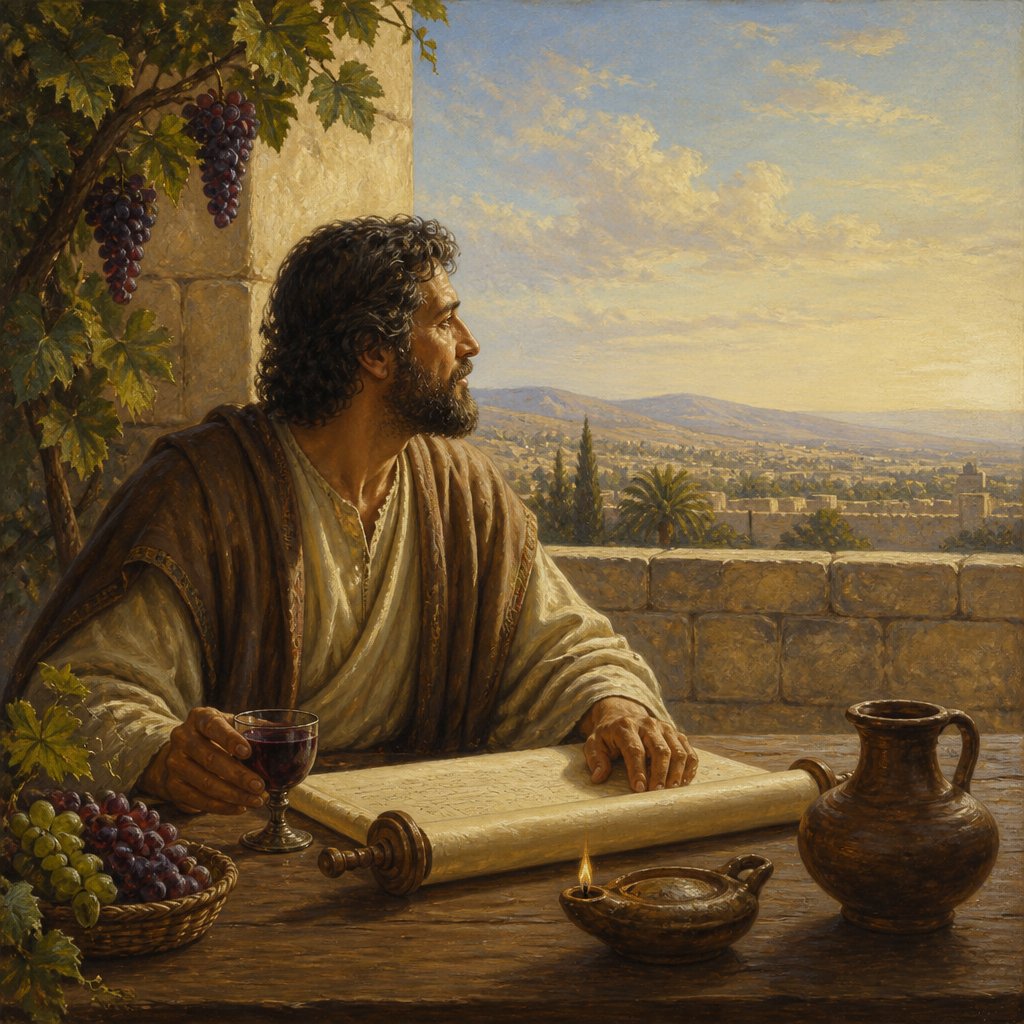
The book of Ecclesiastes, attributed to King Solomon, is a profound exploration of the human condition and the search for meaning in life. In chapter 2, verse 3, we encounter a pivotal moment in this existential journey: "I sought in mine heart to give myself unto wine, yet acquainting mine heart with wisdom; and to lay hold on folly, till I might see what was that good for the sons of men, which they should do under the heaven all the days of their life."
This verse captures the essence of Solomon's quest — to understand the balance between enjoyment and wisdom, pleasure and purpose. It is a reflection on how we navigate the temptations of life while striving to grasp the greater truths that govern our existence. In this statement, Solomon expresses a sincere desire to engage with both the delights and the absurdities of life to find out what is truly good for humanity.
### Seeking Pleasure with Purpose
At first glance, Solomon's pursuit of wine can seem hedonistic; however, it is essential to recognize that his inquiry is more profound than mere indulgence. By choosing to "give myself unto wine," Solomon immerses himself in the pleasures that life has to offer. Wine, often symbolizing joy and celebration, represents all the good things in life that can bring a sense of joy — friendships, laughter, and leisurely moments. But the key here is that Solomon does this while simultaneously "acquainting mine heart with wisdom."
This juxtaposition of wine and wisdom emphasizes the need for balance. It suggests that while it is natural and even necessary to enjoy the gifts of life, we must also ground ourselves in wisdom. True enjoyment does not come from sensory indulgence alone; it must be intertwined with understanding. Solomon essentially advises us to engage with life critically, allowing pleasure to enhance our experiences rather than overshadow our judgment.
### The Role of Folly
Solomon's perspective on folly is equally vital. By "laying hold on folly," he seeks to understand the choices that are devoid of wisdom. Folly here serves as a contrast to wisdom, highlighting the emptiness that can accompany a life lived for pleasure alone. Solomon is willing to explore folly because he recognizes that to understand what is wise, one must also grasp what is foolish.
As we journey through life, we often find ourselves grappling with decisions that may lead us toward folly — choices that may seem attractive but lack lasting significance. Understanding folly allows us to appreciate our wisdom more fully. It draws a bright line between fleeting pleasures and enduring meaning.
### A Quest for Meaning
Ultimately, Solomon's quest is not just about personal pleasure or ethical understanding; it is about discovering what is "that good for the sons of men." He seeks the universal truths that govern human existence — what brings satisfaction, purpose, and fulfillment in our collective lives. This quest reflects a deep-rooted desire for a legacy, aimed at benefiting not just oneself but all of humanity.
Herein lies a challenging truth: the heart of our pursuits must align with wisdom. Our decisions, whether influenced by joy or folly, carry consequences. When we take the time to seek wisdom and engage with life's pleasures critically, we can craft a life that not only fulfills our desires but also honors our purpose in God’s grand design.
### Conclusion
In our daily lives, let us reflect on Solomon's journey. May we be inspired to partake in both the joys and challenges of life with wisdom at the forefront of our hearts. As we celebrate life's pleasures, may we also embrace the lessons learned from our follies. Let us pursue the good that lasts — a legacy built on joy enriched by wisdom, ultimately leading to a life that glorifies the Creator and serves others.
In the engagement of wisdom and folly, may our hearts remain steadfast in seeking the good that pleases God and elevates humankind. Amen.
Get our apps


Artwork for Ecclesiastes 2:3

Ecclesiastes 2:3 - "I sought in mine heart to give myself unto wine, yet acquainting mine heart with wisdom; and to lay hold on folly, till I might see what was that good for the sons of men, which they should do under the heaven all the days of their life."
"I sought in mine heart to give myself unto wine, yet acquainting mine heart with wisdom; and to lay hold on folly, till I might see what was that good for the sons of men, which they should do under the heaven all the days of their life." - Ecclesiastes 2:3

Ecclesiastes 3:2 - "A time to be born, and a time to die; a time to plant, and a time to pluck up that which is planted;"

Ecclesiastes 3:1

Ecclesiastes 3:3 - "A time to kill, and a time to heal; a time to break down, and a time to build up;"

Ecclesiastes 3:7-8

Ecclesiastes 3:1 – "There is a time for everything, and a season for every activity under the heavens."

"A time to be born, and a time to die; a time to plant, and a time to pluck up that which is planted;" - Ecclesiastes 3:2

Ecclesiastes 3:9 - "What profit hath he that worketh in that wherein he laboureth?"

Ecclesiastes 3:1 - "To every thing there is a season, and a time to every purpose under the heaven:"

Ecclesiastes 3:4 - "A time to weep, and a time to laugh; a time to mourn, and a time to dance;"

Ecclesiastes 3:8 - "A time to love, and a time to hate; a time of war, and a time of peace."

Ecclesiastes 3:6 - "A time to get, and a time to lose; a time to keep, and a time to cast away;"

Ecclesiastes 7:3 - "Sorrow is better than laughter: for by the sadness of the countenance the heart is made better."

Ecclesiastes 2:2 - "I said of laughter, It is mad: and of mirth, What doeth it?"

Ecclesiastes 3:7 - "A time to rend, and a time to sew; a time to keep silence, and a time to speak;"

ecclesiastes 12:2-6

Ecclesiastes 3:21 - "Who knoweth the spirit of man that goeth upward, and the spirit of the beast that goeth downward to the earth?"

Ecclesiastes 3:16 - "¶ And moreover I saw under the sun the place of judgment, that wickedness was there; and the place of righteousness, that iniquity was there."

Ecclesiastes 3:20 - "All go unto one place; all are of the dust, and all turn to dust again."

Ecclesiastes 3:12 - "I know that there is no good in them, but for a man to rejoice, and to do good in his life."

Ecclesiastes 5:3 - "For a dream cometh through the multitude of business; and a fool's voice is known by multitude of words."

Ecclesiastes 1:3 - "What profit hath a man of all his labour which he taketh under the sun?"

Ecclesiastes 3:15 - "That which hath been is now; and that which is to be hath already been; and God requireth that which is past."

Ecclesiastes 3:10 - "I have seen the travail, which God hath given to the sons of men to be exercised in it."

Ecclesiastes 3:13 - "And also that every man should eat and drink, and enjoy the good of all his labour, it is the gift of God."

Ecclesiastes 3:1 – "There is a time for everything, and a season for every activity under the heavens." r

Ecclesiastes 3:17 - "I said in mine heart, God shall judge the righteous and the wicked: for there is a time there for every purpose and for every work."

Ecclesiastes 3:5 - "A time to cast away stones, and a time to gather stones together; a time to embrace, and a time to refrain from embracing;"

Ecclesiastes 8:3 - "Be not hasty to go out of his sight: stand not in an evil thing; for he doeth whatsoever pleaseth him."